
Anaphylaxis & Adrenaline (Epinephrine)
Adrenaline (also called epinephrine) is the first-line emergency treatment for anaphylaxis – a severe allergic reaction that can affect breathing and blood pressure. If you suspect anaphylaxis, give adrenaline promptly and call 999.
What is anaphylaxis?
Anaphylaxis is a rapid, serious allergic reaction. It can involve several body systems at once and may worsen quickly.
Common signs and symptoms
Anaphylaxis can include:
– Breathing symptoms – wheeze, noisy breathing, throat tightness, hoarse voice, persistent cough
– Circulation symptoms – dizziness, faintness, collapse, pale or clammy skin
– Skin symptoms – widespread hives, flushing, swelling of lips or face
– Gut symptoms – cramping, vomiting, diarrhoea (especially with breathing or circulation symptoms)
Important: If there are breathing or circulation symptoms, treat it as anaphylaxis and use adrenaline.
Why adrenaline is used first
During anaphylaxis, the immune system releases chemicals that can cause airway narrowing, swelling, and a dangerous drop in blood pressure. Adrenaline works quickly to reverse these effects.
Mechanism of action – receptors explained simply
Adrenaline works by stimulating adrenergic receptors:
– α1 (alpha-1) receptors – tighten blood vessels, raise blood pressure, reduce swelling in tissues
– β1 (beta-1) receptors – support the heart, improve pumping strength and rate
– β2 (beta-2) receptors – relax airway muscles, improve breathing, reduce further mediator release from immune cells
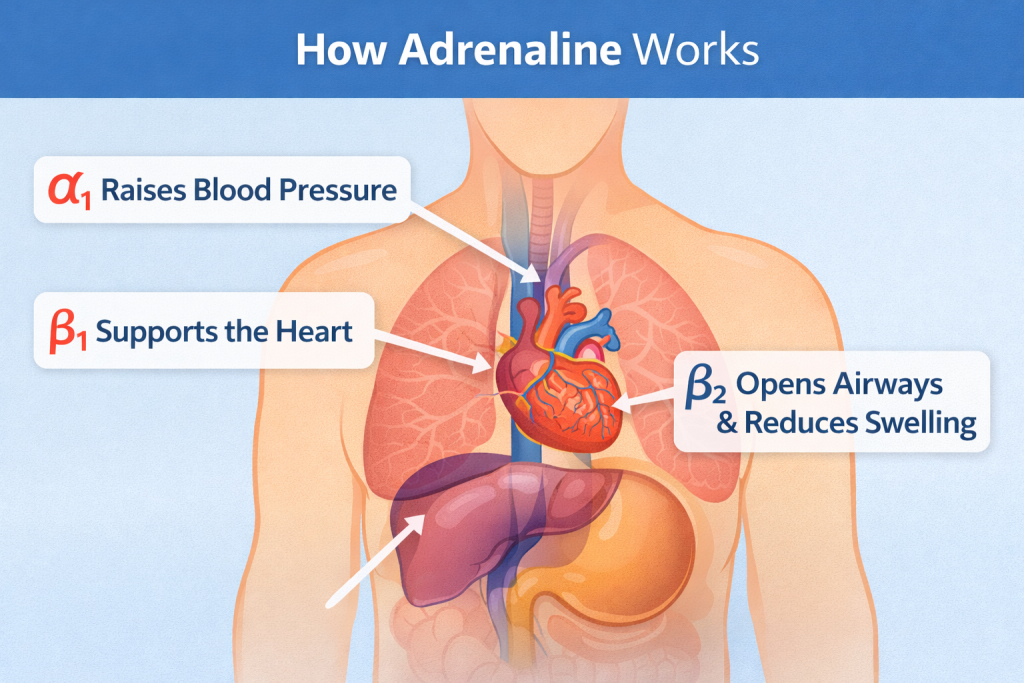
How adrenaline (epinephrine) works in anaphylaxis by raising blood pressure, supporting the heart, and opening the airways.
This is why adrenaline can relieve wheeze, throat swelling, and dizziness – and why speed matters.
How to use adrenaline in an emergency
When to give adrenaline
Use adrenaline immediately if:
– breathing is difficult, noisy, or worsening
– the person feels faint, collapses, or looks pale and clammy
– there is rapid swelling of the tongue or throat
– there is a severe reaction involving more than one system – for example hives plus breathing symptoms
What to do right after giving adrenaline
– Call 999 immediately – say “anaphylaxis”
– Lay the person flat with legs raised if dizzy or faint
– If breathing is difficult, allow them to sit up
– If symptoms don’t improve or return, a second dose may be needed (follow your device instructions)
– Stay with the person until help arrives
Dose and device basics – EpiPen and other auto-injectors
Auto-injectors are designed to give a fixed dose quickly, without needing to draw up medication.
Typical doses you may see
Depending on brand and prescription, common strengths include:
– 0.3 mg – often used for older children and adults
– 0.15 mg – often used for smaller children
– Some regions also use additional strengths for specific weight bands
Your clinician will prescribe the most appropriate dose based on weight and risk – always follow the instructions for your own device.
Why two devices are usually recommended
A second dose may be needed if:
– symptoms do not improve after the first dose
– symptoms return (sometimes called a biphasic reaction)
– the reaction is severe or progressing quickly
A brief history – from syringes to the EpiPen
Before auto-injectors, adrenaline often had to be drawn up from a vial with a syringe – which could be slow and difficult during emergencies.
Auto-injectors helped make community treatment more practical by providing:
– a pre-measured dose
– faster administration under stress
– simpler training for patients, parents, schools, and caregivers
The EpiPen was developed in the 1970s and later became widely used internationally, changing how anaphylaxis is managed outside hospital.
Nasal adrenaline spray – what it is and who it is for
A newer option is intranasal adrenaline – a needle-free spray designed for emergency treatment of anaphylaxis.
Why a nasal spray may help
A nasal adrenaline device may be useful when:
– a person fears needles or delays injection
– caregivers want a simple administration method
– injection is difficult due to clothing or positioning
Nasal adrenaline is still an emergency medicine – you must call 999 after use.
EURneffy – development and key features
EURneffy is a nasal adrenaline spray authorised in the UK/EU for emergency treatment of anaphylaxis in adults and children with body weight ≥ 30 kg.
H3: EURneffy dose (UK/EU)
– The recommended initial dose is one spray delivering 2 mg adrenaline
– If symptoms don’t improve or return, a second spray may be needed (follow patient instructions and emergency guidance)
Practical use
– Use one device = one dose
– Insert into a nostril and press firmly to deliver the dose
– Do not test spray – you could waste the dose
– Call 999 and monitor closely – symptoms can return
Important safety notes
– Always seek emergency medical assessment after adrenaline, even if symptoms improve
– Carry your medicine as advised and check expiry dates
– Ask your clinician which device is best for you – and practise with a trainer device if available
neffy (US) – related product name
In the United States, epinephrine nasal spray is marketed as neffy. Indications and dosing can differ by country, so follow local prescribing information and your clinician’s advice.
Frequently asked questions (FAQ)
What is the difference between adrenaline and epinephrine?
They are the same medicine – “adrenaline” is the common UK term and “epinephrine” is commonly used in the US and in some medical labelling.
Should I use adrenaline if I’m not sure it’s anaphylaxis?
If there are breathing or circulation symptoms, it is safer to treat promptly as anaphylaxis. Delaying adrenaline is a common reason reactions become more serious.
Can I use a nasal adrenaline spray instead of an auto-injector?
Some people may be prescribed a nasal spray, others an auto-injector, and some may carry both depending on guidance. Your clinician will advise what is suitable for your age, weight, and risk.
How quickly does adrenaline work?
Many people improve within minutes, but response varies. If symptoms persist or return, a second dose may be needed and urgent medical care is always required.
Why do I still need to go to hospital after adrenaline?
Symptoms can return after initial improvement. Monitoring is important, and additional treatment may be needed.
Do antihistamines replace adrenaline?
No. Antihistamines can help itching or hives. Adrenaline is the first-line treatment for anaphylaxis.
What position should the person be in during anaphylaxis?
– If faint or dizzy – lie flat with legs raised
– If struggling to breathe – sit up
Avoid standing or walking, which can worsen low blood pressure.
Quick summary box
In anaphylaxis: give adrenaline promptly – call 999 – lie flat (or sit up if struggling to breathe) – give a second dose if needed.
– What is anaphylaxis?
– Food allergy testing and risk assessment
– Allergy action plans for schools and nurseries