
Allergy Safety in Schools 2026: New DfE Guidance Explained
Posted: 11th July 2026 | Posted by allergy
Allergy News & Guidance
New Statutory Guidance on Allergy Safety in Schools: What Parents and Schools Need to Know
Published 6 July 2026 by the Department for Education | Applies to England
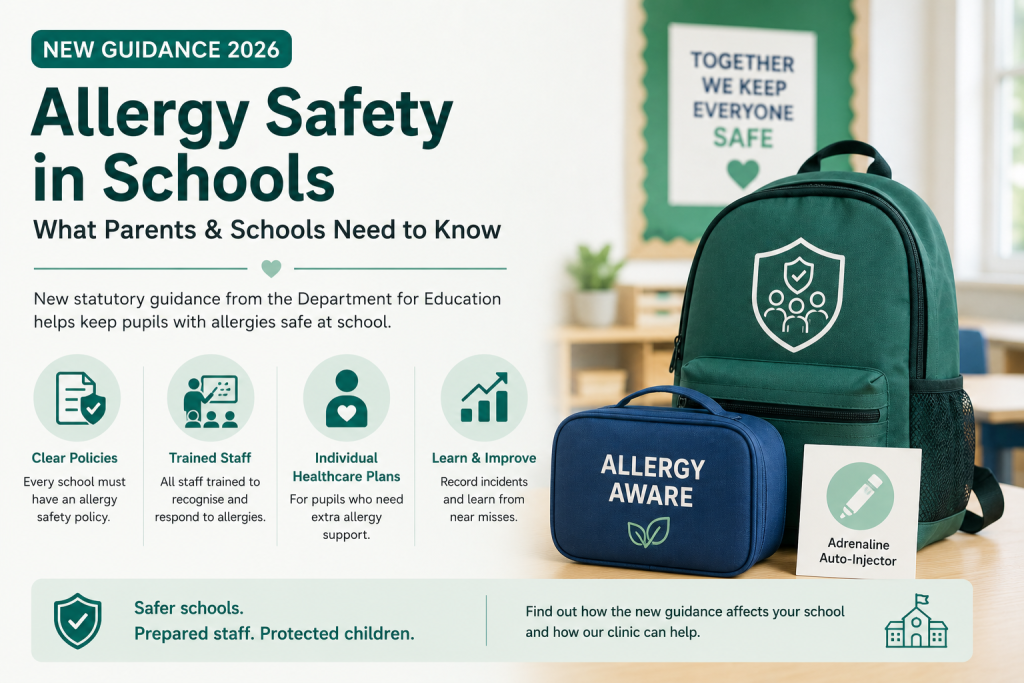
The Department for Education’s 2026 statutory guidance introduces new requirements for allergy safety in schools, including allergy policies, staff training and Individual Healthcare Plans (IHPs).
For the first time, schools in England now have statutory guidance on allergy safety, published by the Department for Education (DfE) on 6 July 2026. If your child lives with a food allergy or other allergic condition, this is a significant step towards safer classrooms, playgrounds and lunch halls. Here’s what the new guidance means, and how our allergy clinic can help your family and school meet it.
What Is the Allergy Safety in Schools Guidance?
The new guidance sets out what schools must do to support pupils with allergies. It applies to governing bodies of local-authority-maintained schools (including special schools), pupil referral units, and academies and free schools. Independent schools are not yet required to follow it, though the government has signalled it intends to bring allergy safety requirements into their regulatory standards too.
Key Requirements for Schools
Under the statutory guidance, schools must:
- Create and publish an allergy safety policy — a clear, written approach to preventing and managing allergic reactions on site.
- Provide allergy safety training for all staff — not just first-aiders, so that everyone knows how to recognise and respond to a reaction.
- Identify pupils who need an Individual Healthcare Plan (IHP) — a personalised plan for managing a child’s allergy day to day.
- Record and learn from serious incidents and near misses — so schools can continuously improve safety, not just react after an emergency.
The DfE has also released two supporting resources: an allergy safety policy template and an Individual Healthcare Plan template, along with guidance on record-keeping and training for the use of adrenaline auto-injectors (AAIs) in schools.
Why This Matters
Food allergies and anaphylaxis are a daily reality for many families, and school is often where a child spends the most time away from home. Clear policies, trained staff and a well-completed Individual Healthcare Plan can make the difference between a close call and a genuine emergency. This guidance gives schools a consistent, structured framework to work from rather than leaving allergy management to chance or to individual school policy alone.
How We Can Help
Our allergy clinic supports both families and schools in putting this guidance into practice. We can help with:
- Completing an accurate, medically-informed Individual Healthcare Plan for your child
- Confirming allergy diagnoses through proper testing, so IHPs are based on solid clinical evidence
- Advising on adrenaline auto-injector prescriptions, technique and in-date supply for school
- Providing letters and clinical summaries schools can use to inform their allergy safety policy
- Guidance for school staff on recognising and responding to allergic reactions
Book an appointment: If your child has a suspected or diagnosed allergy and you’d like help preparing for the new school year under this guidance, get in touch with our clinic team today. We’ll work with you to make sure your child’s Individual Healthcare Plan is ready, current and school-approved.
Useful Resources
- Read the full statutory guidance on GOV.UK
- Related guidance: Supporting pupils with medical conditions at school
This article is for general information only and does not replace individual medical advice. Speak to our clinical team about your child’s specific allergy management needs.