
Eczema and multiple food allergies
Posted: 22nd January 2026 | Posted by allergy
Early Eczema and Food Allergy Risk in Children: 2026 Medical Insights for Parents and Clinicians
The relationship between eczema (atopic dermatitis) and food allergies in children is one of the most important areas in modern allergy prevention. New research published in 2025, supported by emerging 2026 data, shows that the age at which eczema begins plays a critical role in determining whether a child develops food allergies or respiratory allergic diseases.
Key takeaway: Eczema starting in early infancy significantly increases the risk of multiple food allergies, while later onset is more closely linked to asthma and hay fever.
Key Findings from Recent Research
A large study involving 1,309 children under 12 years with diagnosed food allergies provides strong evidence linking eczema timing to allergic outcomes:
- 77% of children with food allergies had eczema
- Over 80% developed eczema within the first year of life
- Earlier onset strongly increases the likelihood of multiple food allergies
- Eczema starting after 12 months reduces risk of multiple food allergies by 43%
- Early-onset eczema is particularly associated with milk and egg allergy
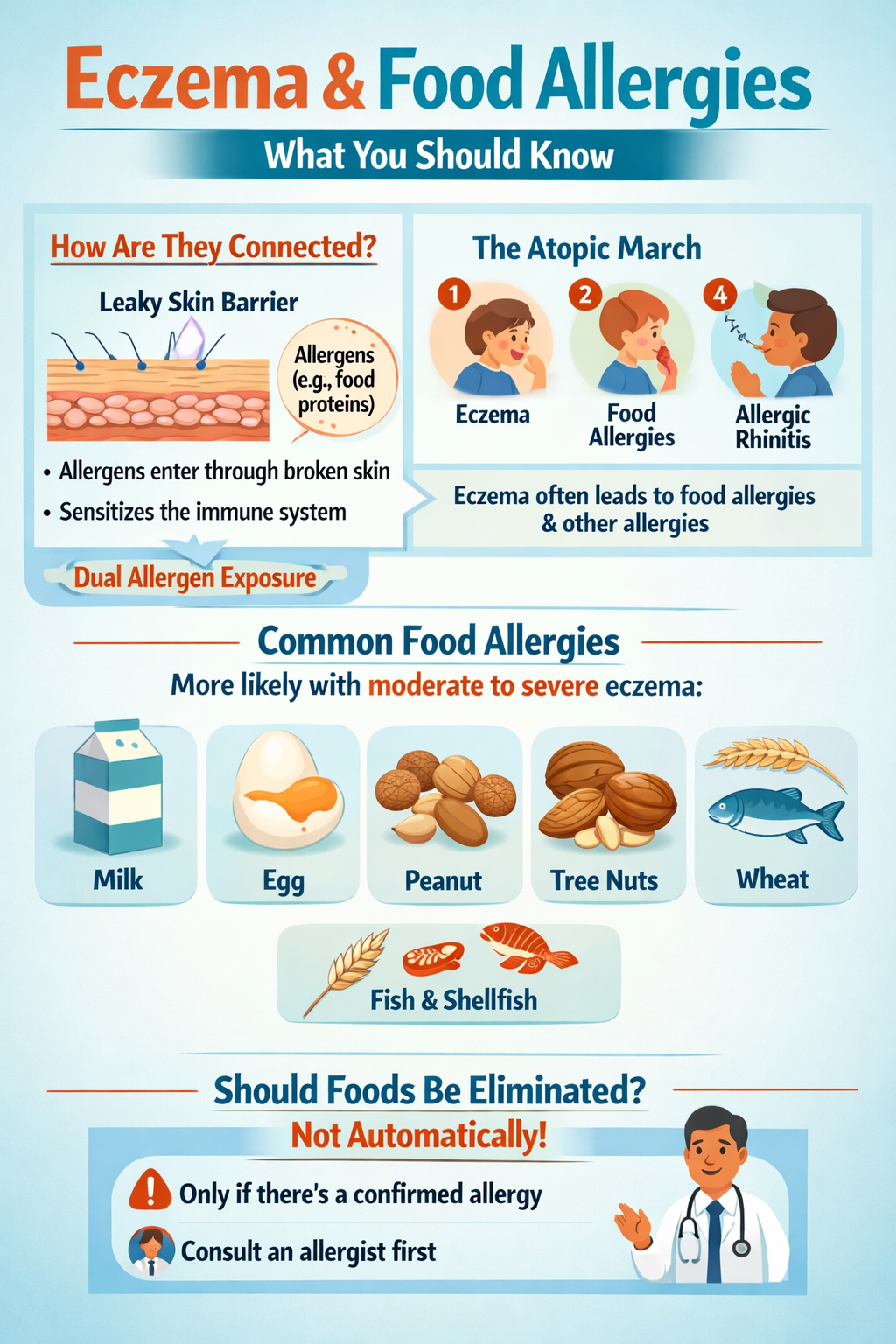
Why Early-Onset Eczema Increases Food Allergy Risk
Recent advances in allergy science support the skin barrier hypothesis, which explains how eczema contributes to food allergy development. In infants, the skin acts as a critical protective barrier. When this barrier is disrupted, allergens can enter the body through the skin rather than through the digestive system.
Clinical insight: Allergen exposure through inflamed skin may lead to immune sensitisation, while early oral exposure may promote tolerance.
- Impaired skin barrier allows allergens (e.g. milk, egg) to penetrate
- Triggers IgE-mediated immune responses
- Leads to higher risk of multiple food allergies
- Strongly associated with filaggrin (FLG) gene mutations
Role of the Skin Microbiome (2026 Update)
Emerging 2026 research highlights the importance of the skin microbiome in eczema and allergy development. Children with eczema often show increased colonisation with Staphylococcus aureus, which can worsen inflammation and further damage the skin barrier.
- Microbial imbalance increases skin inflammation
- Promotes allergic sensitisation
- May influence long-term immune development
Late-Onset Eczema and Respiratory Allergies
In contrast to early eczema, children who develop eczema after 12 months show a different allergic pattern:
- Higher likelihood of developing asthma
- Increased risk of allergic rhinitis (hay fever)
- Less association with multiple food allergies
Interpretation: This suggests distinct allergic pathways, refining the traditional concept of the “atopic march”.
What This Means for Prevention (2026 Guidance)
Modern allergy guidelines emphasise early intervention for infants at high risk. Identifying eczema early provides an opportunity to reduce the likelihood of developing food allergies.
Recommended Strategies
- Introduce allergenic foods early under medical supervision
- Maintain consistent skin hydration using emollients
- Treat eczema proactively to reduce inflammation
- Seek specialist allergy assessment in moderate-to-severe cases
- Monitor for early signs of food reactions
Important: Early identification of high-risk infants allows for targeted prevention strategies and improved long-term outcomes.
Summary
The timing of eczema onset is a powerful predictor of allergic disease patterns:
- Early eczema (≤3 months): High risk of multiple food allergies
- Later eczema (>12 months): Higher risk of asthma and hay fever
Recognising these patterns enables clinicians and parents to take proactive steps in preventing allergic disease progression.
Reference: Hussien H, Moore DL, Nimri S, et al. The age of eczema onset and multiple food allergies. Ann Allergy Asthma Immunol. Published online December 3, 2025.