Latest News and Info

How to handle your contact dermatitis

contact dermatitis

How to handle your contact dermatitis

If you have contact dermatitis, you’re probably more than familiar with that feeling of hot sandpaper being dragged over your skin that can arise simply from washing your hands. And in the past year, your skin is probably red raw after we were advised to sing happy birthday, not once, but twice, while scrubbing our palms to stop the spread of the virus.

Contact dermatitis can be extremely painful and cause real problems for sufferers. If you’re looking for ways you can help mend your dermatitis, we recommend talking to your doctor. Ask them what they can do for you.

Preventative measures 

The only effective way to treat contact dermatitis long term is to identify the trigger and avoid it. While steroids and other creams will definitely help, they don’t get to the root of the problem.

If you come in contact with any irritants, wash the area and dry it thoroughly. It’s much easier said than done, but avoid scratching the area. If you really can’t hold it any longer, rubbing or lightly slapping the affected area is a good middle ground. It offers relief but isn’t as damaging as scratching. 

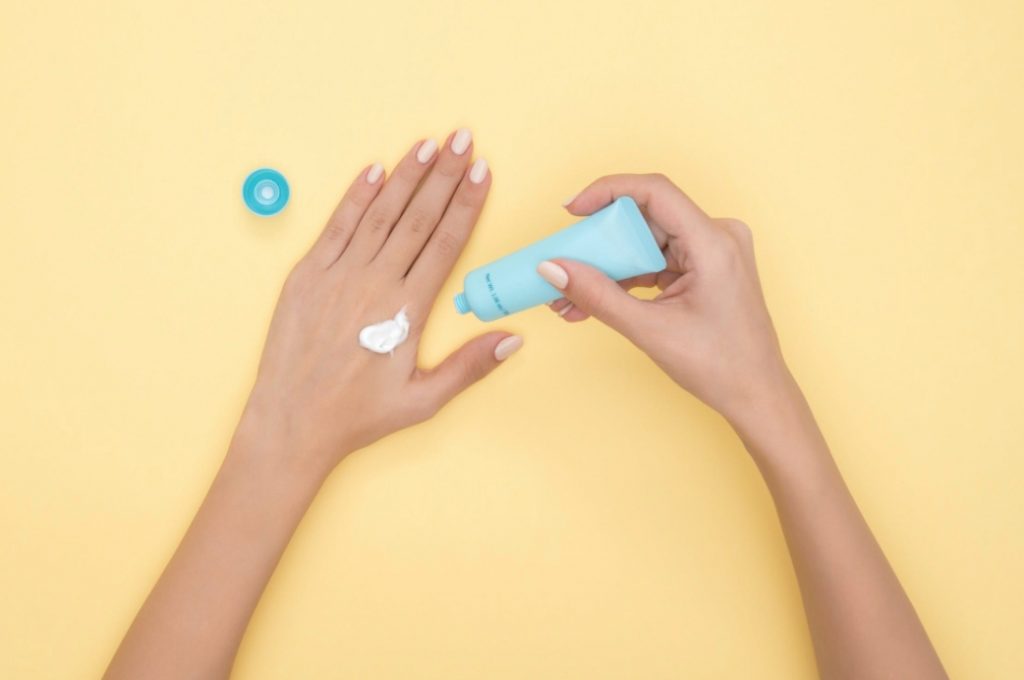
Using a moisturiser or barrier cream is a fantastic preventative measure too. With regular application, the area stays moisturised, instead of turning dry, itchy, and painful. Just ensure it isn’t fragranced.

Treatments 

Your doctor or allergist will likely prescribe you a steroid cream and/or barrier cream. But here are some other treatments you can try. 

Contact dermatitis can often feel hot to the touch and a cold compress can provide relief. And for the days when you can’t stop yourself from scratching, over-the-counter antihistamines might help too. Though when it comes to medicine, we recommend talking to your doctor first.

Topically applying vitamin E to the affected area may help as it’s an anti-inflammatory and provides relief from itching. Honey can also be applied topically as it’s a powerful, natural antiseptic with antibacterial properties. Honey also keeps skin moist, but not oily. Again, anything applied topically can make it worse, especially if your dermatitis is severe, so consult with a specialist first.

Contact dermatitis can cause serious pain and discomfort. If you suspect you have contact dermatitis, get in touch with a doctor or allergist as soon as possible to prevent the condition from worsening.

Need help managing your contact dermatitis? Get in contact with the London Allergy and Immunology Centre today. Our team of experts can help you manage any allergies and regain control of your life. Call us now on 02031 433 449.
What you need to know about contact dermatitis

atopic eczema

What you need to know about contact dermatitis

Fun fact: your skin is the largest organ of your body. You should love the skin you’re in and treat it right. Keep it well moisturised, don’t damage it with too much sun, and enjoy what life gave you. But, for some people, it isn’t that easy.

Their skin might be more sensitive than other people’s and they might be prone to breaking out in a condition. For some, it may be bouts of acne. For others, it could be eczema. Or it might be contact dermatitis, a reaction to certain materials or substances coming into contact with your skin. 

It affects 15 to 20% of people during their lifetime and can be caused by an irritant on the skin or something they are directly allergic to. So how do people cope with contact dermatitis and how can you minimise its impact on you?

Symptoms

First, let’s look at what contact dermatitis can do to your skin. Signs of the condition include dry, itchy skin, potentially with painful blisters and cracks. There might be a noticeable red rash and it could happen within a few hours of coming into contact with an irritant or maybe even a few days.

While it can affect any part of your body, it tends to happen mostly around your hands and face. These are the areas most likely to come into contact with the irritant, so that makes sense.

Can you prevent contact dermatitis?

While you can’t 100% guarantee never having a reaction again, there are ways you could potentially decrease the chances. What’s helpful at this point is knowing what causes your reactions. Some people, for example, react to metals, such as those in jewellery. Or it could be because of a certain perfume or detergent you use.

If you know what causes your reaction, it’s easier to avoid it. If you aren’t sure, then it’s best to talk to a doctor or allergy specialist about it. They can take you through the process to discover what causes your reactions. It’s best to seek professional help rather than trying to figure it out yourself.

Other than that, you should always treat your skin right. Wash your hands in warm water, not hot water, and use soap gently. Do the same when drying them. Talk with your doctor about what soaps to use and any moisturisers they recommend.

Living with contact dermatitis isn’t nice, but it is manageable. If you ever need help, your doctor will always be happy to help.

For more advice, talk to one of our allergy specialists. We have the expertise to deal with a range of allergies and give you the advice you need. To find out more, get in touch on 02031 433 449.

Contact dermatitis: what you need to know

Contact dermatitis

Contact dermatitis: what you need to know

With the winter months approaching, contact dermatitis can take a turn for the worse, with the cold weather affecting dry skin even more. If you have dermatitis or think you might, this is what you need to know about the skin condition.

What is it?

Contact dermatitis is a type of eczema that is triggered by allergens, specific chemicals, or certain substances. The most obvious and primary way to identify eczema is dry, itchy skin. Unlike other forms of eczema, the affected skin will usually clear up if contact with a trigger is stopped.

Symptoms

Other than dryness or itchiness, other symptoms can include:

  • Blistering
  • Bumps
  • Discharge from the skin
  • Scaly skin
  • A ‘tight’ feeling in the skin

Differences

Before we delve into the causes of dermatitis, it’s critical to establish the differences between irritant and allergic contact dermatitis.

Both conditions cause the skin to itch, dry out, and turn red, but they are also completely different. Irritant contact dermatitis is usually more widespread and, unlike allergic contact dermatitis, doesn’t involve the immune system so isn’t an allergy. As its name suggests, irritant contact dermatitis occurs due to exposure to irritants. However, allergic contact dermatitis is more localised and can cause the skin to blister and swell.

There is also a third type called photocontact dermatitis. This is far less common than the other types and occurs when the active ingredients in a skin product are exposed to the sun which can lead to the skin being irritated.

Causes

Common causes of allergic contact dermatitis might include:

  • Jewellery
  • Latex
  • Perfumes or fragrances

Common causes of irritant contact dermatitis might include:

  • Strong chemical products like bleach
  • Detergents
  • Soap

If you think you suffer from contact dermatitis, the following points are essential to think about:

  • When did it first start?
  • Are you aware of specific triggers?
  • Have you used any new products?

Patch test

If you’ve been using new products that may be causing your skin to react negatively, try eliminating them from your routine and see if this makes a difference and clears your skin. Any new products you do use, be sure to check the ingredients list and do a patch test before using.

A patch test can be carried out at home. All you have to do is apply a small amount of product to a ‘patch’ of your body (such as the inside of your elbow) and after a few hours, look for any signs of irritation. If your skin reacts, you’ll notice some itching or swelling in the area you applied the product too. Patch testing can help you identify which chemicals are causing your skin to react.

We highly recommend that you have an allergy test to determine whether or not you have dermatitis, and what your triggers are. The skin can become easily dried out and irritable during cold weather, so finding out as soon as possible what is affecting your skin means that you can seek out treatment.

If your skin feels dry, itchy, and red, it might suggest you have allergies or a skin condition that you didn’t even think about. Why not request an allergy test today or speak to our experts, so that you can live irritant-free.

Scratching the surface of eczema

Scratching the surface of eczema

Scratching the surface of eczema

Dry, sensitive, and itchy skin is no laughing matter. Sadly for the estimated 15 million sufferers in the UK alone, atopic dermatitis – that’s eczema to you and me – is incredibly common. This pesky inflammatory skin disease can be very uncomfortable to the host, making skin red raw, dry, cracked, and tender. It’s more likely to occur in children, with almost a third of youngsters having this irritating ailment. But it affects more than just our infants. Eczema can occur at any age.

By definition, atopic dermatitis is a chronic skin condition, meaning that it’s long-lasting and has a tendency to flare periodically. It also commonly accompanies other allergies, such as hay fever or asthma.

Contact dermatitis is a type of eczema triggered by direct contact with something an individual has an allergy; typically, this will be from chemicals, bathroom products, jewellery, make-up or materials used in construction. Usually, you see delayed reactions, which can range from flaring up in a matter of hours to several days.

As an example, you can consider certain washing detergents as irritants because they can damage the outer layer of skin. But in the case of contact allergy, the immune system that recognises the allergen as a threat will damage skin. It’s more likely to affect the face and hands because the skin is thinner.

Touchy feely

There have been conflicting theories about whether or not contact allergy is a common problem in sufferers of atopic dermatitis. Some believe that patients with atopic dermatitis were unlikely to also suffer from contact dermatitis. The British Journal of Dermatology recently conducted a systematic review to challenge this and get to the bottom of the debate.

They wanted to distinguish the truth in the importance of undertaking a patch test for the allergens for contact dermatitis when a patient already suffers from atopic dermatitis.

To test the theory, they examined 68 children that fell into either category of “with” or ”without” atopic dermatitis. They measured results when a child experienced a minimum of one positive patch test reaction. It affected 41.7% of the children “with” as well as 46.6% of children “without”. These results show that whether an individual suffers from atopic dermatitis or not, patch testing is still vital as you may miss allergens for allergic contact dermatitis.

If you are one of the 15 million people that find yourself suffering from itchy skin and want to find out more about how you improve your condition, please book an appointment with our consultants.

Patch testing for contact dermatitis

Patch testing

Patch testing for contact dermatitis

Allergic contact dermatitis can be provoked by many chemicals, which can make discerning the origin of the reaction challenging. After all, different people react in different ways to different things. Often what triggers an allergic response in one individual will see no reaction in another. Despite this, it often manifests under the umbrella term of ‘eczema’ on any individual, regardless of that original cause. Thankfully, there are ways to narrow down the search. If you want to determine which specific substance is causing the inflammation, you might want to consider patch testing.

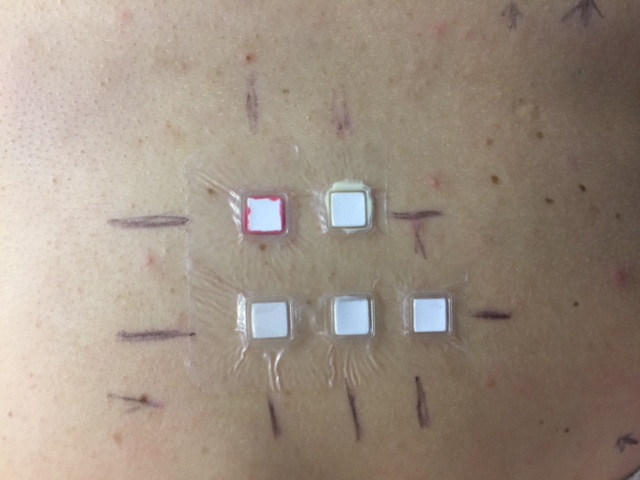
Patch testing helps to distinguish which substances may be causing an allergic reaction in a patient’s skin. It’s a useful puzzle to solve as the contact allergy can damage the skin. You can use other tests (such as blood testing) to look for sensitisation to fungal allergens. The problem with this though is that it might be only the aggravating factor, not the causative on. A patch test is a provocation test; the intention is to produce a local allergic reaction on a small area of the patient’s back, where the diluted chemicals are placed on a plaster.

Testing, 1, 2, 3

The initial process of patch testing generally takes no longer than around half an hour to apply the patch, though this can vary based on the number of allergens you are testing for. After 48 hours the consultant will remove the patches. However, it’s important to remember that the results of patch testing will not occur immediately after the removal of the plaster. Not everyone will see positive results; it can take between 2-4 days for a reaction to occur. After this period, you will return for a third appointment, and the consultant will record which of the allergens have yielded a noticeable effect on the skin.

It’s also important to note that patch testing only tests for contact dermatitis triggered by chemicals, and not other types of allergy. In the case of food allergy or respiratory symptoms, you may also require a blood test or skin prick test. These processes can indicate allergic reactions to stimuli that do not provoke the same response as contact dermatitis.

The intention of patch testing is to indicate what is causing the allergic response, and when identified the patients will need to avoid the allergen that triggers the reaction. Ultimately, once you know what is causing your contact dermatitis, you can begin to adjust your lifestyle in ways that avoid as much contact with the implicated allergen as possible. For optimal skin health, maintaining a great skincare regime is vital and is likely to prevent further skin infection.

You can only carry out patch testing on the recommendation of a consultant. Our consultant will review your condition and advise if contact allergy is suspected and when patch testing can be done. Please book an appointment with one of our staff.

Copyright 2026. All Rights Reserved

LAIC Main Menu