Latest News and Info

Early SLIT Immunotherapy for Hay Fever and Asthma Prevention London

SLIT Immunotherapy London

Early SLIT Immunotherapy: Could Treating Hay Fever Earlier Help Protect Against Asthma?

New medical evidence suggests that sublingual allergen immunotherapy (SLIT) may be more than symptom control. For carefully selected patients, it may help change the long-term course of allergic rhinitis and allergic asthma.

Key message

SLIT immunotherapy is increasingly being viewed as a disease-modifying treatment for allergic rhinitis and allergic asthma, rather than only a final option when antihistamines and nasal sprays are not enough.

What is SLIT immunotherapy?

Sublingual allergen immunotherapy (SLIT) is a specialist allergy treatment designed to gradually train the immune system to tolerate a specific allergen. It may be used for selected patients with allergic rhinitis, allergic conjunctivitis and allergic asthma caused by triggers such as grass pollen, tree pollen, house dust mite or animal dander.

Unlike standard medicines, which mainly reduce symptoms while they are being taken, SLIT aims to reduce the body’s allergic response over time. Treatment is usually administered as liquid allergen drops under the tongue according to the prescribed treatment plan.

How SLIT works

Small amounts of allergen are introduced regularly under the tongue to encourage immune tolerance over time. The treatment plan is individualised according to the allergen profile, symptoms and medical history.

Why is earlier treatment being discussed?

A 2026 expert review in Current Opinion in Allergy and Clinical Immunology highlights a shift in thinking. Traditionally, allergen immunotherapy was often considered only after symptoms remained troublesome despite medication. However, newer real-world evidence suggests that starting immunotherapy earlier in suitable patients may offer a “window of opportunity” to influence the natural history of allergic airway disease.

This is particularly relevant for patients with persistent allergic rhinitis, with or without mild to moderate allergic asthma. Allergic rhinitis and asthma are closely linked, and untreated or poorly controlled nasal allergy may contribute to lower airway symptoms in some patients.

Potential benefits of earlier SLIT immunotherapy

  • Reduced need for long-term allergy medication
  • Improved control of allergic rhinitis symptoms
  • Fewer severe asthma exacerbations in some patient groups
  • Possible reduction in the risk of developing asthma
  • Possible reduction in the development of new allergen sensitisation
  • Long-lasting benefit after completion of treatment in selected patients

What does recent evidence show?

Large real-world studies, including the REACT programme and the EfficAPSI study, suggest that adding allergen immunotherapy to standard care may reduce medication use, severe asthma exacerbations and healthcare use over long-term follow-up.

The 2026 review also highlights that younger patients may gain particular benefit when treatment is started before allergic airway disease becomes more established. This supports the idea that allergic rhinitis should not always be viewed as a minor condition, especially when symptoms are persistent, seasonal year after year, or associated with wheeze, cough or exercise-related breathing symptoms.

Who may be suitable for SLIT immunotherapy?

SLIT is not suitable for everyone. It should only be considered after specialist allergy assessment, including a careful clinical history and confirmation that symptoms match relevant IgE sensitisation on skin prick testing or blood testing.

You may be considered if you have:

  • Moderate to severe hay fever
  • Persistent house dust mite allergy
  • Allergic rhinitis with confirmed pollen, mite or animal allergy
  • Symptoms despite regular antihistamines or nasal sprays
  • Allergic asthma that is mild to moderate and controlled enough for treatment

A specialist review is essential if you have:

  • Uncontrolled asthma
  • A history of severe allergic reactions
  • Multiple allergies requiring prioritisation
  • Other medical conditions or regular medication
  • Uncertainty about the main allergen causing symptoms

Why accurate diagnosis matters

The success of SLIT depends on selecting the correct allergen. For example, a patient with spring symptoms may be reacting to birch pollen, grass pollen, plane tree pollen, or more than one pollen. A patient with year-round symptoms may have house dust mite allergy, animal dander allergy, mould allergy, non-allergic rhinitis, or a combination of causes.

At a consultant-led allergy clinic, testing may include skin prick testing, specific IgE blood testing and, where appropriate, molecular allergy testing. This helps confirm whether immunotherapy is likely to be clinically relevant and which allergen should be prioritised.

Early treatment does not mean rushed treatment

Earlier SLIT means considering disease-modifying treatment before allergic disease progresses further. It does not mean starting treatment without proper assessment. The allergen profile, safety considerations and asthma control must all be reviewed carefully.

How long does treatment take?

SLIT immunotherapy is usually a long-term commitment. Many treatment courses continue for around three years, depending on the allergen and clinical response. The aim is to achieve sustained immune tolerance and longer-lasting benefit, rather than short-term symptom relief only.

Can SLIT replace antihistamines and nasal sprays?

Not immediately. Symptomatic treatment remains important, especially during the early stages of immunotherapy and during high pollen exposure. Many patients continue to use nasal sprays, antihistamines or eye drops as needed. Over time, some patients may need less medication, but this should be reviewed individually.

Why choose a specialist allergy clinic?

SLIT should be prescribed and monitored by clinicians experienced in allergy diagnosis, asthma assessment and immunotherapy safety. A specialist clinic can help identify the most relevant allergen, assess asthma risk and monitor response throughout the course.

Considering SLIT immunotherapy for hay fever, dust mite allergy or allergic asthma?

A consultant-led allergy assessment can help determine whether SLIT immunotherapy is appropriate for you or your child.

Book an Allergy Consultation

Summary

SLIT immunotherapy is increasingly recognised as a treatment that may modify the course of allergic respiratory disease. For suitable patients with confirmed allergic rhinitis, and especially those at risk of asthma progression, earlier discussion of immunotherapy may be clinically valuable.

The decision should always be personalised. The most important first step is accurate diagnosis, followed by careful selection of the correct allergen treatment plan.

Medical disclaimer: This article is for general information only and does not replace medical advice. Immunotherapy should only be started after assessment by an appropriately qualified allergy specialist.

References include: Lombardi C. et al. Allergen-specific immunotherapy at earlier stages of allergic respiratory diseases. Current Opinion in Allergy and Clinical Immunology. 2026; ARIA-EAACI allergic rhinitis guidance; AAAAI, London Allergy and Immunology Centre’s patient information on allergy immunotherapy.

Urticaria Allergic rhinitis Mental health

ACARE & UCARE Accredited Centre

Mind, Mucosa and Skin

How chronic urticaria, allergic rhinitis and psychological wellbeing can affect one another

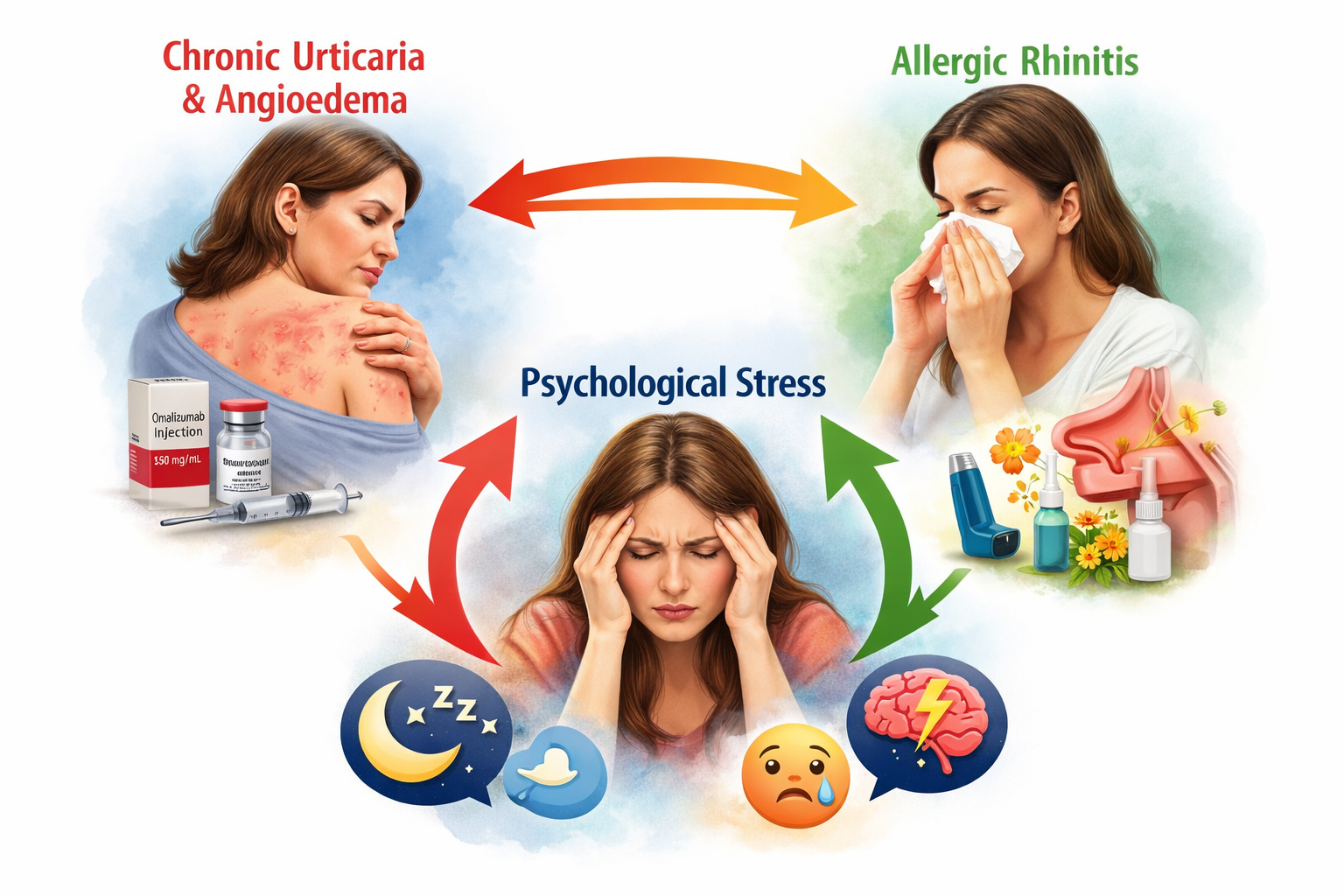
At the London Allergy and Immunology Centre, we take a whole-person view of allergy care. New research highlights that chronic spontaneous urticaria, nasal allergy symptoms and emotional wellbeing are often closely connected. This matters because better understanding of this link can help patients access more complete and effective care.

The link between chronic urticaria hives, allergic rhinitis symptoms and psychological stress in allergy patients

The connection between chronic urticaria, allergic rhinitis and psychological stress affecting overall wellbeing.

Why this matters for patients with allergy and urticaria

Chronic spontaneous urticaria, often called CSU, is more than a skin rash. It can disrupt sleep, affect confidence, interfere with work and family life, and create constant uncertainty because symptoms may flare without warning. When allergic rhinitis is also present, the burden can become even greater. Nasal blockage, sneezing, poor sleep and persistent irritation may add to fatigue and emotional strain.

A 2026 study explored this triad of mind, mucosa and skin and showed that psychiatric comorbidities were very common among adults with antihistamine-refractory CSU receiving omalizumab. The findings support a more integrated model of care in which allergy, skin symptoms, sleep and mental wellbeing are considered together rather than separately.

What is chronic spontaneous urticaria?

Urticaria is characterised by itchy raised wheals, angioedema, or both. When symptoms persist for more than 6 weeks, the condition is defined as chronic urticaria. If the rash and swelling occur without a clear external trigger, it is called chronic spontaneous urticaria.

Many patients improve with antihistamines, but some continue to have frequent symptoms despite treatment. In these more difficult cases, specialist assessment is important to confirm the diagnosis, identify associated conditions, assess disease activity properly and consider advanced treatment options such as omalizumab where appropriate.

Common features of CSU
– Recurrent itchy wheals
– Swelling of the lips, eyelids, hands or other areas
– Symptoms lasting longer than 6 weeks
– Unpredictable flare-ups
– Sleep disturbance and reduced quality of life

What did the 2026 study find?

The study reviewed 72 adults with antihistamine-refractory CSU who received omalizumab and had a formal psychiatric evaluation at a tertiary allergy centre between 2015 and 2025. Most participants were female, with a median age of 45 years. Psychiatric diagnoses were identified in 90.3% of the cohort who underwent psychiatric assessment.

The most frequent psychiatric diagnostic group was anxiety disorders, followed by mood disorders and sleep-wake disorders. Generalised anxiety disorder was the single most common diagnosis. The authors also reported that allergic rhinitis was present in more than half of the cohort, suggesting an important upper-airway allergic burden in this patient group.

Study finding Result
Patients included 72 adults with antihistamine-refractory CSU treated with omalizumab
Female participants 70.8%
Median age 45 years
Any psychiatric comorbidity 90.3%
Most common psychiatric group Anxiety disorders
Allergic rhinitis in the cohort 51.4%

The stress-skin connection in chronic urticaria

Patients often tell us that stress seems to aggravate their hives. This fits with what clinicians and researchers have observed for many years. Chronic urticaria can itself be stressful because flare-ups are unpredictable and visible. At the same time, stress may influence inflammatory pathways, itch perception and symptom severity, which can then further increase anxiety and distress. This creates a self-perpetuating cycle.

The 2026 paper describes this as a close interaction between psyche and skin. Biological pathways thought to be involved include stress-related neuroimmune signalling and mast cell-mediated inflammation. For patients, the important message is simple: the symptoms are real, the burden is real, and both the physical and emotional impact deserve proper attention.

This does not mean urticaria is “just stress”. Rather, it means stress, sleep problems, allergy symptoms and inflammation may all affect one another. That is why good management often requires more than a prescription alone.

Response to treatment in the study

Under omalizumab treatment, disease control improved significantly in this cohort. Median UAS7 scores fell from 42 before treatment to 7 at 24 months, while UCT scores rose from 0 to 14. These results support the role of specialist treatment in patients whose symptoms remain poorly controlled on antihistamines alone.

The authors also noted that improving urticaria control may bring psychological benefits and better emotional wellbeing. In practice, this reinforces the importance of identifying uncontrolled disease early and ensuring that patients receive an expert review rather than simply repeating ineffective treatment.

What this means for care at our ACARE and UCARE accredited centre

As an ACARE and UCARE accredited centre, we believe patients with chronic urticaria deserve expert, evidence-based and compassionate care. This includes careful diagnosis, assessment of angioedema and inducible triggers, review of coexisting allergic diseases such as allergic rhinitis and asthma, and evaluation of how symptoms are affecting sleep, mood and daily functioning.

Where appropriate, management may involve optimisation of antihistamines, consideration of advanced treatment pathways, investigation of associated conditions and practical support around trigger awareness, sleep hygiene and stress reduction. In some cases, collaboration with other professionals may be helpful so that care is truly patient-centred and holistic.

For patients, the key message is that severe hives and swelling are not only skin symptoms. They can affect confidence, sleep, relationships and quality of life. Recognising that full burden is an important step towards better outcomes.

When to seek specialist urticaria assessment

– Your hives or swelling have lasted longer than 6 weeks
– Symptoms keep returning despite antihistamines
– You have troublesome angioedema
– Sleep is regularly disturbed by itch or nasal symptoms
– You feel that stress, anxiety or low mood are making symptoms harder to manage
– You may have both urticaria and allergic rhinitis

Book an expert review

If you are living with chronic hives, angioedema or allergic rhinitis, our specialist team can help assess the full picture and create a personalised plan. We offer consultant-led allergy care with a focus on accurate diagnosis, better symptom control and improved quality of life.

Book an appointment

Reference

This article is based on the 2026 paper by Zeynep Yegin Katran, İsmet Bulut, Andaç Salman, Ali Baz, Galip Muzaffer Kürşat Küçükali and Özge Argın, which examined the relationship between chronic spontaneous urticaria, allergic rhinitis and psychiatric comorbidities in omalizumab-treated adults.

Please note that this blog is for general education and does not replace personalised medical advice. Diagnosis and treatment should always be based on an individual clinical assessment.

Hay fever and children: Understanding and managing seasonal allergies for your little one

Hay fever, or allergic rhinitis, is a common issue that affects many people, especially in the UK. One in three people live with allergies and hay fever, roughly 21 million people in total. This number includes a significant number of children, with 10-15% affected.

Unlike adults, children may not always be able to articulate their discomfort or understand why they feel unwell, making diagnosis and management of hay fever in children uniquely challenging. 

Recognising and treating hay fever in children is crucial, not only for their immediate comfort but also to prevent longer-term issues such as poor sleep quality and disrupted daily activities. This can be especially difficult for you to diagnose when it’s not something you experience yourself.

How hay fever affects children differently from adults

Children are often more sensitive to hay fever than adults due to their still-developing immune systems and smaller nasal passages. The typical symptoms—sneezing, nasal congestion, and itchy eyes—can significantly affect their mood, behaviour, and ability to concentrate in school. Additionally, children may be at a higher risk for developing related conditions like asthma or chronic sinusitis if their hay fever is not managed effectively.

Diagnosis challenges

One of the primary challenges in diagnosing hay fever in children is differentiating it from other childhood illnesses like the common cold. Allergy symptoms tend to be longer lasting and occur seasonally, a key difference from colds, which usually resolve within a week or two. Children may also develop allergies to different substances over time, making it difficult to pinpoint the exact cause without professional testing.

Tips for parents managing their child’s hay fever

If you suspect hay fever, there are ways you can help your little one have a more comfortable spring. Our top four tips for managing your child’schild’s hay fever are:

  1. Limit exposure

Keep windows closed during high-pollen days, and have your child shower and change clothes after being outdoors to remove pollen.

  1. Create a pollen-free environment.

Use air purifiers in the home and avoid hanging laundry outside to dry during pollen season.

  1. Monitor pollen counts

Stay informed about daily pollen levels using reliable sources or apps and plan outdoor activities accordingly.

  1. Educate and empower

Teach your child about their condition in an age-appropriate way, helping them to recognise symptoms and communicate their feelings.

What to do if you suspect your child has hay fever 

If you’re unsure whether your child is experiencing hay fever or something else, it’s best to err on the side of caution and investigate the cause of the symptoms.

Pollen allergies can be disruptive to your child’s life, but with the correct diagnosis and management plan, they can be kept under control. Our experts specialise in identifying and treating pediatric allergies. By conducting thorough testing for pollen and other allergens, we can help you understand exactly what triggers your child’s symptoms and how to tackle them effectively. Why not register as a new patient or take one of our home allergy tests? Together, we can tailor a hay fever management plan that suits your child and lets them enjoy spring to the fullest.

.

Survive your hay fever symptoms this spring

Survive your hay fever symptoms this spring

Hay fever season is here. Boo. 

For many of us, spring is a less-than-welcome visitor. While it brings warmth and longer days, it also brings misery to almost half of the population. But don’t worry—there are ways to manage your symptoms effectively and enjoy the season to the fullest. 

We’ve put together some practical steps to help you thrive despite hay fever this spring so you won’t have to hide under the stairs like Harry Potter for the next four months.

Signs of hayfever and pollen allergies

It’s important to differentiate between hay fever and a common cold, especially during the pollen season. Some symptoms to watch out for include sneezing, coughing, a runny or blocked nose, itchy and watery eyes (allergic conjunctivitis), itchy throat, mouth, nose and ears, loss of smell, forehead pain, headaches, and fatigue.

Hay fever symptoms usually worsen during the peak season, which is usually warm, humid, and windy, with high pollen counts. One way to tell it’s hay fever and not a cold is the persistent nature of your symptoms. While a cold may subside after a week or two, hay fever symptoms can linger for several weeks or even months.

The four attack phases of hay fever

Knowing how hay fever affects you can be useful for understanding how to better manage it. 

Initial contact

The journey of hay fever begins when an external allergen, like pollen, infiltrates your nose, targeting the mast cells within your nasal lining. Initially, this encounter might not even stir noticeable symptoms, subtly setting the stage.

Immediate reaction

Upon this intrusion, the allergen prompts mast cells to produce antibodies, igniting an allergic reaction. This reaction involves the release of various compounds, including histamines, which combat the allergen by affecting nerves and blood vessels. This natural defence mechanism manifests as the familiar discomforts of hay fever.

Swelling and irritation

As your body continues to defend itself, white blood cells rush to the site, bringing about the swelling and irritation that culminates in nasal congestion.

Continued response

The situation escalates over 6 to 12 hours as the inflammation stimulates further histamine release. This results in an intensification of symptoms such as an itchy and runny nose, irritation around your eyes, sneezing, and increased congestion, marking the prolonged battle against hay fever.

Surviving your hay fever symptoms

Spring need not be a season to endure with dread. By adopting a proactive approach to managing your hay fever, you can enjoy the beauty of the season with minimal discomfort. Here are some practical tips:

Stay informed

Keep an eye on daily pollen forecasts. Many weather services provide these, and staying ahead can help you plan your day to minimise exposure. Here’s a pollen calendar we made earlier for you.

Create a pollen barrier

Applying a small amount of Vaseline around your nostrils can help trap pollen before it enters your nose. Similarly, wearing wrap-around sunglasses can protect your eyes from airborne allergens.

Limit your exposure to pollen 

The levels of pollen usually reach their highest point early in the morning and late in the afternoon. Try and plan your outdoor activities outside of these periods of high pollen count. Activities such as cutting or walking on grass can stir up pollen, as can keeping fresh flowers indoors. Moreover, exposure to smoke, either by smoking yourself or being around others who smoke, can significantly worsen your symptoms of hay fever. Also, it is important to avoid drying your clothes outside during high pollen seasons, as they can attract pollen and bring these irritants directly into your living space.

Keep your environment pollen-free

Make it a habit to change your clothes and take a shower after coming indoors to remove pollen. Keep windows closed during high pollen counts, and consider using air purifiers in your home.

Be mindful of the pollen your pets carry

It’s common for pets to bring pollen into your house when they come in. Although some advice says leave your pets outside, as pet owners ourselves we know that’s b…hogswash. 

Instead, to reduce the impact of pollen, it’s recommended that you clean your pet when they come inside from playing. Additionally, make sure to put any towels or cloths that come into contact with your pet straight in the wash.

Management options 

It’s easy to struggle through with antihistamines, decongestants, and nasal sprays. But a better quality of life is around the corner. An allergy test can confirm if pollen is the culprit, and consulting with our specialist can help you develop a personalised management plan.

Embracing spring means facing hay fever head-on, but you don’t have to do it alone. Are you ready to thrive beyond your hay fever symptoms? Register as a new patient, and let’s chart a course towards more breathable, symptom-free springs. Whether you’re drawn to an in-depth assessment at our renowned allergy clinic in London or you prefer the simplicity and comfort of our home allergy test, our dedicated team is committed to guiding you through every step. Together, we can tailor a hay fever management plan that fits your lifestyle and lets you enjoy the beauty of spring to the fullest.


All you need to know about hay fever in the UK 

All you need to know about hay fever in the UK 

As the weather battles to transition into spring, many of us are likely to start finding ourselves grappling with the unwelcome symptoms of hay fever. Unlike the common cold, hay fever stems from an allergic reaction to pollen, which varies in type and intensity throughout the year. 

If you struggle with hay fever every year, you’re not alone. Alternatively, a recent change may have triggered a new experience for you. 49% of the UK report yearly had hay fever symptoms, making it one of the most common allergies. Understanding the different pollen seasons and their impact on hay fever is essential to help you find relief.

Common hayfever and pollen allergen signs

Hay fever and pollen allergies share some common symptoms with the common cold. However, there are some distinct signs that help distinguish between them. The key symptoms of hay fever include:

  • Sneezing and coughing
  • A runny or blocked nose
  • Itchy, red or watery eyes (allergic conjunctivitis)
  • Itchy throat, mouth, nose and ears
  • Loss of smell
  • Forehead pain
  • Headaches
  • Fatigue

During the peak season, hay fever symptoms can worsen, especially when it’s warm, humid, and windy and the pollen count is high. Unlike a cold, hay fever can last for several weeks or even months.

Pollen calendar

The UK hay fever season is extensive, beginning as early as January and lasting until autumn. The primary culprits behind hay fever are tree, grass, and weed pollens. These peak at different times of the year and are heavily influenced by geographical location and weather patterns.

The hay fever season usually starts with tree pollen and lasts from late March to mid-May. It affects around 25% of hay fever sufferers.

Grass pollen is the most common trigger and typically peaks twice, from mid-May to July. Its impact varies depending on weather conditions and can often intensify symptoms for many.

Finally, weed pollen completes the hay fever cycle from the end of June to September.

Regional variations and weather impact on hay fever 

The timing and severity of hay fever symptoms can vary significantly depending on where you are in the UK. The north tend to have a later start and shorter pollen seasons due to generally lower pollen levels. Cities have lower pollen counts than out in the country, while seaside towns are less affected than inland areas.

The weather also plays a crucial role in pollen production and dispersal. Temperature fluctuations, rainfall, and wind not only determine the start and end of pollen seasons but also day-to-day pollen counts. Unpredictable spring weather and warm early summers can lead to higher pollen production, worsening hay fever symptoms for many.

3 common culprits of hay fever

Three types of tree pollen—birch, oak, and grass pollen —are commonly associated with allergies during the pollen season.

Birch pollen is a major source of pollen in the UK and is released between March and June. It is one of the most common triggers of hay fever (seasonal allergic rhinitis) during the spring.

Oak trees also contribute significantly to the pollen count, especially in late spring and early summer. Although oak pollen is less allergenic than birch pollen, it can still cause symptoms in sensitive individuals.

Grass pollen, although not a tree, is also worth mentioning as it is one of the most common allergens affecting a large number of people during the summer months. Other sources of tree pollen, such as plane and ash trees, also contribute to the pollen count, but to a lesser extent in terms of widespread allergies, after birch and oak.

Testing for pollen allergies

The pollen seasons can be complicated, and every individual reacts differently to various types of pollen. This can make managing hay fever symptoms on your own seem like a difficult task.

However, identifying your specific triggers is a crucial next step towards finding relief.

By taking a test to determine the exact cause of your hay fever, a targeted management strategy can be developed. Why not take a test today? Our experts will be with you every step of the way, providing medication or suggesting lifestyle adjustments to offer you relief and help you understand your triggers.

Navigating through hay fever season can be challenging, but you’re not on this journey alone. Ready to take the next step toward clearer days? Register as a new patient with us today, and let’s embark on a path to better manage your hay fever and pollen allergens. Whether you opt for a comprehensive evaluation at our London-based allergy clinic or prefer the convenience of our home allergy test, we’re here to support you every step of the way.

What you need to know about weed pollen season

weed pollen

What you need to know about weed pollen season

Summer is often the time most associated with hay fever. In fact, we’ve covered the topic before. Extensively. But did you know that pollen season can start in early spring and go all the way through to late autumn – if not longer?

This is because there are three different “pollen” timeframes. You have tree pollen season in spring, grass pollen in summer, and weed pollen in autumn. A person may be allergic to just one or a mix of all three. So it means that, for some people, the annoyance of hay fever won’t be over for a while yet.

To help, we want to talk more about weed pollen, its symptoms, and which weeds are the biggest culprits. Let’s dive in!

When and what is weed pollen season?

It’s difficult to pinpoint exactly when weed pollen season starts. It largely depends on the weather and issues like climate change are shifting the window. But, typically, it can start as early as June and runs through to September. This is usually the season where weeds release their pollen as part of their reproductive process.

You’re more likely to feel the effects of your hay fever on warmer, drier days as there’s nothing in the air to get in the way of the pollen particles, so to speak. Wetter weather tends to suppress it, but the increase in rainfall might nourish weeds enough to release more pollen.

Symptoms of weed pollen allergy

The symptoms are pretty standard fare for hay fever. You’re going to experience the usual mix of a runny or blocked nose, watery eyes, scratchy throat, and potentially even difficulty breathing.

It’s important not to confuse an allergic reaction to a normal reaction to coming into contact with a weed. Nettles are the prime example. Brushing past one tends to bring you out in a bumpy rash, but this isn’t because of an allergy. They have small hairs on their leaves which leave irritants on your skin, causing the breakout. Hogweed does something similar.

What weeds to look out for

If you want to reduce your symptoms, it’s a good idea to get rid of any weeds in close proximity. Say, those in your garden. But what should you look out for? There are plenty of varieties, but here are some common examples:

  • Nettles
  • Ragweed
  • Hogweed
  • Mugwort
  • Dock plants
  • Plantain weeds

It’s unfortunate that weeds are so abundant as it makes avoiding its pollen a challenge. But if you take the necessary precautions and make sure you have any medication you need, you can reduce the toll it takes on you. Talk to your GP about the right treatment for you – or better yet, find an allergist to give you tailored advice.

Our team of allergy specialists know how difficult living with hay fever can be. Get in touch to talk to us about how you can live a happier and healthier life. Call us on 02031 433 449 or register as a new patient today.

Unusual symptoms that might be linked to your hay fever

Hay fever symptoms

Unusual symptoms that might be linked to your hay fever

The past couple of weeks have been tough for people in the UK with hay fever. High levels of pollen combined with the hot, still weather means it’s been hard to escape the symptoms. All you have to do is step outside for 5 minutes and you start to feel miserable. It’s hard to enjoy the nice weather when you’re blowing your nose constantly or itching your eyes.

These are the symptoms we all know and absolutely do not love. Other common ones include an itchy throat and endless sneezing. But there are some less common symptoms that you might not realise are part of your hay fever. If you know where they come from, you might have an easier time dealing with them. Let’s look at three unusual examples…

Headaches and face pain

The last thing you want when you’re dealing with hay fever is a nasty headache – or even a migraine. But did you know the two could be linked? That stuffy nose and constant sniffling can lead to a sinus blockage and inflammation. And when this happens, it creates a pressure build-up that can present as a headache.

You’ll know it’s a sinus headache if you feel the pressure particularly around the upper part of your nose and behind your eyes. This may extend down your face; you could even feel it as low as your jaw. Nasal decongestant medication could help alleviate this. 

There’s a chance the headache could be a coincidence. It is summer after all, so it could be a sign of dehydration. So make sure you’re drinking enough water, too.

Loss of smell and taste

It’s not the only unusual symptom caused by sinus blockages. That build-up can also lead to a temporary loss of smell and – by association – taste. The inflammation in the nasal passages, which happens to keep pollen out, limits our ability to smell. And since smell and taste go hand in hand, you may also notice food isn’t as nice to eat.

This loss is known as ‘anosmia’ and is also a key symptom of COVID-19. This can make it tricky to figure out the cause. But if you know you have hay fever and it’s that time of year – and if you have other symptoms such as a blocked nose – then you can probably cross COVID off the list of suspects.

Excessive sweating

It’s summer; you’re going to sweat. But if you’re sitting in a cool room away from the sun and you’re still sweating, then it could be a part of your hay fever. Now, it isn’t a direct symptom of hay fever in the sense that sneezing or coughing is. Rather, it’s your body reacting to the changes that hay fever has put you through.

Let’s explain it further. When your body goes through a stressful or painful situation, it releases a number of chemicals to cope. It could be adrenaline or cortisol – whatever it needs to do to keep your body going. But these chemicals put your body through some strain, which can increase sweating.

While hay fever is rarely fatal, it is often inconvenient. And this lengthy list of symptoms is part of what makes it such a pain to live with. But if you know what to expect, you can figure out how to fight back. If your symptoms are affecting your quality of life, and if over-the-counter medication isn’t doing enough, then talk to your doctor about your next steps.

Or go one step further and find a dedicated allergist who can listen to your worries and find the best course of action for you. Our team is always here to help anyone dealing with life-altering allergic conditions. Reach out to us on 02031 433 449 or register as a new patient here.

How you can stop your allergies getting in the way of your exercise routine

Allergies and exercise

How you can stop your allergies getting in the way of your exercise routine

Exercise: we all have our own complicated relationship with it. Some of us love it – 58% of people exercise at least once a week. While others can’t stand the idea, which is why 64% of people say they don’t look after their health as much as they know they should. But this is changing; over the period between 2011 and 2019, gym membership numbers increased from 4.5 million to 7 million.

All of this to say that when it comes to the UK public and working out, there are challenges. To add to that, some people struggle even more because of their allergies. Especially at this time of year when seasonal allergies can disrupt something that doesn’t usually present problems. So how can you ensure your allergies don’t get in the way of your exercise routine?

Change up your exercise

If your allergies are getting in the way of your workout, you can always try switching it up. There are a couple of ways this could happen.

One is to change up where you exercise. If, for example, you’re finding the pollen in the air is causing symptoms or the summer heat is triggering your asthma, you might consider moving indoors. Either your home or a gym would suffice.

Alternatively, you could try a different exercise. Running outdoors might be affecting you because of the reasons above, so you can try swimming instead. Time is another factor. Pollen is usually released early in the day, allowing it to spread across the late morning and evening. So try an earlier exercise – or later in the evening works too, once the pollen has settled.

Change your clothes

For seasonal allergy sufferers, you might think the symptoms aren’t enough of a nuisance to change your routine. That’s fair enough. But get into the habit of changing (and washing) your clothes as soon as you return. Pollen can stick to your clothes, meaning you risk bringing it into your home and aggravating your hay fever constantly. There’ll be no reprieve.

Similarly, you might consider washing yourself as soon as you get back. Jump in the shower quickly when you return and focus on your hair. That’s something pollen can cling on to. Plus, a post-workout shower always feels good, right? It’s two birds with one stone!

Think about your medication

Depending on your allergy, you may have a prescribed or over-the-counter medication to combat it. People with seasonal allergies can buy antihistamines at any good supermarket, for example. The important point here is to use it as recommended. If it’s a prescribed medication, follow your doctor’s advice.

For antihistamines, they’re best used as a preventative measure. Meaning they aren’t as effective if you take them once your symptoms start. You’ll have a much better time if you get in the habit of taking them at the same time every day while allergy season is ongoing. The only caveat to this is do consult your GP first. They might have advice that’s better suited to your unique needs.

In fact, that’s ultimately our last piece of advice. If you have any concerns or questions about your allergies, your best bet is to ask a professional. Be it your GP or an allergy specialist. They will be able to guide you through your ideal steps for dealing with your particular allergy. And how you can exercise in peace without it bothering you too much.

If you want any allergy advice, our team of allergy specialists is always happy to help. Reach out to us on 02031 433 449 or register as a new patient.

Why you shouldn’t ignore your seasonal allergies

seasonal allergies

Why you shouldn’t ignore your seasonal allergies

We’ve spent a lot of time talking about seasonal allergies – or, as they’re also known, hay fever or allergic rhinitis. There are plenty of blogs on this very site talking about dos and don’ts, what you can do to make them better, and even how climate change can make them worse.

But still, it’s only hay fever, right? What’s the worst that can happen from a sniffly nose or itchy eyes? It’s not as if it’s life or death. Having such a blasé approach to your allergies can do more harm than good – even for a mild seasonal allergy. Let’s look at how you could be making your life more difficult by ignoring yours.

It’s not going to get better

While the symptoms might be annoying at the start, some people think they can just get used to them. They’ll go away on their own eventually, so why bother worrying about it now? Except our body isn’t going to magically heal or grow tolerant of the pollen. That’s the reason it’s reacting in the first place.

Even if you wait, you might be waiting for a long time. Due to climate change, pollen seasons seem to be starting earlier and lasting longer. In one study, they increased by 20 days between 1990 and 2018. And pollen concentrations have gone up 21% over that same time period.

It’s not something to ignore because it’s going to be constantly reminding you it’s there. Ask yourself, do you really want to be dealing with this for months and months?

In fact, it might get worse

As we said, allergies don’t just disappear. You might notice your seasonal allergies affect you less depending on where you are in the world, but your body’s intolerance to them won’t go away. They might do the complete opposite.

People can develop allergies at any age, and it stands to reason that they can get increasingly worse over time, too. Why this happens is hard to pin down, though some speculate repeated exposure to an allergen has its negative effects over the years. So while you try to ignore your allergies, they won’t be going anywhere. And the more you avoid taking the steps to address them, the more chance you give them to develop.

It’s not going to be nice

There can be a tendency with seasonal allergies to “wait out the storm”, as it were. After all, pollen season only lasts so long. Give it enough time and the symptoms will subside. But, as we said, this could be months and months of suffering. Do you want to wake up every morning with a blocked nose? A constant sore throat? Eyes watering at the most inopportune moments?

Even if you decide you can deal with them, why would you want to? As much as you may want to avoid the doctor’s clinic or remember to take an antihistamine every day, the alternative is infinitely more trying.

While seasonal allergies can be annoying, ignoring them will never be the solution. You save yourself a lot of the hassle by being proactive and taking care of any symptoms before they even appear. It’s also not something you have to deal with alone. Talk to a professional today to take some of the burden off your shoulders and enjoy your springtime.

If you ever need advice about your seasonal allergies, get in touch with our team of allergists today. Simply call us on 02031 433 449 or register as a new patient here.

Adult-onset allergies: what are they and where do they come from?

Adult-onset allergies

Adult-onset allergies: what are they and where do they come from?

We’re sure many of you know what it’s like to get older. The years go by and your knees get a bit creakier, your back starts to hurt that little bit more, and you frequently forget where you put your keys. It’s part and parcel of ageing up. But amongst the health quirks that can pop up, one stands out as particularly strange.

Yes, you can develop allergies after years of never having a problem. Seemingly out of nowhere, you might suddenly become sensitive to shellfish or nuts. The same goes for intolerances, with some people developing lactose or gluten intolerances over time. But what do adult-onset allergies entail and where do they even come from?

What we mean by “adult-onset allergies”

Let’s start by defining what they actually are. Because there can be a couple of ways in which they present themselves. As we mentioned, they are allergies you develop later in life – by which we mean as an adult. So anything you get in your 20s and beyond. It’s not something that only happens over a certain age; we’re just referring to conditions not present when you were a child.

The most peculiar aspect of them is they can develop out of nowhere. While some might occur because it’s literally your first time coming into contact with the allergen in question, others can happen seemingly overnight. You might have interacted with it every day of your life and suddenly it causes a reaction in your one day.

But why does this happen?

Where adult-onset allergies come from

Sorry to disappoint, but there’s no one answer to that question. Much like allergies at large, we don’t fully have a grasp on why they appear in some people and not in others, and adult-onset ones are no different. Though there are some interesting theories.

One is what is called the “atopic march”. This describes an adult-onset allergy as something that develops over the course of someone’s life. It may start as a barely noticeable condition before evolving into a full-blown allergy. In this theory, it was a sensitivity you always had, but never bothered you before growing into a much bigger problem.

Then there’s the effects of the changing environment. Climate change has led to a shift in plant pollen, with it occurring earlier in the year and lasting longer. This increase in exposure could play its role, as could aspects such as air pollution. You also have changes in your lifestyle, such as moving to a new place or a greater amount of stress, which could contribute.

But, as noted, there is no one answer and, in the grand scheme of things, where it came from doesn’t really matter. What does is how you handle your adult-onset allergy.

Can you stop adult-onset allergies?

We don’t currently know how to prevent or cure allergies. Though we do have a better grasp on how to treat them. So if you find yourself reacting badly to something that you never noticed before, the first thing you should do is seek medical advice.

Book an appointment with your doctor – or, if you want to be more targeted, an allergy specialist – to talk through your reactions. This can put you on the path to a proper diagnosis, which will allow you to manage your new condition. You shouldn’t ignore it – this can go badly. There’s no knowing how severe your allergy could be, and a mild reaction today could be a fatal reaction tomorrow.

Arming yourself with more knowledge about your condition is the best way to fight it. There’s no reason your adult-onset allergy should reduce your quality of life. It just means being a bit more on the ball about it. So get yourself an appointment, schedule yourself for an allergy test, and start living your new, healthier life.

If you ever have an undiagnosed condition that you want to get to the bottom of, our team of allergists can help. We can test for a number of allergens and help you understand what you’re up against. Register as a new patient or simply give us a call on 02031 433 449 to find out more.

Copyright 2026. All Rights Reserved

LAIC Main Menu