Sublingual and Oral Immunotherapy for Milk Allergy
23rd July 2013
The Journal of Allergy and Clinical Immunology
The safety and efficacy of sublingual and oral immunotherapy for milk allergy
Corinne A. Keet, MD, MS Pamela A. Frischmeyer-Guerrerio, MD, PhD Ananth Thyagarajan, MD John T. Schroeder, PhD Robert G. Hamilton, PhD Stephen Boden, MD Pamela Steele, MSN, CPNP, AE-CSarah Driggers, RN, MPH, CCRP A. Wesley Burks, MD Robert A. Wood, MD
Conclusion
OIT was more efficacious for desensitization to CM than SLIT alone but was accompanied by more systemic side effects. Clinical desensitization was lost in some cases within 1 week off therapy.
Infant feeding and the development of food allergies and atopic eczema
23rd July 2013
Infant feeding and the development of food allergies and atopic eczema: An update
 Australasian Journal of Dermatology
Early View (Online Version of Record published before inclusion in an issue)
H1 Antihistamines
23rd July 2013
Simons, F. Estelle R.; Simons, Keith J.
World Allergy Organization Journal . 1(9):145-155, September 2008.
doi: 10.1097/WOX.0b013e318186fb3a
…Most of the second-generation H1 antihistamines currently in use have been identified by screening and structural modification of preexisting medications in the class. For example, cetirizine is a metabolite of hydroxyzine, levocetirizine is the active R-enantiomer of cetirizine, desloratadine is a metabolite of loratadine, and fexofenadine is a metabolite of terfenadine. New H1 antihistamines continue to be developed and introduced for clinical use51,52; however, such medications should be scrutinized closely because they may or may not represent important clinically relevant advances when compared with existing second-generation medications in the class. To date, no second-generation H1 antihistamine appears to have superior overall efficacy to the others, although some are safer than others.2-4…
Angioedema, hereditary angioedema, ACE inhibitor and Bradykinin
23rd July 2013
 Angioedema is a result of increased vascular permeability, with subsequent extravasation of intravascular fluid into the surrounding tissues. Angioedema may be mediated by histamine, bradykinin, or other mediators. Histaminergic angioedema generally presents with urticaria and/or pruritus and will respond to conventional treatment with antihistamines, corticosteroids, or epinephrine. Bradykinin-mediated angioedema, which includes hereditary angioedema (HAE types I, II, and III), acquired C1-INH deficiency, and ACE inhibitor−induced angioedema, does not typically present with urticaria/wheals and does not respond to conventional agents such as antihistamines or corticosteroids. In recent years, several agents that prevent the generation or activity of bradykinin have been developed for the treatment of HAE types I and II and are also being evaluated in other types of bradykinin-mediated angioedema.
Allergen immunotherapy practice in the United States: guidelines, measures, and outcomes
23rd July 2013
www.annallergy.org
Annals of Allergy, Asthma & Immunology, Volume 107, Issue 4, Pages 289-299, October 2011, Authors:Linda Cox, MD; Robert E. Esch, PhD; Mark Corbett, MD; Cheryl Hankin, PhD; Michael Nelson, MD, PhD; Greg Plunkett, PhD
Allergen immunotherapy practice in the United States: guidelines, measures, and outcomes
Currently, immunotherapy efficacy is determined with subjective assessments that rely on patient reporting, but this may change as health care reform evolves. It will likely become more important for US allergy/immunology practices to demonstrate immunotherapy comparative-effectiveness and report quality measures. Recent comparative-effectiveness studies have demonstrated the cost-effectiveness of immunotherapy compared with symptomatic drug treatment.
Looking for causes of chronic Urticaria (Hives) may lead to Helicobacter pylori
23rd July 2013
Possible benefit from treatment of Helicobacter pylori in antihistamine-resistant chronic urticaria.
Clinical and Experimental Dermatology
 Early View (Online Version of Record published before inclusion in an issue)
Interleukin-25 induces type 2 cytokine production in a steroid-resistant interleukin-17RB+ myeloid population that exacerbates asthmatic pathology
23rd July 2013
Researchers from the University of Michigan Health System have discovered a new type of cell in mice that appears to be crucial to causing asthma symptoms—even in the presence of steroid. Their findings, published in the journal Nature Medicine, also showed that people with asthma have a very similar cell type in their blood at higher levels than people without the condition.
The research may help explain what’s going on in the lungs of steroid-resistant individuals with asthma. In addition, the findings could aid in the development of new treatment options, and of better ways to identify people at risk of becoming steroid-resistant.
The new cell type, dubbed T2M, for type 2 myeloid, was shown to receive specific distress signals sent out by cells in the lung lining, and to produce molecules that lead to more inflammation. The researchers discovered the cells while examining the role of a signaling molecule called interleukin 25 (IL-25).
Molecular allergy test Immunocap ISAC Allergy Testing in London tests for Allergy UK wide
23rd July 2013
Allergy Testing in London tests for Allergy UK wide
Thermo Fisher Scientific – instruction film ImmunoCAP ISAC from Populate – a film agency on Vimeo.
If you’re terrified of peanut butter or your child has to sit at the non-peanut table in the school cafeteria, there’s a new peanut allergy test that could change all that. ISAC molecular allergy test by Phadia can better diagnose peanut allergies and their severity.
It is the first and only peanut allergy molecular test.
Some parents may find their children are dangerously allergic to peanuts, mildly allergic, or not allergic at all.
Phadia, the global leader in allergy and autoimmune disease-related diagnostics, demonstrates how ImmunoCAP Molecular Allergy can help improve the diagnosis and management of food allergy.
With heightened awareness of the impact, prevalence, cost, and severity of food allergies, ImmunoCAP Molecular Allergy provides physicians and patients with information at the molecular level to aid in the diagnosis and management of food allergies.
Laboratories play an important role in providing physicians with accurate and reliable data. Phadia is supporting this need by extending its leadership role in allergy diagnosis and management by educating laboratory professionals about the clinical utility of the use of ImmunoCAP ISAC Molecular Allergy testing.
Specific IgE RAST test 112 food and aero allergens – Allergy Testing in London tests for Allergy UK wide
If you want to have an allergy test done before you see a consultant in London or you live far away and want to use our remote allergy testing program
please start with filling in ISAC allergy symptoms questionnaire.

More information here

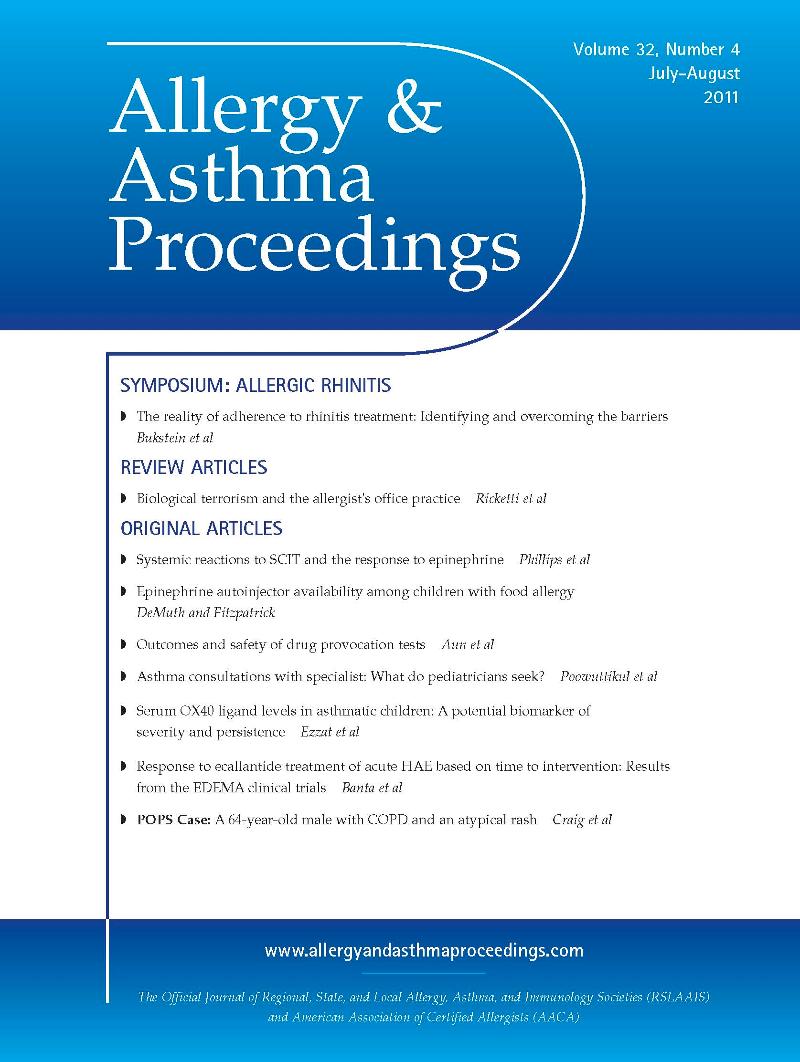 Hereditary angioedema: An instructive model of clinical description, molecular discovery, and development of new effective treatments