Latest News and Info

Urticaria Allergic rhinitis Mental health

ACARE & UCARE Accredited Centre

Mind, Mucosa and Skin

How chronic urticaria, allergic rhinitis and psychological wellbeing can affect one another

At the London Allergy and Immunology Centre, we take a whole-person view of allergy care. New research highlights that chronic spontaneous urticaria, nasal allergy symptoms and emotional wellbeing are often closely connected. This matters because better understanding of this link can help patients access more complete and effective care.

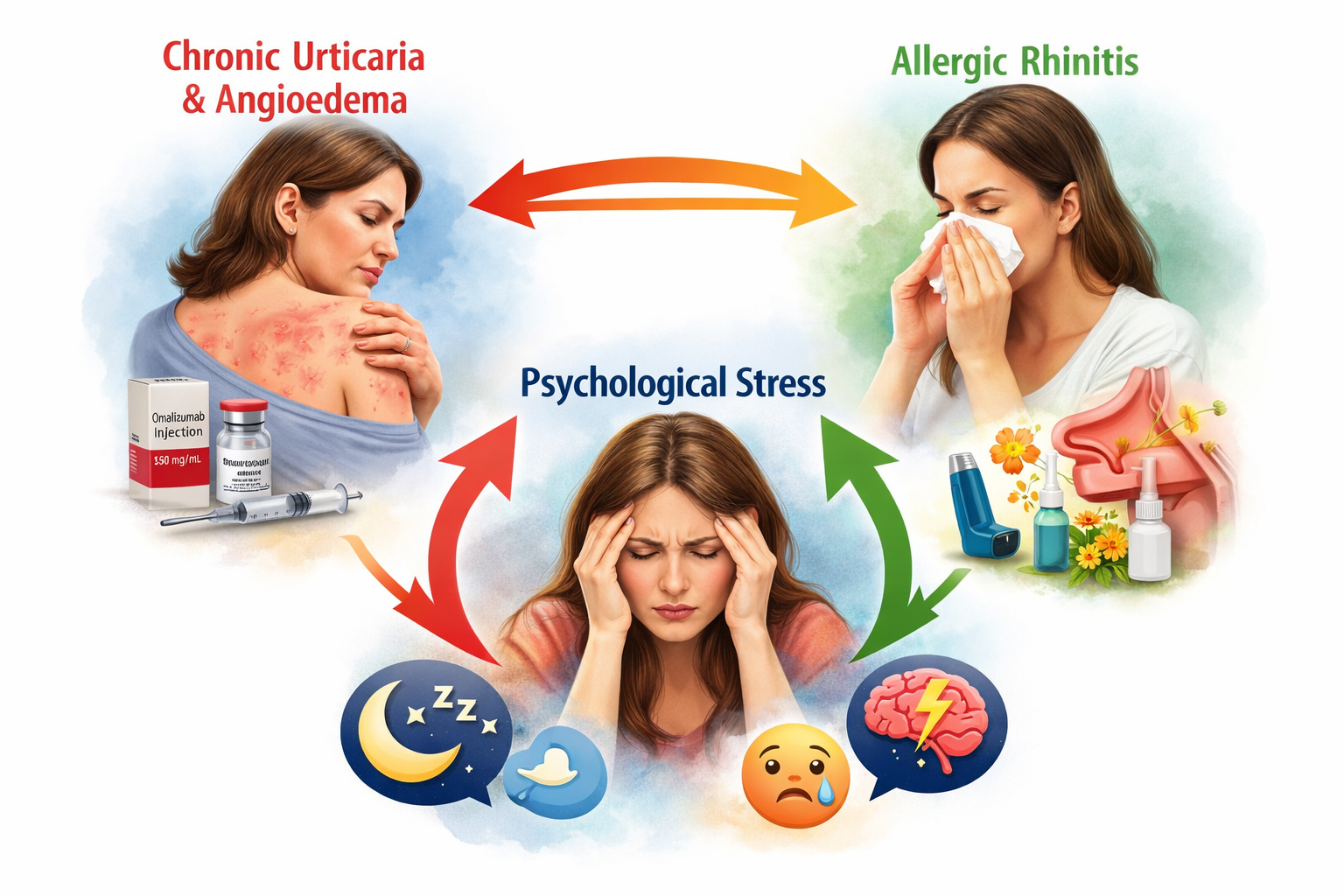
The link between chronic urticaria hives, allergic rhinitis symptoms and psychological stress in allergy patients

The connection between chronic urticaria, allergic rhinitis and psychological stress affecting overall wellbeing.

Why this matters for patients with allergy and urticaria

Chronic spontaneous urticaria, often called CSU, is more than a skin rash. It can disrupt sleep, affect confidence, interfere with work and family life, and create constant uncertainty because symptoms may flare without warning. When allergic rhinitis is also present, the burden can become even greater. Nasal blockage, sneezing, poor sleep and persistent irritation may add to fatigue and emotional strain.

A 2026 study explored this triad of mind, mucosa and skin and showed that psychiatric comorbidities were very common among adults with antihistamine-refractory CSU receiving omalizumab. The findings support a more integrated model of care in which allergy, skin symptoms, sleep and mental wellbeing are considered together rather than separately.

What is chronic spontaneous urticaria?

Urticaria is characterised by itchy raised wheals, angioedema, or both. When symptoms persist for more than 6 weeks, the condition is defined as chronic urticaria. If the rash and swelling occur without a clear external trigger, it is called chronic spontaneous urticaria.

Many patients improve with antihistamines, but some continue to have frequent symptoms despite treatment. In these more difficult cases, specialist assessment is important to confirm the diagnosis, identify associated conditions, assess disease activity properly and consider advanced treatment options such as omalizumab where appropriate.

Common features of CSU
– Recurrent itchy wheals
– Swelling of the lips, eyelids, hands or other areas
– Symptoms lasting longer than 6 weeks
– Unpredictable flare-ups
– Sleep disturbance and reduced quality of life

What did the 2026 study find?

The study reviewed 72 adults with antihistamine-refractory CSU who received omalizumab and had a formal psychiatric evaluation at a tertiary allergy centre between 2015 and 2025. Most participants were female, with a median age of 45 years. Psychiatric diagnoses were identified in 90.3% of the cohort who underwent psychiatric assessment.

The most frequent psychiatric diagnostic group was anxiety disorders, followed by mood disorders and sleep-wake disorders. Generalised anxiety disorder was the single most common diagnosis. The authors also reported that allergic rhinitis was present in more than half of the cohort, suggesting an important upper-airway allergic burden in this patient group.

Study finding Result
Patients included 72 adults with antihistamine-refractory CSU treated with omalizumab
Female participants 70.8%
Median age 45 years
Any psychiatric comorbidity 90.3%
Most common psychiatric group Anxiety disorders
Allergic rhinitis in the cohort 51.4%

The stress-skin connection in chronic urticaria

Patients often tell us that stress seems to aggravate their hives. This fits with what clinicians and researchers have observed for many years. Chronic urticaria can itself be stressful because flare-ups are unpredictable and visible. At the same time, stress may influence inflammatory pathways, itch perception and symptom severity, which can then further increase anxiety and distress. This creates a self-perpetuating cycle.

The 2026 paper describes this as a close interaction between psyche and skin. Biological pathways thought to be involved include stress-related neuroimmune signalling and mast cell-mediated inflammation. For patients, the important message is simple: the symptoms are real, the burden is real, and both the physical and emotional impact deserve proper attention.

This does not mean urticaria is “just stress”. Rather, it means stress, sleep problems, allergy symptoms and inflammation may all affect one another. That is why good management often requires more than a prescription alone.

Response to treatment in the study

Under omalizumab treatment, disease control improved significantly in this cohort. Median UAS7 scores fell from 42 before treatment to 7 at 24 months, while UCT scores rose from 0 to 14. These results support the role of specialist treatment in patients whose symptoms remain poorly controlled on antihistamines alone.

The authors also noted that improving urticaria control may bring psychological benefits and better emotional wellbeing. In practice, this reinforces the importance of identifying uncontrolled disease early and ensuring that patients receive an expert review rather than simply repeating ineffective treatment.

What this means for care at our ACARE and UCARE accredited centre

As an ACARE and UCARE accredited centre, we believe patients with chronic urticaria deserve expert, evidence-based and compassionate care. This includes careful diagnosis, assessment of angioedema and inducible triggers, review of coexisting allergic diseases such as allergic rhinitis and asthma, and evaluation of how symptoms are affecting sleep, mood and daily functioning.

Where appropriate, management may involve optimisation of antihistamines, consideration of advanced treatment pathways, investigation of associated conditions and practical support around trigger awareness, sleep hygiene and stress reduction. In some cases, collaboration with other professionals may be helpful so that care is truly patient-centred and holistic.

For patients, the key message is that severe hives and swelling are not only skin symptoms. They can affect confidence, sleep, relationships and quality of life. Recognising that full burden is an important step towards better outcomes.

When to seek specialist urticaria assessment

– Your hives or swelling have lasted longer than 6 weeks
– Symptoms keep returning despite antihistamines
– You have troublesome angioedema
– Sleep is regularly disturbed by itch or nasal symptoms
– You feel that stress, anxiety or low mood are making symptoms harder to manage
– You may have both urticaria and allergic rhinitis

Book an expert review

If you are living with chronic hives, angioedema or allergic rhinitis, our specialist team can help assess the full picture and create a personalised plan. We offer consultant-led allergy care with a focus on accurate diagnosis, better symptom control and improved quality of life.

Book an appointment

Reference

This article is based on the 2026 paper by Zeynep Yegin Katran, İsmet Bulut, Andaç Salman, Ali Baz, Galip Muzaffer Kürşat Küçükali and Özge Argın, which examined the relationship between chronic spontaneous urticaria, allergic rhinitis and psychiatric comorbidities in omalizumab-treated adults.

Please note that this blog is for general education and does not replace personalised medical advice. Diagnosis and treatment should always be based on an individual clinical assessment.

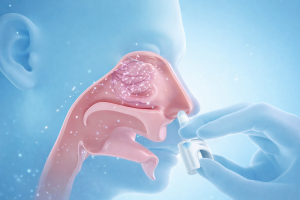
Adrenaline nasal spray inserted into a person’s nostril, with a semi-transparent side view revealing the nasal cavity and fine particles dispersing inside

Intranasal Adrenaline: The Needle-Free Revolution in Anaphylaxis Treatment

A nasal spray that delivers the same life-saving medication as an injection — no needles, no fear, no complicated technique. Here is everything you need to know about intranasal adrenaline, backed by the latest medical evidence.

Updated February 2026  |  Evidence-based guide for patients & carers

Adrenaline nasal spray inserted into a person’s nostril, with a semi-transparent side view revealing the nasal cavity and fine particles dispersing inside

Adrenaline nasal spray being administered into the nasal passage, highlighting the internal structures and distribution of particles

Imagine being at a restaurant when a friend with a severe food allergy suddenly develops anaphylaxis — their throat tightening, skin erupting in hives, blood pressure plummeting. You reach for their emergency medication, but it is a needle-based auto-injector. If you or your friend have a fear of needles, hesitation in those crucial seconds could be fatal.

That scenario has driven decades of research into alternative ways to administer adrenaline, the only first-line medication proven to reverse a severe allergic reaction. In August 2024, the U.S. Food and Drug Administration (FDA) approved the first-ever nasal spray formulation of adrenaline for the emergency treatment of anaphylaxis — a milestone described by allergists worldwide as a potential game-changer for patient safety.

In Europe, the picture is evolving rapidly. The European Medicines Agency approved the first nasal spray formulation of adrenaline in August 2023, and the UK’s Medicines and Healthcare products Regulatory Agency (MHRA) followed with its own approval in July 2025 — making the UK the first country in the region to license a needle-free emergency treatment for anaphylaxis.

As in the US, allergists and patient advocates across Europe have welcomed the development as a significant step forward for people who struggle with auto-injectors due to needle phobia, dexterity issues, or the stress of an acute allergic reaction — though clinicians stress that decisions about which formulation is most appropriate should be made on an individual basis.

This article explains what intranasal adrenaline is, what the science says, who it is designed for, and what it means for people living with severe allergies.

~5%
of people in the US have experienced anaphylaxis at some point in their lives
225+
deaths per year in the US are attributed to anaphylaxis
~52%
of adults with severe food allergy have actually been prescribed an adrenaline auto-injector

What Is Anaphylaxis — And Why Does Timing Matter So Much?

Anaphylaxis is a severe, potentially life-threatening allergic reaction. It can be triggered by foods (such as peanuts, tree nuts, shellfish, or milk), insect stings, medications, latex, and sometimes exercise. The reaction is rapid — symptoms can escalate within minutes — and involves multiple organ systems simultaneously: the skin, airway, circulatory system, and gastrointestinal tract.

The World Allergy Organization estimates that anaphylaxis occurs globally at a rate of 50 to 112 episodes per 100,000 people per year, and among high-risk individuals, recurrence rates range from 26% to 54%. Despite how common it is, anaphylaxis is consistently under-treated, particularly in out-of-hospital settings. Delayed or absent adrenaline administration is the most common factor in anaphylaxis-related deaths.

“Delayed administration of adrenaline can lead to more severe outcomes such as prolonged reactions, hypotension, and increased mortality.”
— Emergency Medicine Research & Analysis, 2025

Adrenaline counters anaphylaxis by constricting blood vessels, relaxing the airways, reducing hives and swelling, and stimulating the heart. It works within minutes and remains the only medication endorsed as first-line treatment by every major international allergy guideline, including those from the World Allergy Organization, the European Academy of Allergy and Clinical Immunology (EAACI), and the American Academy of Allergy, Asthma & Immunology (AAAAI).

The Problem With Traditional Auto-Injectors

For decades, the standard method of emergency adrenaline delivery has been the auto-injector — a spring-loaded device that injects the medication intramuscularly (usually into the outer thigh). Auto-injectors are highly effective, but they come with real-world barriers that have always troubled clinicians and patients alike.

Common barriers to auto-injector use

  • Needle phobia — one of the most frequently cited reasons for hesitation
  • Fear of accidentally injuring someone (especially in bystander situations)
  • Needle length variability: in patients with obesity, the needle may not reach the muscle
  • Risk of incorrect technique under panic conditions
  • Relatively short shelf life; must be stored at specific temperatures
  • High cost and barriers to access in some countries
  • Inconvenient size and shape — many patients leave them at home

A 2022 US survey found that approximately 36% of adults with severe food allergy believed adrenaline auto-injectors could cause life-threatening side effects — a misconception that leads to dangerous hesitation. Meanwhile, researchers have long observed that needle phobia is widespread, and that parents in particular are reluctant to inject a child or a loved one.

These barriers have directly motivated the search for a needle-free alternative that can deliver adrenaline rapidly, reliably, and without any injection technique at all.

How Does Intranasal Adrenaline Work?

The nasal route has been used for decades to deliver medications — from decongestants to hormone therapies — because the nasal mucosa is richly supplied with blood vessels and can absorb drugs quickly into the systemic circulation.

Intranasal adrenaline is delivered as a fine spray directly into one nostril. The medication crosses the nasal lining into the bloodstream without any injection. Clinical research shows that when the correct formulation is used, the speed of absorption is comparable to — and in some formulations, faster than — intramuscular injection.

A 2025 systematic review presented at the European Emergency Medicine Congress (Vienna) analysed five clinical studies comparing intranasal and intramuscular adrenaline. The researchers found that intranasal adrenaline achieved its peak plasma concentration in 2.5 to 30 minutes, compared to 9 to 45 minutes for the intramuscular route — suggesting that, depending on the formulation and individual nasal characteristics, the nasal spray can reach the bloodstream at least as rapidly, and sometimes more rapidly.

“Nasal sprays could become a suitable and equally effective needle-free alternative to the EpiPen, which is the current treatment for anaphylaxis.”
— Dr. Danielle Furness, University of Buckingham, European Emergency Medicine Congress 2025

What the Clinical Evidence Shows

The FDA’s 2024 approval of the first intranasal adrenaline product was supported by rigorous pharmacokinetic and clinical trial data. Here is what current medical research tells us:

Comparable effectiveness to injection

A landmark Phase 3 prospective trial showed that all 15 participants who received intranasal adrenaline during an oral food challenge responded successfully to a single dose, with no requirement for a second dose to control the reaction. Separate real-world data collected from over 500 patients treated by clinicians in the United States showed an approximately 89% success rate with a single dose — a figure that closely matches the historic success rates of intramuscular injection and autoinjectors across published meta-analyses.

Faster or comparable absorption

Pharmacokinetic studies have consistently shown that well-formulated intranasal adrenaline achieves plasma levels similar to or higher than intramuscular adrenaline. The 2025 dose-optimisation study published in the Journal of Allergy and Clinical Immunology: Global confirmed that nasal powder formulations in particular enable fast, high absorption within the short therapeutic window critical for anaphylaxis treatment.

Interestingly, nasal congestion does not appear to be a barrier

One concern researchers initially raised was whether nasal congestion — common during an allergic reaction — might reduce absorption. However, clinical studies have actually observed that nasal congestion can enhance adrenaline absorption through the nasal mucosa, likely due to increased local blood flow, addressing a key theoretical concern about the nasal route.

Well-tolerated safety profile

Published research in peer-reviewed journals has consistently described intranasal adrenaline as well tolerated. The side effect profile mirrors that of injected adrenaline (such as transient increase in heart rate and mild anxiety) but avoids injection-site pain, bruising, and the risk of inadvertent intravenous injection. A 2024 review in the Journal of Allergy and Clinical Immunology found no evidence of severe adverse reactions specific to the nasal route.

Effective for children and adults

A 2025 review published in Current Opinion in Allergy and Clinical Immunology specifically examined the evidence for intranasal adrenaline in the paediatric setting. The authors concluded that it represents a “promising, well-tolerated option that could significantly improve the accessibility and effectiveness of anaphylaxis management” in children — a population where needle fear is particularly acute and accurate injection technique especially difficult to achieve under stress.

Intranasal Adrenaline vs. Auto-Injector: A Quick Comparison

Feature Intranasal Spray Auto-Injector (Injection)
Delivery method Nasal spray — no needles Intramuscular injection (thigh)
Needle required No Yes
Speed of absorption 2.5–30 min (comparable or faster) 9–45 min
Ease of use under stress High — single-step nose spray Moderate — requires correct technique
Needle phobia barrier Eliminated Significant for many patients
Body weight variability Not affected by adipose tissue Needle may not reach muscle in obese patients
FDA-approved for anaphylaxis Yes (2024, adults & children ≥30 kg) Yes (long-established)
Suitable as first-line treatment Yes — per 2024 GA²LEN consensus Yes — longstanding first-line standard

Who Can Use Intranasal Adrenaline?

Following FDA approval in August 2024, intranasal adrenaline is indicated for the emergency treatment of Type 1 allergic reactions, including anaphylaxis, in adults and children weighing at least 30 kilograms (approximately 66 pounds). It is intended for use as an emergency rescue treatment — not a preventive or routine medication.

The approved dosing protocol (per the 2024 GA²LEN anaphylaxis consensus tool) is one spray (2 mg adrenaline) into one nostril. If symptoms do not improve or worsen after 5 minutes, a second dose may be administered in the same nostril using a new spray device.

⚠ Important: Call emergency services immediately

Intranasal adrenaline — like all forms of emergency adrenaline — is a bridge to definitive medical care, not a substitute for it. Anyone who receives adrenaline for anaphylaxis must be taken to an emergency department immediately, even if they feel better. Biphasic reactions (a second wave of symptoms hours later) can occur without warning. Always call emergency services as soon as possible.

What Do Current Allergy Guidelines Say?

The 2024 GA²LEN Anaphylaxis Consensus Report — a major international agreement involving multiple allergy organisations — formally incorporated intranasal adrenaline into its anaphylaxis clinical support tool alongside intramuscular auto-injectors. This reflects a significant shift in global medical thinking.

The Resuscitation Council UK’s updated anaphylaxis evidence review (2025) continues to establish adrenaline as the unambiguous first-line treatment for anaphylaxis, and notes the evolving evidence base for needle-free delivery methods. Researchers in the UK have called for intranasal adrenaline to be incorporated into national guidelines “once strong, real-world evidence supports its safety and effectiveness” — with initial rollout to include close monitoring and systematic outcome reporting.

The EAACI (European Academy of Allergy and Clinical Immunology), which last updated its major anaphylaxis guidelines in 2021, is expected to incorporate needle-free alternatives in forthcoming revisions as real-world evidence continues to accumulate.

Why This Matters for Everyday People With Allergies

For patients and their families, the practical implications of a nasal spray option are significant. Consider the following scenarios where intranasal delivery could be transformational:

Children at school: Teachers and school staff are sometimes reluctant to use an auto-injector on a child experiencing anaphylaxis, even with training, due to fear of the needle. A nasal spray could be easier to administer confidently by non-medical personnel in an emergency.

Adolescents managing their own allergy: Teenagers are a high-risk group for anaphylaxis fatalities precisely because they often fail to carry or use their adrenaline auto-injector. A spray that fits in a pocket and involves no needle may meaningfully improve adherence.

Bystanders at public events: In out-of-hospital settings — restaurants, airports, sporting venues — the likelihood of a willing bystander using an auto-injector on a stranger is low. The nasal route dramatically lowers the psychological barrier to intervention.

Patients with obesity: Studies have shown that standard auto-injector needle lengths may fail to reach the muscle in patients with greater adipose tissue, resulting in subcutaneous rather than intramuscular delivery. The nasal route is unaffected by body composition.

Are There Any Limitations or Concerns?

While the evidence is encouraging, researchers and clinicians urge balanced perspective. Intranasal adrenaline is a powerful advance, but several areas warrant ongoing attention:

Weight restriction: The current approval covers patients weighing at least 30 kilograms. Smaller children — including infants and toddlers, who are a particularly high-risk group — cannot yet use the approved product, and different dosing considerations apply.

Real-world evidence is still maturing: Although the real-world data collected in 2025 from over 500 patients is highly encouraging, the clinical trials supporting approval included relatively small populations. Larger post-market studies will be important to confirm long-term safety and effectiveness across diverse patient groups.

Not a replacement for medical education: Patients and carers still need clear instruction on when and how to use any adrenaline device, whether injection or nasal spray. Training and anaphylaxis action plans remain essential.

Access and cost: As a recently approved product in the United States, insurance coverage and affordability may vary. International regulatory approvals are still pending in many countries.

What Should You Do If You or Someone You Know Has Severe Allergies?

Whether you opt for an auto-injector, an intranasal spray, or carry both, the single most important principle remains unchanged: adrenaline must be accessible, and you must know how to use it. Here are steps every person with a serious allergy — or anyone who cares for one — should take:

Practical steps for people at risk of anaphylaxis

  • Discuss all available adrenaline options with your allergist or GP, including intranasal sprays
  • Always carry your prescribed emergency adrenaline — and ensure it has not expired
  • Have a written anaphylaxis action plan and share it with family, school, and workplace
  • Know the early signs of anaphylaxis: hives, throat tightening, dizziness, vomiting, difficulty breathing
  • Use adrenaline at the first sign of anaphylaxis — do not wait to see if antihistamines work
  • Call emergency services (999 / 112 / 911) immediately after giving adrenaline
  • Go to hospital even if symptoms improve — biphasic reactions can occur hours later
  • Review and practise your adrenaline technique or spray technique regularly

The Bottom Line

Intranasal adrenaline represents one of the most meaningful advances in allergy emergency medicine in a generation. For the first time, patients and bystanders have access to an FDA-approved, needle-free option to treat a life-threatening allergic reaction — one that the latest clinical evidence shows to be at least as effective as traditional injection for adults and most children.

It will not replace conventional auto-injectors overnight, and the global medical community rightly calls for further real-world evidence and guideline integration. But for the millions of people who carry adrenaline every day — and the many more who do not carry it at all — this innovation has the potential to save lives that might otherwise be lost to hesitation, needle phobia, or simply not having the device at hand.

Speak to your doctor or allergist to find out whether intranasal adrenaline is the right option for you or your child. The most important thing is that when anaphylaxis strikes, you are prepared — and ready to act.


Sources & Further Reading

  1. Crescioli G, et al. “Adrenaline nasal spray for the treatment of anaphylaxis: perspectives in paediatrics.” Current Opinion in Allergy and Clinical Immunology. 2025;25(6):511–517.
  2. Ebisawa M, Muraro A, Worm M, et al. “Optimizing Adrenaline Administration in Anaphylaxis: Clinical Practice Considerations and Safety Insights.” Clinical and Translational Allergy. 2025;15(8):e70085.
  3. Furness D, et al. Systematic literature review on intranasal vs intramuscular adrenaline for anaphylaxis. Presented at: European Emergency Medicine Congress; September 2025; Vienna, Austria.
  4. Lapidot T, Tal Y, Megiddo D, et al. “First-in-class intranasal adrenaline spray for anaphylaxis: Dose finding clinical study.” Journal of Allergy and Clinical Immunology: Global. 2025;4(3):100487.
  5. Campbell RL, et al. “Anaphylaxis definition, overview, and clinical support tool: 2024 consensus report — a GA²LEN project.” Journal of Allergy and Clinical Immunology. 2025. doi:10.1016/j.jaci.2025.00072.
  6. U.S. Food and Drug Administration. “FDA approves first nasal spray for treatment of anaphylaxis.” August 2024. fda.gov
  7. Cardona V, Ansotegui IJ, Ebisawa M, et al. “World Allergy Organization Anaphylaxis Guidance 2020.” World Allergy Organization Journal. 2020;13(10):100472.
  8. Dodd A, et al. “Evidence update for the treatment of anaphylaxis.” Resuscitation. Resuscitation Council UK, 2025.

Medical disclaimer: This article is written for general information purposes only and does not constitute medical advice. The information presented reflects peer-reviewed literature and publicly available guidelines available as of early 2026. Always consult a qualified healthcare professional — such as your GP, allergist, or emergency physician — before making decisions about your treatment or your child’s treatment. In an emergency, always call your local emergency services.

 

© 2026 · Evidence-based health content for the general public · Always consult a qualified medical professional for personal health advice.


New Gut Mast Cells Mediator for Severe Food Allergic Reactions

Scientists Discover a New Gut Mast Cell Mediator for Severe Food Allergic Reactions

A groundbreaking study published in Science has identified a previously underappreciated biological pathway behind severe food allergy reactions and anaphylaxis.

Gut mast cells linked to severe food allergy and anaphylaxis through leukotriene release

Gut mast cells and leukotriene release in severe food allergy and anaphylaxis.

Researchers discovered that specialised mast cells in the gut lining can trigger life-threatening allergic reactions through powerful inflammatory chemicals – even before allergens enter the bloodstream.

The research, available via PubMed Central, helps explain why swallowing even a tiny amount of a food allergen can rapidly cause whole-body symptoms.


Why This Discovery Matters for Severe Food Allergy

Food allergies affect millions of people in the UK and worldwide. In susceptible individuals, exposure to even trace amounts of allergenic food can trigger anaphylaxis — a medical emergency characterised by:

  • Difficulty breathing
  • Swelling of the throat or tongue
  • A sudden drop in blood pressure
  • Dizziness or fainting
  • Skin reactions such as urticaria (hives)

Although the mechanisms behind injected or inhaled allergen reactions are well described, the biological pathways driving gut-initiated anaphylaxis have remained poorly understood.

Key scientific question: What initiates systemic anaphylaxis when an allergen is eaten?


The Role of Gut Mast Cells in Food-Induced Anaphylaxis

Mast cells are tissue-resident immune cells central to IgE-mediated allergic reactions. Upon allergen exposure, IgE antibodies cross-link on the mast cell surface, triggering rapid mediator release.

The study demonstrates that intestinal mast cells differ significantly from mast cells found in the skin or lungs.

Distinct Characteristics of Intestinal Mast Cells

  • Reside directly within the intestinal epithelial layer
  • Are shaped by signals from surrounding gut epithelial cells
  • Produce comparatively lower levels of histamine
  • Generate substantially higher levels of leukotrienes

This unique gut mast cell phenotype suggests that food-triggered allergic reactions follow a distinct biological pathway compared with parenteral allergen exposure.


Leukotrienes – A Major Driver of Severe Food Allergy Reactions

Leukotrienes are lipid-derived inflammatory mediators synthesised via the 5-lipoxygenase pathway. They are well recognised in asthma for promoting airway narrowing, vascular permeability, and tissue inflammation.

The study found that during food-induced anaphylaxis:

  • Leukotrienes are dominant mediators of systemic reaction severity
  • Pharmacological blockade of leukotriene synthesis significantly reduced severe reactions in experimental models
  • Antihistamines alone were less effective in preventing systemic symptoms

By contrast, allergic reactions triggered by injected allergens relied more heavily on histamine release.

This may explain why antihistamines are often insufficient in preventing severe food allergy reactions.


How Food-Induced Anaphylaxis May Begin in the Gut

Based on the experimental findings, researchers propose the following mechanism:

  1. A food allergen is ingested
  2. The allergen crosses the intestinal epithelial barrier
  3. IgE antibodies activate mast cells within the gut lining
  4. Gut mast cells release large quantities of leukotrienes
  5. Systemic inflammation develops, leading to anaphylaxis

This model reframes severe food allergy as a gut-initiated immune event rather than purely a circulating allergic response.


Why Some Food Allergy Reactions Are More Severe

The research suggests that severity of food-induced anaphylaxis may depend on:

  • Mast cell density within the intestinal mucosa
  • Magnitude of leukotriene production
  • Integrity of the intestinal barrier
  • Local immune and epithelial signalling pathways

These biological variables may explain why some individuals experience mild oral symptoms while others develop life-threatening systemic reactions.


Implications for Future Food Allergy Treatment

An important clinical implication is that leukotriene-targeting medications already exist and are widely used in asthma management.

In experimental models:

  • Blocking leukotriene pathways significantly reduced reaction severity
  • Combined targeting of histamine and leukotrienes may offer enhanced protection

However:

  • Current evidence is largely based on animal models
  • Human clinical trials are required
  • Standard management guidelines remain unchanged

Patients with diagnosed severe food allergy must continue to:

  • Avoid known trigger foods
  • Carry adrenaline auto-injectors at all times
  • Seek urgent medical attention if symptoms occur

The Gut as a Central Immune Organ in Allergy

This discovery reinforces the concept that the intestine functions as a major immune organ. Constant exposure to dietary proteins and microbes requires careful immune regulation. When tolerance mechanisms fail, severe food allergic reactions may result.

Understanding the role of gut mast cells and leukotrienes in food-induced anaphylaxis may transform future approaches to risk prediction, prevention, and targeted therapy.


Key Take-Home Messages

  • Gut mast cells play a central role in severe food allergy
  • Leukotrienes — not just histamine — drive food-induced anaphylaxis
  • Targeting leukotriene pathways represents a promising therapeutic strategy
  • Current emergency management recommendations remain essential

This research provides a major step forward in understanding the biological mechanisms underlying life-threatening food allergic reactions.

baked-milk-oral-immunotherapy-cows-milk-allergy

Baked Milk Oral Immunotherapy: A New Advance in Cow’s Milk Allergy Treatment

Cow’s milk allergy (CMA) is one of the most common food allergies in children and can have a significant impact on daily life, nutrition, and family wellbeing. Strict milk avoidance is challenging, as milk proteins are present in many everyday foods, particularly baked products.A randomised clinical trial published in January 2025 has provided encouraging evidence that baked milk oral immunotherapy (BMOIT) may offer a safer and effective treatment option for selected patients with cow’s milk allergy.

At London Allergy and Immunology Centre, we closely monitor emerging research to ensure our patients benefit from the most up-to-date, evidence-based allergy care.

What Is Baked Milk Oral Immunotherapy (BMOIT)?

Oral immunotherapy (OIT) is a treatment approach designed to desensitise the immune system by exposing patients to very small, gradually increasing amounts of an allergen under specialist supervision.

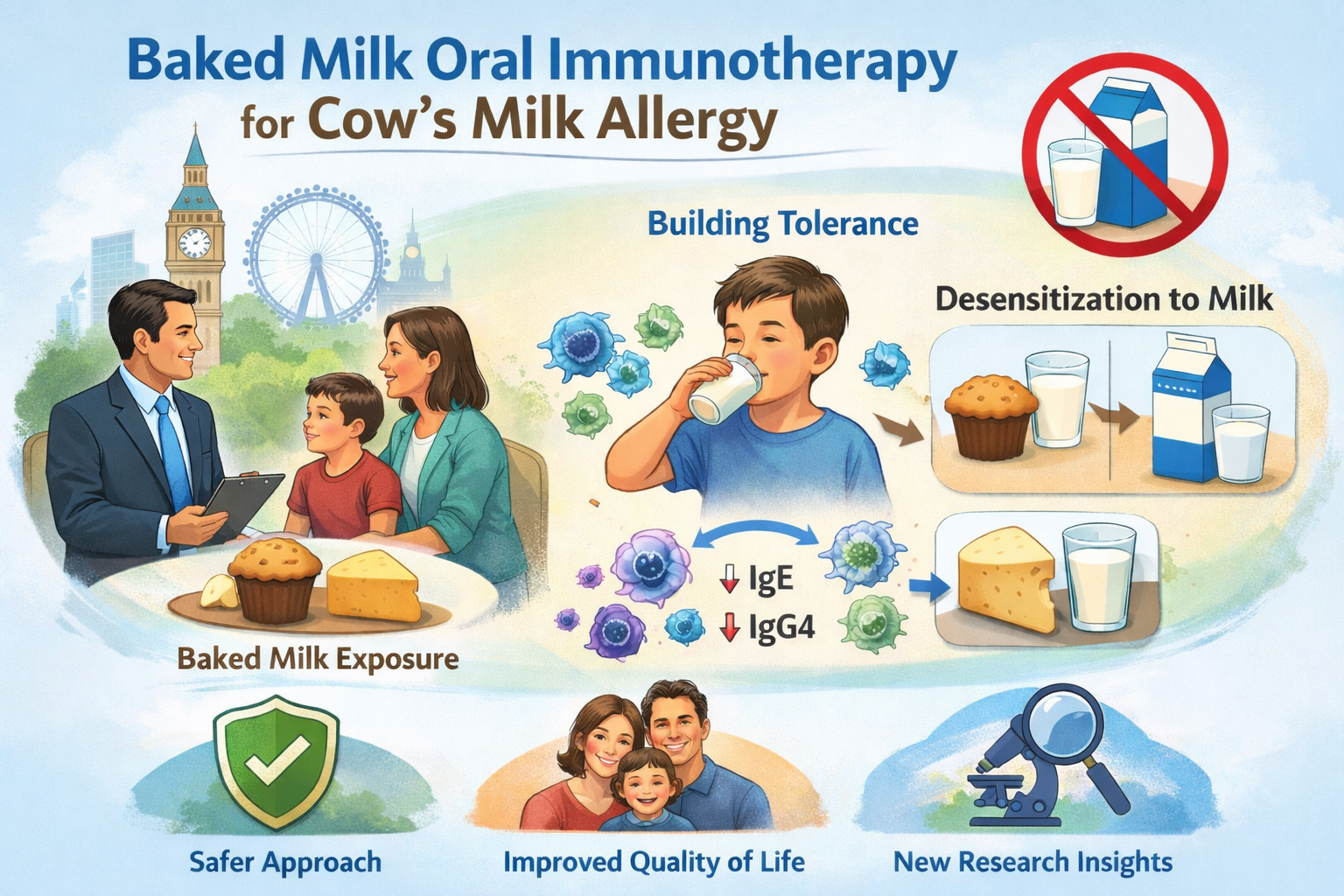
Baked milk oral immunotherapy for cow’s milk allergy: a UK doctor consulting a mother and child, child drinking baked milk, immune system changes with IgE and IgG4 antibodies, desensitisation from baked milk to fresh milk, London landmarks in the background, and icons for safety, improved quality of life, and research insights

Baked milk oral immunotherapy (BMOIT) helps children with cow’s milk allergy build tolerance safely, guided by a UK allergy consultant, with immune system changes and improved quality of life

Baked milk OIT differs from traditional milk OIT because it uses milk that has been extensively heated, such as milk baked into muffins or cakes. Heating changes the structure of milk proteins, making them less allergenic while still capable of training the immune system to tolerate milk.

Many children with cow’s milk allergy can already tolerate baked milk, even if they react to fresh milk. This makes baked milk an attractive starting point for immunotherapy.

Key Findings From the January 2025 Study

The study, titled “Clinical and immunological outcomes after randomized trial of baked milk oral immunotherapy for milk allergy”, followed children aged 3 to 18 years with confirmed cow’s milk allergy.

  • Baked milk OIT was well tolerated, with most reactions being mild
  • 70% of participants achieved desensitisation to baked milk
  • 37% also developed tolerance to unheated (fresh) milk
  • No severe allergic reactions were reported during treatment

These findings suggest that baked milk oral immunotherapy may safely increase milk tolerance while reducing the risks often associated with traditional milk OIT.

How Does Baked Milk OIT Affect the Immune System?

In addition to clinical outcomes, researchers analysed immune markers to understand how tolerance develops during baked milk OIT.

  • Reduction in milk-specific IgE antibodies, which trigger allergic reactions
  • Increase in IgG4 antibodies, associated with immune tolerance
  • Favourable changes in immune cells involved in regulating allergic inflammation

These immunological changes confirm that baked milk OIT actively modifies the allergic immune response rather than simply masking symptoms.

Why This Research Matters for Families

Living with cow’s milk allergy can lead to anxiety about accidental exposure, nutritional concerns, and social challenges at school, childcare, and family events.

Baked milk oral immunotherapy may help by:

  • Increasing safety margins against accidental milk exposure
  • Expanding dietary options
  • Improving quality of life for children and their families

While not every patient is suitable for oral immunotherapy, this approach offers new hope for carefully selected individuals.

Is Baked Milk Oral Immunotherapy Available?

Baked milk oral immunotherapy should only be performed under specialist medical supervision. It is not suitable for all patients with cow’s milk allergy and requires careful assessment, monitoring, and long-term follow-up.

At London Allergy and Immunology Centre, we assess each patient individually to determine whether oral immunotherapy, including baked milk protocols, is appropriate and safe.

Expert Care at London Allergy and Immunology Centre

We specialise in the diagnosis and management of food allergies, including cow’s milk allergy, using the latest diagnostic tools and evidence-based treatments.

  • Comprehensive allergy assessments
  • Supervised food challenges
  • Personalised allergy management plans
  • Expert advice on emerging treatments such as oral immunotherapy

If your child has a cow’s milk allergy and you would like to explore current or future treatment options, our specialist team is here to help.

To book a consultation, please contact London Allergy and Immunology Centre.


This article is for educational purposes only and does not replace individual medical advice.

Read More »

Eczema and multiple food allergies

Early Eczema and Food Allergy Risk in Children: 2026 Medical Insights for Parents and Clinicians

The relationship between eczema (atopic dermatitis) and food allergies in children is one of the most important areas in modern allergy prevention. New research published in 2025, supported by emerging 2026 data, shows that the age at which eczema begins plays a critical role in determining whether a child develops food allergies or respiratory allergic diseases.

Key takeaway: Eczema starting in early infancy significantly increases the risk of multiple food allergies, while later onset is more closely linked to asthma and hay fever.

Key Findings from Recent Research

A large study involving 1,309 children under 12 years with diagnosed food allergies provides strong evidence linking eczema timing to allergic outcomes:

  • 77% of children with food allergies had eczema
  • Over 80% developed eczema within the first year of life
  • Earlier onset strongly increases the likelihood of multiple food allergies
  • Eczema starting after 12 months reduces risk of multiple food allergies by 43%
  • Early-onset eczema is particularly associated with milk and egg allergy
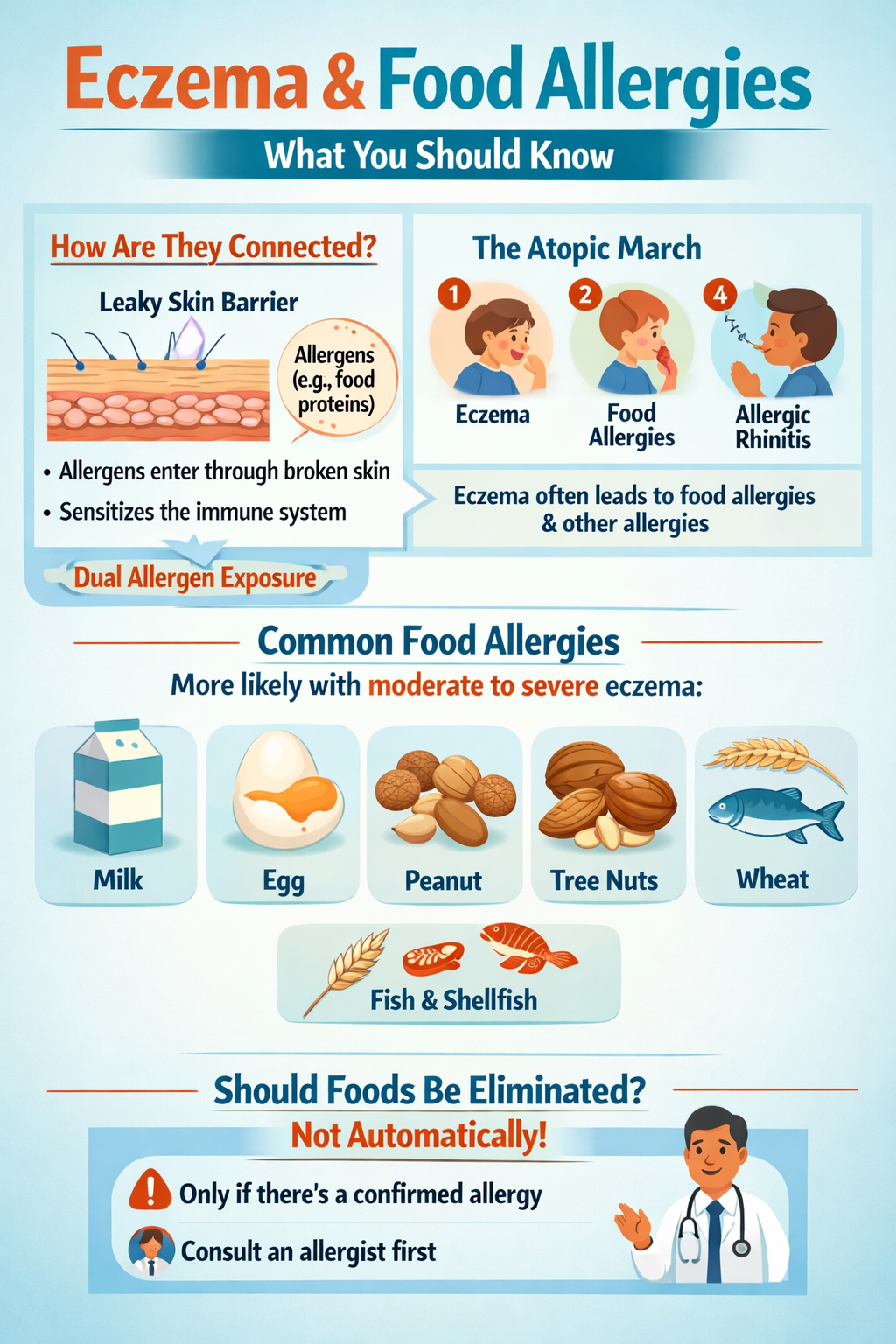
Relationship between eczema onset and food allergy risk in children

Why Early-Onset Eczema Increases Food Allergy Risk

Recent advances in allergy science support the skin barrier hypothesis, which explains how eczema contributes to food allergy development. In infants, the skin acts as a critical protective barrier. When this barrier is disrupted, allergens can enter the body through the skin rather than through the digestive system.

Clinical insight: Allergen exposure through inflamed skin may lead to immune sensitisation, while early oral exposure may promote tolerance.

  • Impaired skin barrier allows allergens (e.g. milk, egg) to penetrate
  • Triggers IgE-mediated immune responses
  • Leads to higher risk of multiple food allergies
  • Strongly associated with filaggrin (FLG) gene mutations

Role of the Skin Microbiome (2026 Update)

Emerging 2026 research highlights the importance of the skin microbiome in eczema and allergy development. Children with eczema often show increased colonisation with Staphylococcus aureus, which can worsen inflammation and further damage the skin barrier.

  • Microbial imbalance increases skin inflammation
  • Promotes allergic sensitisation
  • May influence long-term immune development

Late-Onset Eczema and Respiratory Allergies

In contrast to early eczema, children who develop eczema after 12 months show a different allergic pattern:

  • Higher likelihood of developing asthma
  • Increased risk of allergic rhinitis (hay fever)
  • Less association with multiple food allergies

Interpretation: This suggests distinct allergic pathways, refining the traditional concept of the “atopic march”.

What This Means for Prevention (2026 Guidance)

Modern allergy guidelines emphasise early intervention for infants at high risk. Identifying eczema early provides an opportunity to reduce the likelihood of developing food allergies.

Recommended Strategies

  • Introduce allergenic foods early under medical supervision
  • Maintain consistent skin hydration using emollients
  • Treat eczema proactively to reduce inflammation
  • Seek specialist allergy assessment in moderate-to-severe cases
  • Monitor for early signs of food reactions

Important: Early identification of high-risk infants allows for targeted prevention strategies and improved long-term outcomes.

Summary

The timing of eczema onset is a powerful predictor of allergic disease patterns:

  • Early eczema (≤3 months): High risk of multiple food allergies
  • Later eczema (>12 months): Higher risk of asthma and hay fever

Recognising these patterns enables clinicians and parents to take proactive steps in preventing allergic disease progression.

Reference: Hussien H, Moore DL, Nimri S, et al. The age of eczema onset and multiple food allergies. Ann Allergy Asthma Immunol. Published online December 3, 2025.


Copyright 2026. All Rights Reserved

LAIC Main Menu