Latest News and Info

Allergy Safety in Schools 2026: New DfE Guidance Explained


Allergy News & Guidance

New Statutory Guidance on Allergy Safety in Schools: What Parents and Schools Need to Know

Published 6 July 2026 by the Department for Education | Applies to England

New statutory allergy safety guidance for schools in England 2026, highlighting school allergy policies, staff training and Individual Healthcare Plans for pupils with allergies.

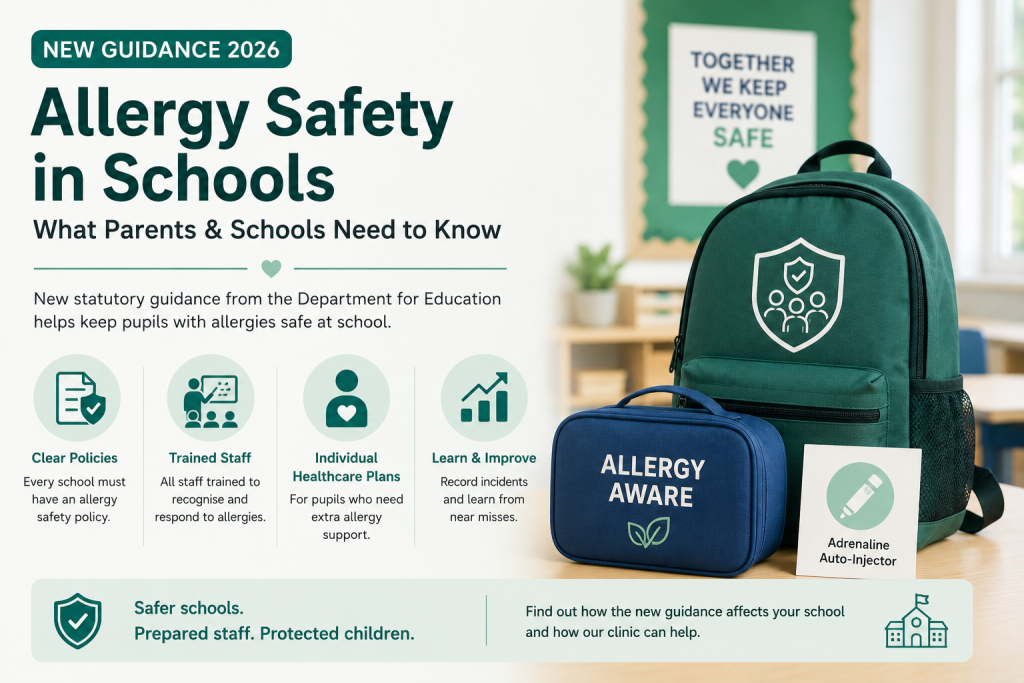
The Department for Education’s 2026 statutory guidance introduces new requirements for allergy safety in schools, including allergy policies, staff training and Individual Healthcare Plans (IHPs).

For the first time, schools in England now have statutory guidance on allergy safety, published by the Department for Education (DfE) on 6 July 2026. If your child lives with a food allergy or other allergic condition, this is a significant step towards safer classrooms, playgrounds and lunch halls. Here’s what the new guidance means, and how our allergy clinic can help your family and school meet it.

What Is the Allergy Safety in Schools Guidance?

The new guidance sets out what schools must do to support pupils with allergies. It applies to governing bodies of local-authority-maintained schools (including special schools), pupil referral units, and academies and free schools. Independent schools are not yet required to follow it, though the government has signalled it intends to bring allergy safety requirements into their regulatory standards too.

Key Requirements for Schools

Under the statutory guidance, schools must:

  • Create and publish an allergy safety policy — a clear, written approach to preventing and managing allergic reactions on site.
  • Provide allergy safety training for all staff — not just first-aiders, so that everyone knows how to recognise and respond to a reaction.
  • Identify pupils who need an Individual Healthcare Plan (IHP) — a personalised plan for managing a child’s allergy day to day.
  • Record and learn from serious incidents and near misses — so schools can continuously improve safety, not just react after an emergency.

The DfE has also released two supporting resources: an allergy safety policy template and an Individual Healthcare Plan template, along with guidance on record-keeping and training for the use of adrenaline auto-injectors (AAIs) in schools.

Why This Matters

Food allergies and anaphylaxis are a daily reality for many families, and school is often where a child spends the most time away from home. Clear policies, trained staff and a well-completed Individual Healthcare Plan can make the difference between a close call and a genuine emergency. This guidance gives schools a consistent, structured framework to work from rather than leaving allergy management to chance or to individual school policy alone.

How We Can Help

Our allergy clinic supports both families and schools in putting this guidance into practice. We can help with:

  • Completing an accurate, medically-informed Individual Healthcare Plan for your child
  • Confirming allergy diagnoses through proper testing, so IHPs are based on solid clinical evidence
  • Advising on adrenaline auto-injector prescriptions, technique and in-date supply for school
  • Providing letters and clinical summaries schools can use to inform their allergy safety policy
  • Guidance for school staff on recognising and responding to allergic reactions

Book an appointment: If your child has a suspected or diagnosed allergy and you’d like help preparing for the new school year under this guidance, get in touch with our clinic team today. We’ll work with you to make sure your child’s Individual Healthcare Plan is ready, current and school-approved.

Useful Resources

This article is for general information only and does not replace individual medical advice. Speak to our clinical team about your child’s specific allergy management needs.


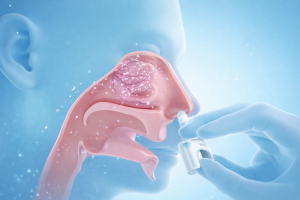
Adrenaline nasal spray inserted into a person’s nostril, with a semi-transparent side view revealing the nasal cavity and fine particles dispersing inside

Intranasal Adrenaline: The Needle-Free Revolution in Anaphylaxis Treatment

A nasal spray that delivers the same life-saving medication as an injection — no needles, no fear, no complicated technique. Here is everything you need to know about intranasal adrenaline, backed by the latest medical evidence.

Updated February 2026  |  Evidence-based guide for patients & carers

Adrenaline nasal spray inserted into a person’s nostril, with a semi-transparent side view revealing the nasal cavity and fine particles dispersing inside

Adrenaline nasal spray being administered into the nasal passage, highlighting the internal structures and distribution of particles

Imagine being at a restaurant when a friend with a severe food allergy suddenly develops anaphylaxis — their throat tightening, skin erupting in hives, blood pressure plummeting. You reach for their emergency medication, but it is a needle-based auto-injector. If you or your friend have a fear of needles, hesitation in those crucial seconds could be fatal.

That scenario has driven decades of research into alternative ways to administer adrenaline, the only first-line medication proven to reverse a severe allergic reaction. In August 2024, the U.S. Food and Drug Administration (FDA) approved the first-ever nasal spray formulation of adrenaline for the emergency treatment of anaphylaxis — a milestone described by allergists worldwide as a potential game-changer for patient safety.

In Europe, the picture is evolving rapidly. The European Medicines Agency approved the first nasal spray formulation of adrenaline in August 2023, and the UK’s Medicines and Healthcare products Regulatory Agency (MHRA) followed with its own approval in July 2025 — making the UK the first country in the region to license a needle-free emergency treatment for anaphylaxis.

As in the US, allergists and patient advocates across Europe have welcomed the development as a significant step forward for people who struggle with auto-injectors due to needle phobia, dexterity issues, or the stress of an acute allergic reaction — though clinicians stress that decisions about which formulation is most appropriate should be made on an individual basis.

This article explains what intranasal adrenaline is, what the science says, who it is designed for, and what it means for people living with severe allergies.

~5%
of people in the US have experienced anaphylaxis at some point in their lives
225+
deaths per year in the US are attributed to anaphylaxis
~52%
of adults with severe food allergy have actually been prescribed an adrenaline auto-injector

What Is Anaphylaxis — And Why Does Timing Matter So Much?

Anaphylaxis is a severe, potentially life-threatening allergic reaction. It can be triggered by foods (such as peanuts, tree nuts, shellfish, or milk), insect stings, medications, latex, and sometimes exercise. The reaction is rapid — symptoms can escalate within minutes — and involves multiple organ systems simultaneously: the skin, airway, circulatory system, and gastrointestinal tract.

The World Allergy Organization estimates that anaphylaxis occurs globally at a rate of 50 to 112 episodes per 100,000 people per year, and among high-risk individuals, recurrence rates range from 26% to 54%. Despite how common it is, anaphylaxis is consistently under-treated, particularly in out-of-hospital settings. Delayed or absent adrenaline administration is the most common factor in anaphylaxis-related deaths.

“Delayed administration of adrenaline can lead to more severe outcomes such as prolonged reactions, hypotension, and increased mortality.”
— Emergency Medicine Research & Analysis, 2025

Adrenaline counters anaphylaxis by constricting blood vessels, relaxing the airways, reducing hives and swelling, and stimulating the heart. It works within minutes and remains the only medication endorsed as first-line treatment by every major international allergy guideline, including those from the World Allergy Organization, the European Academy of Allergy and Clinical Immunology (EAACI), and the American Academy of Allergy, Asthma & Immunology (AAAAI).

The Problem With Traditional Auto-Injectors

For decades, the standard method of emergency adrenaline delivery has been the auto-injector — a spring-loaded device that injects the medication intramuscularly (usually into the outer thigh). Auto-injectors are highly effective, but they come with real-world barriers that have always troubled clinicians and patients alike.

Common barriers to auto-injector use

  • Needle phobia — one of the most frequently cited reasons for hesitation
  • Fear of accidentally injuring someone (especially in bystander situations)
  • Needle length variability: in patients with obesity, the needle may not reach the muscle
  • Risk of incorrect technique under panic conditions
  • Relatively short shelf life; must be stored at specific temperatures
  • High cost and barriers to access in some countries
  • Inconvenient size and shape — many patients leave them at home

A 2022 US survey found that approximately 36% of adults with severe food allergy believed adrenaline auto-injectors could cause life-threatening side effects — a misconception that leads to dangerous hesitation. Meanwhile, researchers have long observed that needle phobia is widespread, and that parents in particular are reluctant to inject a child or a loved one.

These barriers have directly motivated the search for a needle-free alternative that can deliver adrenaline rapidly, reliably, and without any injection technique at all.

How Does Intranasal Adrenaline Work?

The nasal route has been used for decades to deliver medications — from decongestants to hormone therapies — because the nasal mucosa is richly supplied with blood vessels and can absorb drugs quickly into the systemic circulation.

Intranasal adrenaline is delivered as a fine spray directly into one nostril. The medication crosses the nasal lining into the bloodstream without any injection. Clinical research shows that when the correct formulation is used, the speed of absorption is comparable to — and in some formulations, faster than — intramuscular injection.

A 2025 systematic review presented at the European Emergency Medicine Congress (Vienna) analysed five clinical studies comparing intranasal and intramuscular adrenaline. The researchers found that intranasal adrenaline achieved its peak plasma concentration in 2.5 to 30 minutes, compared to 9 to 45 minutes for the intramuscular route — suggesting that, depending on the formulation and individual nasal characteristics, the nasal spray can reach the bloodstream at least as rapidly, and sometimes more rapidly.

“Nasal sprays could become a suitable and equally effective needle-free alternative to the EpiPen, which is the current treatment for anaphylaxis.”
— Dr. Danielle Furness, University of Buckingham, European Emergency Medicine Congress 2025

What the Clinical Evidence Shows

The FDA’s 2024 approval of the first intranasal adrenaline product was supported by rigorous pharmacokinetic and clinical trial data. Here is what current medical research tells us:

Comparable effectiveness to injection

A landmark Phase 3 prospective trial showed that all 15 participants who received intranasal adrenaline during an oral food challenge responded successfully to a single dose, with no requirement for a second dose to control the reaction. Separate real-world data collected from over 500 patients treated by clinicians in the United States showed an approximately 89% success rate with a single dose — a figure that closely matches the historic success rates of intramuscular injection and autoinjectors across published meta-analyses.

Faster or comparable absorption

Pharmacokinetic studies have consistently shown that well-formulated intranasal adrenaline achieves plasma levels similar to or higher than intramuscular adrenaline. The 2025 dose-optimisation study published in the Journal of Allergy and Clinical Immunology: Global confirmed that nasal powder formulations in particular enable fast, high absorption within the short therapeutic window critical for anaphylaxis treatment.

Interestingly, nasal congestion does not appear to be a barrier

One concern researchers initially raised was whether nasal congestion — common during an allergic reaction — might reduce absorption. However, clinical studies have actually observed that nasal congestion can enhance adrenaline absorption through the nasal mucosa, likely due to increased local blood flow, addressing a key theoretical concern about the nasal route.

Well-tolerated safety profile

Published research in peer-reviewed journals has consistently described intranasal adrenaline as well tolerated. The side effect profile mirrors that of injected adrenaline (such as transient increase in heart rate and mild anxiety) but avoids injection-site pain, bruising, and the risk of inadvertent intravenous injection. A 2024 review in the Journal of Allergy and Clinical Immunology found no evidence of severe adverse reactions specific to the nasal route.

Effective for children and adults

A 2025 review published in Current Opinion in Allergy and Clinical Immunology specifically examined the evidence for intranasal adrenaline in the paediatric setting. The authors concluded that it represents a “promising, well-tolerated option that could significantly improve the accessibility and effectiveness of anaphylaxis management” in children — a population where needle fear is particularly acute and accurate injection technique especially difficult to achieve under stress.

Intranasal Adrenaline vs. Auto-Injector: A Quick Comparison

Feature Intranasal Spray Auto-Injector (Injection)
Delivery method Nasal spray — no needles Intramuscular injection (thigh)
Needle required No Yes
Speed of absorption 2.5–30 min (comparable or faster) 9–45 min
Ease of use under stress High — single-step nose spray Moderate — requires correct technique
Needle phobia barrier Eliminated Significant for many patients
Body weight variability Not affected by adipose tissue Needle may not reach muscle in obese patients
FDA-approved for anaphylaxis Yes (2024, adults & children ≥30 kg) Yes (long-established)
Suitable as first-line treatment Yes — per 2024 GA²LEN consensus Yes — longstanding first-line standard

Who Can Use Intranasal Adrenaline?

Following FDA approval in August 2024, intranasal adrenaline is indicated for the emergency treatment of Type 1 allergic reactions, including anaphylaxis, in adults and children weighing at least 30 kilograms (approximately 66 pounds). It is intended for use as an emergency rescue treatment — not a preventive or routine medication.

The approved dosing protocol (per the 2024 GA²LEN anaphylaxis consensus tool) is one spray (2 mg adrenaline) into one nostril. If symptoms do not improve or worsen after 5 minutes, a second dose may be administered in the same nostril using a new spray device.

⚠ Important: Call emergency services immediately

Intranasal adrenaline — like all forms of emergency adrenaline — is a bridge to definitive medical care, not a substitute for it. Anyone who receives adrenaline for anaphylaxis must be taken to an emergency department immediately, even if they feel better. Biphasic reactions (a second wave of symptoms hours later) can occur without warning. Always call emergency services as soon as possible.

What Do Current Allergy Guidelines Say?

The 2024 GA²LEN Anaphylaxis Consensus Report — a major international agreement involving multiple allergy organisations — formally incorporated intranasal adrenaline into its anaphylaxis clinical support tool alongside intramuscular auto-injectors. This reflects a significant shift in global medical thinking.

The Resuscitation Council UK’s updated anaphylaxis evidence review (2025) continues to establish adrenaline as the unambiguous first-line treatment for anaphylaxis, and notes the evolving evidence base for needle-free delivery methods. Researchers in the UK have called for intranasal adrenaline to be incorporated into national guidelines “once strong, real-world evidence supports its safety and effectiveness” — with initial rollout to include close monitoring and systematic outcome reporting.

The EAACI (European Academy of Allergy and Clinical Immunology), which last updated its major anaphylaxis guidelines in 2021, is expected to incorporate needle-free alternatives in forthcoming revisions as real-world evidence continues to accumulate.

Why This Matters for Everyday People With Allergies

For patients and their families, the practical implications of a nasal spray option are significant. Consider the following scenarios where intranasal delivery could be transformational:

Children at school: Teachers and school staff are sometimes reluctant to use an auto-injector on a child experiencing anaphylaxis, even with training, due to fear of the needle. A nasal spray could be easier to administer confidently by non-medical personnel in an emergency.

Adolescents managing their own allergy: Teenagers are a high-risk group for anaphylaxis fatalities precisely because they often fail to carry or use their adrenaline auto-injector. A spray that fits in a pocket and involves no needle may meaningfully improve adherence.

Bystanders at public events: In out-of-hospital settings — restaurants, airports, sporting venues — the likelihood of a willing bystander using an auto-injector on a stranger is low. The nasal route dramatically lowers the psychological barrier to intervention.

Patients with obesity: Studies have shown that standard auto-injector needle lengths may fail to reach the muscle in patients with greater adipose tissue, resulting in subcutaneous rather than intramuscular delivery. The nasal route is unaffected by body composition.

Are There Any Limitations or Concerns?

While the evidence is encouraging, researchers and clinicians urge balanced perspective. Intranasal adrenaline is a powerful advance, but several areas warrant ongoing attention:

Weight restriction: The current approval covers patients weighing at least 30 kilograms. Smaller children — including infants and toddlers, who are a particularly high-risk group — cannot yet use the approved product, and different dosing considerations apply.

Real-world evidence is still maturing: Although the real-world data collected in 2025 from over 500 patients is highly encouraging, the clinical trials supporting approval included relatively small populations. Larger post-market studies will be important to confirm long-term safety and effectiveness across diverse patient groups.

Not a replacement for medical education: Patients and carers still need clear instruction on when and how to use any adrenaline device, whether injection or nasal spray. Training and anaphylaxis action plans remain essential.

Access and cost: As a recently approved product in the United States, insurance coverage and affordability may vary. International regulatory approvals are still pending in many countries.

What Should You Do If You or Someone You Know Has Severe Allergies?

Whether you opt for an auto-injector, an intranasal spray, or carry both, the single most important principle remains unchanged: adrenaline must be accessible, and you must know how to use it. Here are steps every person with a serious allergy — or anyone who cares for one — should take:

Practical steps for people at risk of anaphylaxis

  • Discuss all available adrenaline options with your allergist or GP, including intranasal sprays
  • Always carry your prescribed emergency adrenaline — and ensure it has not expired
  • Have a written anaphylaxis action plan and share it with family, school, and workplace
  • Know the early signs of anaphylaxis: hives, throat tightening, dizziness, vomiting, difficulty breathing
  • Use adrenaline at the first sign of anaphylaxis — do not wait to see if antihistamines work
  • Call emergency services (999 / 112 / 911) immediately after giving adrenaline
  • Go to hospital even if symptoms improve — biphasic reactions can occur hours later
  • Review and practise your adrenaline technique or spray technique regularly

The Bottom Line

Intranasal adrenaline represents one of the most meaningful advances in allergy emergency medicine in a generation. For the first time, patients and bystanders have access to an FDA-approved, needle-free option to treat a life-threatening allergic reaction — one that the latest clinical evidence shows to be at least as effective as traditional injection for adults and most children.

It will not replace conventional auto-injectors overnight, and the global medical community rightly calls for further real-world evidence and guideline integration. But for the millions of people who carry adrenaline every day — and the many more who do not carry it at all — this innovation has the potential to save lives that might otherwise be lost to hesitation, needle phobia, or simply not having the device at hand.

Speak to your doctor or allergist to find out whether intranasal adrenaline is the right option for you or your child. The most important thing is that when anaphylaxis strikes, you are prepared — and ready to act.


Sources & Further Reading

  1. Crescioli G, et al. “Adrenaline nasal spray for the treatment of anaphylaxis: perspectives in paediatrics.” Current Opinion in Allergy and Clinical Immunology. 2025;25(6):511–517.
  2. Ebisawa M, Muraro A, Worm M, et al. “Optimizing Adrenaline Administration in Anaphylaxis: Clinical Practice Considerations and Safety Insights.” Clinical and Translational Allergy. 2025;15(8):e70085.
  3. Furness D, et al. Systematic literature review on intranasal vs intramuscular adrenaline for anaphylaxis. Presented at: European Emergency Medicine Congress; September 2025; Vienna, Austria.
  4. Lapidot T, Tal Y, Megiddo D, et al. “First-in-class intranasal adrenaline spray for anaphylaxis: Dose finding clinical study.” Journal of Allergy and Clinical Immunology: Global. 2025;4(3):100487.
  5. Campbell RL, et al. “Anaphylaxis definition, overview, and clinical support tool: 2024 consensus report — a GA²LEN project.” Journal of Allergy and Clinical Immunology. 2025. doi:10.1016/j.jaci.2025.00072.
  6. U.S. Food and Drug Administration. “FDA approves first nasal spray for treatment of anaphylaxis.” August 2024. fda.gov
  7. Cardona V, Ansotegui IJ, Ebisawa M, et al. “World Allergy Organization Anaphylaxis Guidance 2020.” World Allergy Organization Journal. 2020;13(10):100472.
  8. Dodd A, et al. “Evidence update for the treatment of anaphylaxis.” Resuscitation. Resuscitation Council UK, 2025.

Medical disclaimer: This article is written for general information purposes only and does not constitute medical advice. The information presented reflects peer-reviewed literature and publicly available guidelines available as of early 2026. Always consult a qualified healthcare professional — such as your GP, allergist, or emergency physician — before making decisions about your treatment or your child’s treatment. In an emergency, always call your local emergency services.

 

© 2026 · Evidence-based health content for the general public · Always consult a qualified medical professional for personal health advice.


Lentil allergy

Lentil Allergy: Clinical Relevance of Len c 1 and Len c 3

Lentil allergy
Lentil allergy is an important food allergy concern due to its prevalence in diets across Mediterranean, Middle Eastern, Asian, and North American regions. Key lentil allergens, Len c 1 (7/8S globulin) and Len c 3 (nsLTP), are implicated in IgE-mediated hypersensitivity reactions ranging from mild oral allergy syndrome to severe anaphylaxis. Their identification is critical for accurate diagnosis and management of legume allergies.

Overview of Lentil Allergens

Lentils (Lens culinaris) contain two major protein allergens:

  • Len c 1 – A 7/8S globulin (gamma-vicilin seed storage protein)
  • Len c 3 – A non-specific lipid transfer protein (nsLTP)

Biochemical Properties

Len c 1 is the major vicilin-type allergen in lentils, commonly linked to legume-induced allergic responses. Len c 3 is a potent nsLTP, structurally stable and capable of provoking systemic reactions in sensitised individuals. Understanding these properties aids in predicting severity and cross-reactivity.

Exposure and Geographic Prevalence

Allergic reactions primarily occur via ingestion, though inhalational exposure during cooking has been reported. High prevalence areas include:

  • Southern Europe (Spain, Italy)
  • Middle East
  • South Asia
  • North America

Cross-Reactivity with Other Legumes

Len c 1 shares IgE-binding epitopes with other vicilin allergens:

  • Ara h 1 (peanut)
  • Pis s 1 (pea)
  • Cic a 1 (chickpea)

Len c 3 cross-reacts with Pru p 3 (peach nsLTP), relevant in LTP syndrome prevalent in southern Europe. These cross-reactivities explain overlapping allergic responses among legumes and certain fruits.

Thermal Stability and Allergenicity

  • Some IgE-binding proteins are heat-labile and lose allergenicity when cooked
  • Len c 1 and Len c 3 remain heat-stable and can provoke reactions even after boiling

Diagnostic Value of Component-Resolved Testing (CRD)

Recombinant Len c 1 and Len c 3 allow for component-resolved diagnostics:

  • Higher sensitivity in detecting lentil allergy
  • Improved risk stratification
  • Differentiation between true allergy and cross-reactive sensitisation

This molecular approach is particularly useful in cases involving multiple legumes.

Conclusion

Len c 1 and Len c 3 are central to lentil allergy diagnosis and management. Their structural stability and cross-reactive potential make them key targets in personalised allergy testing and risk assessment. Accurate identification improves clinical decision-making and patient outcomes.

References

  1. Vieths S, et al. Component-resolved diagnostics for legume allergy. Allergy. 2023.
  2. Garcia-Blanco A, et al. Thermal stability of legume vicilin allergens. Clin Exp Allergy. 2024.
  3. Sénéchal H, et al. Cross-reactivity among edible legumes: molecular insights. Mol Immunol. 2023.

Individual allergy test for Lentil (whole allergen) is available at www.FoodAllergyTest.co.uk

Why are allergies and anaphylaxis on the rise in the UK? 

Why are allergies and anaphylaxis on the rise in the UK? 

This year alone, the number of hospital-reported allergic reactions has doubled compared to two decades ago. In 1993, there were 12,361 admissions to English hospitals for allergies and anaphylaxis; this year alone, we’ve witnessed over 25,700 cases.

Cultural diversity 

The reason? Put simply, we’re more culturally diverse than ever. 

With a wider availability of foods worldwide, we’re increasingly exposed to allergens uncommon in the British diet. 

Specifically, legume and kiwifruit allergies are on the rise. A recent UK study testing reactions to lentils, beans, chickpeas, and green beans showed that 72% of children had an allergy to at least one. The prevalence of a kiwifruit allergy across England is as high as 60.0%, with direct skin contact being enough to trigger reactions.

Challenges in eating out

Eating and drinking out can be where the main issue lies. Despite the cost of living crisis, two in five (40%) Britons go out to eat and drink at least weekly in 2023. 

Trying new foods and flavours poses risks, especially in sauces and ingredients you’ve never encountered. Alcohol also poses a significant risk, as highlighted by a recent case involving a partygoer and pink peppercorns. The peppercorns had cross-reacted with cashew nuts, triggering her nut allergy.

The rise of artisanal-infused spirits

As artisanal-infused spirits gain popularity, botanicals, fruits, vegetables, and spices are fused into the base alcohol. Once drinks are flowing, knowing precisely what you’re consuming becomes impossible.

It’s this exposure that is contributing to the rise in allergies in England.

Preparation is key

Greater exposure means greater risk, but it doesn’t mean you must become a hermit. The best thing you can do is be prepared.

Recognising symptoms

Know what an allergy looks like. Understand the symptoms of anaphylaxis so you know what steps to take if you react to an unfamiliar allergen.

Anaphylactic shock symptoms include swelling of the throat and tongue, difficulty breathing, wheezing, coughing, or noisy breathing, difficulty swallowing, confusion, dizziness, fainting, and a swollen, raised, or itchy rash. If you have an EpiPen, use it immediately and call 999 for medical attention. Say “anaphylaxis” for speed, lay flat, raise your legs, and wait for medical attention. If you are pregnant, lay on your left side. 

Not all reactions are severe but don’t downplay them if you face a reaction. It’s better to be safe than sorry.

Be prepared, know your triggers

Rather than leaving it to chance and reacting to anaphylaxis, it’s better to know your triggers. All restaurants are obligated to disclose ingredients, allowing you to enjoy your social life confidently.

Put your health first

The rising numbers in England underscore the severe consequences of allergies. Being prepared with knowledge about your triggers and having an Epipen dramatically reduces the potential for exposure to harm. Consider taking an allergy test to gain peace of mind.

Our allergy experts are here to guide you through the testing process and provide the support and advice you need to enjoy your life without stress. Don’t let allergies hold you back—take action now and invest in your well-being. Register as a new patient or call us at 02031 433 449 to gain confidence when enjoying your social life.


Does my baby have an allergy to cow’s milk?

Does my baby have an allergy to cow milk?

Parenthood is a journey filled with wonder and joy, but it also comes with its fair share of concerns and challenges. “What does that cry mean?” “Am I doing it right?” “What’s that rash?” These are just some of the many questions you may have already antagonised over as a new parent. “Does my baby have an allergy to cow milk?” is up there too. 

Having an allergy to cow’s milk is common in babies.  Especially when they’re bottle-fed. In the first year of life between 1.8% and 7.5% of infants are reactive to the protein. The good news is, it’s not always an issue for life. By age 3, more than 75% of children will have outgrown their milk allergy, and over 90% of children will become tolerant of milk by age 6.

Recognising the symptoms

Most allergies or intolerances will show up similarly. If you notice signs of colic (excessive crying when you can’t for the life of you figure out why), vomiting, diarrhoea, eczema, and extreme fussiness, it could be a sign that something is causing your baby discomfort. It can often take time for these symptoms to appear and they gradually worsen.

Test for the issue

Once you spot that there is an issue, the next best step is to test to understand the cause of the issue. It could be an allergy to cow’s milk, or it could be something else. Once you are able to identify the cause of the issue, you can take steps to help your baby feel better. 

What the future looks like when your baby has a cow milk allergy 

Many parents fear the process of diagnosis and worry about what comes next. Your concerns about your baby’s health and potential cow’s milk allergy are entirely valid but management isn’t as daunting as it seems. Managing a cow’s milk allergy in an infant often involves a change to their diet. Rather than relying solely on online sources or self-diagnosis, it’s better to get expert advice so that you can better plan what’s next. A qualified paediatrician will guide you on suitable formula options, breastfeeding techniques, and the introduction of solid foods that are free from cow’s milk that give your baby a better quality of life. 

At our London-based allergy and immunology centre, we understand that the well-being of your baby is your top priority. Our experienced paediatrician is here to provide compassionate support and guidance. If you suspect your baby has a cow’s milk allergy or if you’re unsure about the symptoms you’re witnessing, register as a new patient today and let’s start the process of helping your baby feel better.

Why we need to talk about food allergies and mental health

food allergies and mental health

Why we need to talk about food allergies and mental health

When we talk about allergies, there’s obviously a huge focus on physical health. Symptoms that make people feel unwell, off balance, or that potentially put them in a life-threatening position. Because that’s how we mostly see allergies in our lives. News stories about anaphylaxis or how to avoid pollen.

But that’s only part of the story. There’s not as much focus as there needs to be on the mental health of people with severely limiting conditions, such as food allergies. They can easily take a heavy toll on a person. And we wouldn’t blame anyone who feels that way.

Food allergies and mental health

This isn’t an unknown phenomenon. There have been studies into this effect on people with allergies. Now, this isn’t to say that allergies lead to the development of serious mental health problems. More that people with an allergy are likely to experience higher bouts of anxiety or distress.

In children 8 to 16 years of age, those with food allergies were more likely to cope in an anxious manner. They also had higher separation-induced panic when their parents weren’t around. While it wasn’t diagnosed as a full anxiety disorder, having an allergy led to legitimate fear.

For teenagers, there was an increase in symptoms of depression. In one study, there was also a high occurrence of bullying. 24% of food-allergic teens had been harassed by their peers, with 21% reporting the bullying came from teachers and staff.

What can be done?

Thankfully, it feels like we’re seeing some change in the public perception of allergies. With too many news stories of young people dying due to preventable reactions, we finally saw Natasha’s Law come into effect last year. This makes it a requirement for food providers to put a full ingredient list on all pre-packaged food for sale.

Beyond that, we need more education in schools. We saw that bullying can be a problem for kids with allergies. There was a story in 2019 of a boy who died at school after classmates threw cheese at him. To those without serious food allergies, it seems like a harmless joke. After all, it’s just cheese. But we know that’s not the case. We need these stories to be taught across classrooms to show the devastating impacts of not taking it seriously.

This wouldn’t fix everything, nor would it stop those feelings of anxiety or depression, but it would do something to alleviate those fears. Any way we can ease that burden is worth it. So let’s make mental health a part of the conversation when it comes to allergies.

If you ever have any concerns about your allergies – food-related or otherwise – talk to an allergy professional. They’ll know the best course of action, and help you live as stress-free a life as possible. To get in touch with one of our specialists, you can reach out on 02031 433 449.

The link between food allergies and mental health

Food allergy

The link between food allergies and mental health

We’ve dedicated thousands of words to talk about the risks of food allergies, both to adults and children. Multiple posts about the physical effects of a food allergy, how to avoid a reaction, and how to manage anaphylactic shock. But something we’ve never really talked about is how a food allergy can affect your mental health.

No matter how safe you keep yourself, the anxiety about your food allergy never goes aware. So let’s talk about mental health in you and your children, and how you can stay on top of it.

Mental health and food allergies

There are many concerning statistics around food allergies. Just look at some of them:

  • 60% of people admitted food allergies affect food preparation.
  • 34% reported food allergies affected their child’s school attendance.
  • 50% of parents or caregivers admitted it affected their family activities.
  • 58% said it affected their child’s ability to play at a friend’s house.
  • 59% of parents said it affected any school trips.

As you can see, food allergies are constantly getting in the way of life. It’s something people can’t forget about. So it’s no surprise that 41% of people reported that food allergies had a significant impact on their mental health.

It can leave someone with a never-ending feeling of anxiety, maybe even leading to depression. Any physical symptoms, such as hives, can also play on the mind as it’s a painful reminder of your condition. Is it any surprise that, over time, it chips away at a person’s confidence? It’s not something any parent wants to see in their child.

What can you do?

It’s important to keep an open line of communication. Talk to your child about their allergy and let them know it’s something they can always talk about. Show them it doesn’t have to be just their burden.

It might be worth talking to an allergy specialist to see if they can refer you to someone trained to handle anxiety in allergy patients. They can teach you the methods you need to cope with anxiety.

In the meantime, do what you can to educate your child about their allergy and involve them in the cooking process so they can see what goes into their food. Show them their food allergy isn’t something to be feared, just something to be aware of. It won’t always be easy, but it can save lives.

We are dedicated to providing the best service to anyone with a food allergy or any other allergy they may have. If you have questions about a potential allergy, please contact us on 02031 433 449 or visit our website.

Can a tick bite give you a meat allergy?

meat allergy

Can a tick bite give you a meat allergy?

It sounds too crazy to believe: a tick bite can suddenly make you allergic to meat. However, it’s true. And, it’s not just tick bites. Redbugs, also known as harvest mites or berry bugs, may also contribute to the condition. 

Alpha-gal syndrome

Alpha-gal syndrome is an allergy to red meat. There are alpha-gal incidents across the world – in the USA, UK, Europe, Australia, and Asia. In the UK, the tick that carries the bacterial infection, Lyme Disease, is also responsible for spreading alpha-gal syndrome. However, the exact cause of the resultant allergy is unknown. 

The allergy itself isn’t directly to red meat. Rather, it’s a reaction to a molecule found in pork, beef, and other forms of meat called alpha-gal. People who experience the allergy find out after eating red meat and feeling sick later. For example, two patients in Glasgow both went into anaphylactic shock during their sleep nearly four hours after they consumed meat. 

Symptoms range from serious – like anaphylactic shock – to hives, stomach problems, and other mild reactions. But due to the large delay between food and the first appearance of symptoms, it’s sometimes hard to identify what exactly causes the reaction. 

Prevention and treatment

Preventative measures are useful. You should cover up, use insect repellents, and check yourself, children, and pets for ticks. If you find one, remove it as quickly as possible, making sure when you pull it out, you also remove the head without squashing it.

If you contract alpha-gal syndrome, unfortunately, there is no treatment yet. Avoiding red meat is the most effective way to ensure you don’t experience symptoms. But, unlike most food allergies, the symptoms of alpha-gal syndrome may lessen or even disappear over time as long as there are no further bites. Some people have been able to eat meat again after two years, but others have not.

Alpha-gal syndrome isn’t something to worry about unless you’ve had a tick bite. If you haven’t, it’s likely your symptoms are due to something else. If you’re experiencing food allergy symptoms and aren’t sure why, it’s important to contact an allergy professional for a formal diagnosis. 

The consultants at The London Allergy and Immunology Centre can help you determine the cause of your allergy symptoms and advise you on the best course of action. This will help you get your life back under control and live without anxiety. Book an appointment today.

Are food allergy concerns for our children exaggerated?

Food allergy concerns

Are food allergy concerns for our children exaggerated?

In 2006, child health experts Allan Colver, from the University of Newcastle, and Jonathan Hourihane, from University College York, went head to head to debate whether the dangers of food allergies in children were exaggerated.

Since 2006, childhood allergies have been on the rise. In 2018, around 7% of children had a food allergy. However, experts claim that food-allergy-related deaths are still rare. Food allergies are not the leading cause of death for people with them, so why all the concern?

Food for thought

Professor Colver said that we often think food allergies are more frightening and dangerous than pneumonia, asthma, or diabetes. However, ONS data shows that between 2012 and 2016, just five child deaths were traceable to food allergies. In fact, data shows that the leading cause of death in children is cancer, accounting for over 20% of childhood deaths.

Colver argued that increasing prescription of emergency prophylaxis to children fuels anxiety. This creates the perception that food allergies pose a greater risk to children than data suggests.

On the other hand

But Professor Hourihane argued that there’s no evidence to suggest that the prescription of prophylaxis medication increases anxiety and they’re an essential part of allergy management, helping to keep risk low in children with allergies. You could also blame the media for why some people believe the risk of food allergies to children is high.

News stories about this topic are becoming more common. There was 15-year-old Natasha Ednan-Laperouse, who suffered a fatal reaction to a baguette from Pret a Manger. In 2018, a 13-year-old boy died after coming into contact with cheese at school. With the rise in social media, we’re not just limited to stories from the UK, but globally. This may make the incidents of allergy-related deaths in children seem more concerning. Especially when we look at the global population of children (around 1.9 billion).

From this, we could reasonably suggest that the fatal risk of food allergies to children is low. However, this is likely a result of the healthcare, education, and legislation put in place to protect children in the UK. Other countries may not follow the same laws or have the same level of healthcare available to vulnerable children. It’s why we still need to do our best to raise awareness of the dangers of food allergies in children.

If you’re worried that your child suffers from an allergy, get in touch with the experts at London Allergy and Immunology Centre on 020 314 334 49. We can test for over 100 allergies at a time and provide the best treatment for them, so don’t wait.

Food allergies and anxiety

Food allergies and anxiety

Food allergies and anxiety

It may seem obvious that experiencing an allergic reaction is uncomfortable. Reactions cause harmful symptoms including rashes, rhinitis, and anaphylaxis, all of which can be painful. But having an allergy causes more than just physical pain. Allergies and anxiety go hand in hand.

A European survey of studies published in Chemical Immunology and Allergy found a strong link between food allergies and reduced “health-related quality of life”. This was defined in terms of social, dietary, and psychological factors. These are the less talked about experiences of living with an allergy, yet they are very common. Many people are left wondering how to cope with them.

Food allergies

Around 2 million people in the UK have a food allergy. This includes 5-8% of all children. Vice once published a story titled ‘How food allergies can ruin your life’. If this title is to be believed, that means 2 million people’s lives in the UK are at risk of being ruined by something out of their control. The term ‘ruin’ may be slightly extreme for some people with allergies. In some cases, food allergies can cause death, but for many, there are effective treatments and ways to keep allergies under control.

But, there are subtle ways that allergies can take their toll on your well-being. The constant vigilance required to prevent an allergic reaction is tiring for many. It takes control over where you go, when you go, who you go with, and removes spontaneity from your life. With everything you do, there is a constant worry. “What if I have a reaction?” “What if they mess up my order?”

These concerns are more than legitimate. People have died when restaurants have messed up an order and forgotten to remove an allergen from someone’s meal. Peanuts are incredibly common, especially in certain cuisines. There is a constant, rational fear that comes with having an allergy. A fear of life or death. This fear can lead to anxiety. You become anxious about travelling, trying new foods, going on public transport, or visiting places where there are lots of people whose actions may affect your allergy, yet are out of your control.

Feeling anxious

To complicate matters further, the symptoms of anxiety can be similar to those of an allergic reaction. If you have an allergy, you may panic because you suspect you have come into contact with an allergen. You could misinterpret the resultant symptoms of anxiety as an allergic reaction. This is dangerous in some cases through the maladministration of anti-anaphylactic drugs, but mostly it is highly distressing to experience.

So how do you stop the allergy-anxiety cycle? We should not allow allergies to ‘ruin’ anyone’s life. Varied treatments for anxiety exist but they depend on what is causing your anxiety and who you are. Some people may already have anxiety which is worsened by having allergies. For some, having severe allergies can cause anxiety to develop. Anxiety can also rear its head if you have a child with allergies.

If you are experiencing symptoms of anxiety, it’s best to speak to your doctor who can talk you through your treatment options. These can include therapy, medication or calming techniques. Getting to the root cause of your anxiety will allow you to treat it for an improved level of social, physical and mental wellbeing.

To ease your mind, it’s a good idea to understand exactly what you are allergic to so that you can start to take the necessary steps to prevent future reactions. To arrange an allergy test, book an appointment with one of our consultants today.

Copyright 2026. All Rights Reserved

LAIC Main Menu