Latest News and Info

Tips for parents of children with food allergies

children with food allergies

Tips for parents of children with food allergies

Whether you just found out your child has a food allergy or if you’ve known for some time now, you may feel anxious, stressed or worried. But you’re not alone. 

5-8% of children in the UK suffer from food allergies. And one recent study showed over 80% of parents face “significant worry” about their child’s food allergy, 42% have post-traumatic stress symptoms, and 39% said they experience moderate to severe anxiety. But no one should have to suffer. So here are three essential tips for parents of children with food allergies.

Speak to other parents whose children have allergies

Part of what can make it so scary as a parent is the feeling you’re on your own. You feel it’s up to you to keep your child safe, and if you’ve never had to deal with allergies before, you might not even know where to begin.

So why not meet up with other parents in person to share your experiences? This can help make you feel less alone and allows the group to support each other. Or you could join a forum or group on social media to find other parents in a similar situation.

Take some time for yourself

Parenting is a stressful, full-time job. And when your child has food allergies, it can be even harder. But it’s important to have time for yourself, free of anxiety, enjoying your favourite activities. 

Spend time with friends, go to restaurants you can’t take your child to, and try to unwind. But if you plan on going to a restaurant your child can’t eat at, consult their allergist before to be certain it’s safe.

Try not to be so hard on yourself

People make mistakes. We’re only human. If you accidentally expose your child to an allergen, it isn’t your fault. It’s impossible to remember every single food that may contain an allergen. 

Chewing gum, for example, can contain milk, as can margarine, crisps and hotdogs. Allergens are found in more products than you would have guessed. So try to take some of that burden off your shoulders. In a similar vein to the first tip, try to share the responsibility with others. The child’s other parent, your family, a close friend – someone who can work with you.

Having a child with a food allergy isn’t easy. And it’s a constant stress in your life. But there are steps you can take to make it that bit easier and help you realise you aren’t alone.

Does your child suffer from food allergies? Get in touch with the London Allergy and Immunology Centre. Our experts can help you manage your child’s allergies and regain control of your life. Get in touch with us now on 02031 433 449.
Food allergies on Halloween and how to avoid them

Halloween

Food allergies on Halloween and how to avoid them

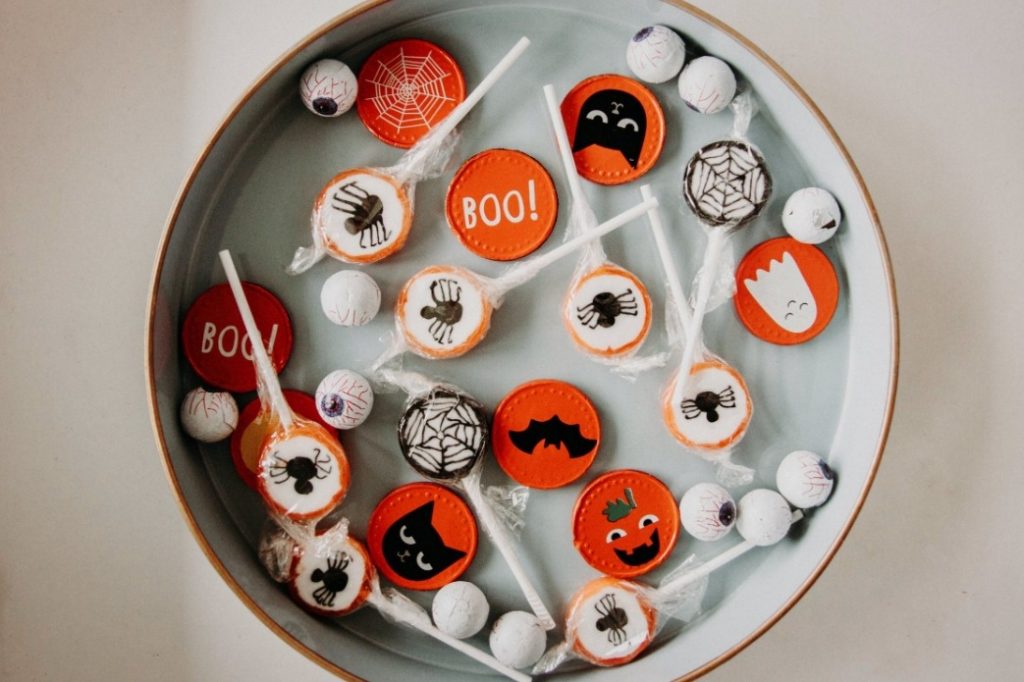
The year is racing by. And now we’re in October, that can only mean one thing: Halloween is just around the corner. For many kids, it’s an exciting time of year. Between all the silly costumes and sweet treats, there’s a lot for them to love.

But if your child has a food allergy, it can be a scary time for a different reason. Do you let them go trick-or-treating? What if they eat something they shouldn’t? Do you stop them from going out and having fun? It’s a tough question to weigh up. We don’t think it means you have to stop the festivities. Here’s how you and your child can still have a great time this Halloween.

Check all the labels

As much as your child will want to dive into their sweets as soon as they get home, don’t let them. Not straight away. First, look over everything they have and read the ingredients. Maybe have an allergy-free alternative waiting for them while you do your inspection.

Not every treat will have a label on it, so you might have to do some research online. Also, fun-sized chocolate bars can have different ingredients from their bigger alternatives, so keep that in mind. If you have to take anything away from your child, maybe think about doing a sweet swap with something safer, this way, they don’t lose anything.

Allergy-free treats

Speaking of which, buy in some snacks you know your child can eat and enjoy. Both for the sweet swap and to give out to other kids who come knocking. This way, you can be sure no one’s allergies flare up on October 31st.

If you know the neighbourhood where your child will be trick-or-treating, it might be worth talking to the people who live there. Just let them know about your child’s allergies and ask what they might be giving out.

Host your own party

The best way to be sure is to control everything yourself. So why not throw your own spooky party? You can set the menu and choose appropriate sweets. Throw in some party games and decorations and everyone will have a great time!

If not that, then why not host a scary movie night? Depending on your child’s age, there are plenty of kid-friendly scary movies. Something like Scooby Doo or Goosebumps work if they’re younger, while classics like Ghostbusters and Gremlins are perfect if they’re a bit older.

Halloween is still a few weeks away, giving you plenty of time to prepare something special for your child. It can be a scary time for all the wrong reasons, but with some careful thought and planning, there’s no reason it can’t be the best Halloween yet.

If you have allergy concerns about you or your child, get in touch with our allergy specialists. We’re always happy to help you live a more comfortable life. Book an appointment online or call us on 02031 433 449.

Is it possible to have a spice allergy?

spice allergy

Is it possible to have a spice allergy?

One in ten Brits order a takeaway at least once a week. It’s a welcome treat after a long week, and the UK loves a Chinese or Indian in particular. But if either of these leaves you feeling not-so-great – bloated or breaking out in hives – it’s possible you might have a spice allergy.

Spice allergies aren’t talked about often. Perhaps it’s because most of us have never really stopped to ask ourselves if we can even be allergic to spices. But while it’s rare, it reportedly affects between 4 and 13 of every 10,000 adults. So what are the symptoms and what should you do if you think you have one? 

Symptoms

Figuring out if you’re allergic to spices can be difficult. In part, it’s because spicy food naturally causes reactions that may seem like allergy symptoms. Who hasn’t had watery eyes, a runny nose, and a burning sensation in the mouth after a particularly hot curry? These symptoms alone are simply a response to the chemicals in the spice and are normal.

But if you start to experience other symptoms – such as a blocked nose, hives, nausea, diarrhoea, and shortness of breath – you could be allergic. In serious cases, spice allergy can even lead to anaphylaxis, which can be life-threatening.

What to do if you think you’re allergic

Spice allergies are underdiagnosed because of a lack of reliable tests. With this in mind, it might be tempting to test out various spices to see if they cause a reaction, but this can be incredibly dangerous.

The best action you can take is to keep a detailed food diary, noting down when your symptoms appear and what they are. This can help an allergist narrow down the list of potential allergens. It may also be useful to note that some spice allergies are more common than others. These include mustard, celery, sesame, garlic, cinnamon, turmeric, and onion.

The chances you have this particular allergy are minimal, but if you ever have any suspicions, seek the advice of a doctor. After all, it’s better to be safe than sorry!

If you suspect you may have a spice allergy, don’t suffer in silence. Get in touch with the London Allergy and Immunology Centre. Call us today on 02031 433 449.

Can you be allergic to Chinese food?

Chinese food

Can you be allergic to Chinese food?

The Chinese takeaway – a staple for every Brit. This country has a love for this Eastern cuisine – in fact, it’s the most popular choice for a large section of the UK public.

But have you ever felt bloated, sick, and had a pounding headache after eating one? You aren’t alone. But it isn’t just Chinese food that can trigger symptoms. Any food that contains high amounts of the flavour enhancer MSG seems to have an effect on some people. So can you be allergic to MSG? Let’s take a look…

Can you be allergic to MSG?

MSG allergy has been disputed for some time now. One 2019 review stated there isn’t enough evidence to confirm that MSG hypersensitivity exists. That same review states that the amount of MSG in foods isn’t high enough to cause a serious adverse reaction. We need more evidence before we can say that MSG allergy exists. At most, some speculate that it could be a sensitivity, which is different from an allergy.

But I have symptoms after eating MSG 

We currently don’t have enough evidence to confirm that MSG allergies and sensitivities exist, but they still might. In fact, there have been cases of anaphylaxis that seem to be tied to MSG consumption. If you experience symptoms after consuming MSG, it’s still possible that you have a sensitivity known as ‘MSG symptom complex’.

MSG symptom complex refers to the symptoms a person may experience after eating foods containing high amounts of MSG. Mild symptoms include headache, stomach problems, numbness or burning around the mouth, and fatigue. In worse cases, a sufferer may experience chest pain, heart palpitations, shortness of breath, and anaphylaxis.

Treatment

Simply avoiding MSG is the best treatment. While MSG can be found in almost any food, there are some with a higher concentration than others. Meat, poultry, fish, and cheese contain high amounts of MSG, therefore these foods are best avoided. As MSG is a flavour enhancer, it’s also commonly found in seasoning, condiments, junk food, and tinned foods, such as soup.

There isn’t enough evidence yet to prove that MSG allergies exist, but if you experience any of these symptoms, talk to your doctor.

Worried about a potential allergy? Get in touch with London Allergy & Immunology Centre. Our team of professionals can test you for allergies and help you keep your allergies under control. Call us now on 02031 433 449.

Three common allergy myths you should know about

allergy myths

Three common allergy myths you should know about

Dealing with allergies isn’t easy. From mildly inconvenient to life-changing, they’re tough to deal with. But when you’re constantly hearing misconceptions and myths about them, it makes it all so much harder. 

One person is telling you one “fact” and someone else tells you something different. It can feel exhausting and sometimes even be dangerous. It’s important to know what’s true and what’s just a bit of an old wives’ tale. So here are three common myths about allergies that we want to clear up.

“A peanut allergy is the most dangerous one”

With how much you hear about them, some people have come to believe that peanut allergies are the most dangerous type of allergy. But this isn’t true. 

While yes, some people can go into anaphylactic shock from them, many people just have mild reactions to peanuts. There’s a wide spectrum of reactions, and other allergies are no different. Some can have life-threatening reactions to, for example, pet dander. Allergies come in varying degrees, so one type of allergy isn’t necessarily worse than others.

“Local honey will help my hay fever”

It would be a lifesaver if it was true, but there’s no evidence that honey helps improve hay fever symptoms. The idea is that, by eating local honey, you’re eating local pollen. And by eating local pollen, you become less and less sensitive to it. 

But sadly, a 2002 study showed no difference in patients who were treated with local honey, processed honey, and a honey-flavoured placebo. 

“My baby won’t have allergies because it’s not in our family history”

Babies are more likely to develop allergies if both their parents have allergies, that’s true. But babies aren’t immune from allergies just because there’s no family history of them. In fact, 12% of children with allergies have no family history at all. Anyone can develop one and at any time in their life. 

With so many myths about allergies out there, we wouldn’t blame you for being confused about them. But dealing with them shouldn’t have to be difficult. If you’re struggling or looking for advice, get in touch with a professional who knows fact from fiction.

Need help controlling your allergies? Get in touch with London Allergy & Immunology Centre. Our team of professionals is ready to help you manage your allergies and regain control of your life. Call us now on 02031 433 449.

The foods that may make your hay fever worse

hay fever

The foods that may make your hay fever worse

Our diet affects almost everything. We all know how it can help or hurt our physical health, but did you know it could also worsen or alleviate hay fever symptoms? That’s because some foods contain higher levels of histamine, the chemical our body releases in response to our allergies. They give us all those uncomfortable symptoms that drive us mad. 

To stop your symptoms from getting worse, it’s best to avoid high histamine foods. Here are four common culprits that might not be helping you during this hay fever season.

Dairy

Dairy products can be taxing on our immune systems. And when they’re weak, it can cause an overreaction to pollen and make existing symptoms worse. To fight hay fever, it’s important to have as strong an immune system as possible. This is possibly why vitamin C helps combat symptoms of allergic rhinitis.

Coffee

It may be time to replace your morning coffee with decaf. Caffeine is naturally high in histamines, which can worsen hay fever symptoms. Excess caffeine may even cause liver congestion, making it even worse still, as well as causing other problems. 

Alcohol

Nothing sounds better than sitting in the garden with a beer or a glass of wine on a warm, sunny evening. But sadly, beer, wine, and liquor all contain histamines that are produced during the fermentation process. Alcohol also suppresses the immune system. So, similar to dairy, anything that weakens this will make symptoms more of a chore.

Nuts

While nuts may seem like the perfect snack, they’re packed full of histamines too. So it may be best to lay off cashews, pistachios, walnuts, and almonds until your symptoms become more manageable. Nuts like hazelnuts, pecans, and macadamia nuts are less likely to trigger symptoms as they contain lower levels of histamine. 

While no food will ever cure your hay fever, avoiding certain foods may help prevent your symptoms from getting worse. Always check with your doctor or allergist before making any lifestyle changes. 

Is hay fever getting you down? Get in contact with the London Allergy and Immunology Centre today. Our team of experts can help you manage your allergies and help you regain control of your life. Call us now on 02031 433 449.

The foods that may help your hay fever

hay fever

The foods that may help your hay fever

For those suffering from hay fever, summer can be a miserable time. Instead of enjoying the sun, you’re constantly checking for updates on pollen levels. The constant disruptive symptoms can put us off wanting to do anything outdoors altogether. 

But some studies have linked certain foods with helping to alleviate hay fever symptoms. Let’s look at some of the studies and see what they say. As always, talk to your doctor or allergy specialist first before making any big changes!

Vitamin C

Foods high in vitamin C have been shown to reduce symptoms of allergic rhinitis. So to combat that pesky pollen, it could be a good idea to load up on vitamin C. And you aren’t just limited to oranges. There are many foods high in vitamin C, including: 

  • Grapefruit
  • Lemon
  • Lime
  • Peppers 
  • Strawberries
  • Blackcurrants
  • Broccoli
  • Sprouts
  • Potatoes 
  • Tomatoes 

Tomatoes aren’t just high in vitamin C; they also have plenty of lycopene. This is an antioxidant compound that gives food its red colour. As well as reducing allergy symptoms, lycopene may also help reduce the effects of asthma.

Anti-inflammatories

A runny nose and itchy eyes are the result of inflammation and swelling in the lining of your nose and the protective tissue of your eyes. So increasing your consumption of anti-inflammatories could help reduce your hay fever symptoms. Anti-inflammatory foods include:

  • Tomatoes 
  • Leafy greens like kale and spinach 
  • Fatty fish like salmon, tuna and sardines
  • Avocados 
  • Oranges 
  • Cherries 
  • Strawberries
  • Blueberries
  • Purple grapes 
  • Olive oil
  • Pumpkin seed oil 
  • Flaxseed oil 
  • Turmeric 
  • Ginger 

Probiotics

The gut is incredibly important to our overall health. In fact, around 70% of our immune system is housed in our guts. We can’t be healthy without a healthy gut. And probiotics have been proven to ease allergy symptoms in those with birch pollen allergy. So if you’re a sufferer, simply adding probiotics to your diet could help. Probiotic foods include:

  • Kombucha
  • Sauerkraut
  • Pickles
  • Miso
  • Kefir
  • Yoghurt
  • Tempeh
  • Kimchi
  • Some types of cheese, including mozzarella, cheddar and gouda 

We understand if hay fever season is driving you crazy. As well as potentially helping with your allergies, some of these are great options for a healthy diet. Before you do anything related to your allergies, talk with your doctor first.

Need help managing your allergy symptoms? London Allergy & Immunology Centre has a dedicated team of professionals who can help you regain control of your allergies. Call us now on 02031 433 449.

What is oral allergy syndrome?

oral allergy syndrome

What is oral allergy syndrome?

Do you ever get that funny feeling in your mouth after eating where your tongue feels itchy, your throat feels scratchy, and your lips go numb? It’s possible you have oral allergy syndrome. 

There will be plenty of people out there who don’t even realise they have a food allergy. They eat some pineapple and think that swelling feeling in their mouth is just what happens when you eat it. It’s not until their friends throw them puzzled looks that they realise it’s not quite so normal.

These are signs of an allergy, we just might not realise it. So what are some of the warning signs? And what even is oral allergy syndrome?

Symptom triggers

Oral allergy syndrome – sometimes known as pollen fruit syndrome – comes from eating raw fruit, raw vegetables, or nuts. To put it in its simplest terms, when you eat certain foods, your body confuses the protein with pollen proteins. Symptoms can range from numb, swollen lips, itchy mouth, and scratchy throat to full-blown anaphylaxis, although severe reactions are rare. Symptoms tend to be worse when pollen levels are high.

Different people are triggered by different foods, but apples are a common one, resulting in symptoms for around 50-70% of people with an allergy to birch pollen and mugwort pollen. Citrus fruits are also common triggers for oral allergy syndrome, as well as bananas, celery, hazelnut and zucchini. 

Treating and managing symptoms

The best treatment for oral allergy syndrome is to simply avoid the foods that trigger symptoms. Some people with oral allergy syndrome continue to eat the food but cook it instead of eating it raw, but this can be dangerous, especially if you have severe symptoms or if they include the swelling of the throat.

While it might be harmless, you can never be too careful. For this reason, it’s always best to err on the side of caution and avoid the foods that trigger your symptoms and get an allergy test to check. Getting a test eliminates the possibility of it being something more sinister and allows you to treat your allergy as best as possible.

Allergy Clinic London has a team of experts that can help you control your allergies. Book a test with us now on 02031 433 449.

The three most common food allergies in babies

food allergies in babies

The three most common food allergies in babies

Up to 6 percent of children have some kind of food allergy. That might not sound like a lot, but with 12 million children in the UK, that means 720,000 are allergic to one food or another.

It can be a scary time as a parent. You might feel as if you have to keep your eye on your child at all times. There are plenty of things they might be allergic to, but here are the three most common food allergies in babies.

Cow’s milk (CMA)

A cow’s milk allergy affects up to 7% of babies under one-year-old. Though, according to the NHS, most children outgrow it by the time they’re five. This allergy usually develops when cow’s milk is first introduced into the baby’s diet. CMA symptoms include rashes, coughing, and diarrhoea, and in severe cases, it can be life-threatening.

Eggs

Like CMA, children can grow out of egg allergy. Your baby may have allergic reactions to all eggs (no matter how they’re cooked) or only to raw eggs (found in cake mix and mayonnaise). Symptoms include rashes, hives, and congestion.

Peanuts

1 in 50 children have an allergy to peanuts. But there might be good news on the horizon – peanut allergy numbers seem to be dropping. This is based on changes to child diet guidelines and is based on research that says introducing peanuts at a young age can actually reduce the chances they develop an allergy. Though the researchers do stress that more study is needed before we can truly be sure.

Allergens can be found in the most unusual of places. Did you know traces of egg can be found in vaccines for yellow fever and the flu? This is just one of the reasons it’s so important to know if your baby has any allergies. There are a lot of struggles as a new parent; don’t let trying to figure out your baby’s allergies on your own be one of them. Talk to a doctor today about your children.

At Allergy Clinic London, we believe allergies shouldn’t interrupt your life. To get some expert advice, contact us today on 02031 433 449.

What’s the difference between food allergies and food intolerances?

food intolerances

What’s the difference between food allergies and food intolerances?

There are plenty of people who don’t know the difference between allergies and intolerances. You might be one of them, but don’t worry, you aren’t alone. It’s not necessarily common knowledge, and if you don’t have an allergy or intolerance, it may never have even crossed your mind. 

Sometimes, people use the two terms interchangeably. But when food allergies can be life or death, we can’t afford to not take it seriously. Especially when 5% of people have some form of a food allergy. That’s 1 in 20 – in a standard classroom, that means at least one child is likely to have one.

So we put together this quick guide to highlight how the two are different, the causes of each, and the symptoms.

What is a food allergy?

Our immune systems create antibodies as a response to infection to help defend us. That’s how the human body works. But for people with allergies, their immune system sees certain harmless triggers, such as peanuts, as a threat and responds in much the same way. 

The immune system’s reaction can affect your skin, sinuses, eyes, airways, and digestive system, as well as causing other symptoms, such as nausea. Unlike a food intolerance, an allergy can be triggered just by touching the allergen. In rare cases, allergies can cause severe reactions known as anaphylaxis, which can be life-threatening. 

What is a food intolerance? 

Food intolerance is the difficulty of digesting certain foods and having bad physical reactions to them. Lactose intolerance is one such common food intolerance. The symptoms of food intolerance include bloating, stomach pain, nausea, and diarrhoea, which typically start a few hours after eating the food. 

Other symptoms can occur like skin rashes and itching. It’s not entirely clear what causes intolerances, but some are caused by the lack of an enzyme that is needed to digest the food. In the case of lactose intolerance, the enzyme that people lack is lactase.

Intolerances and allergies are often confused or seen as the same thing, but the causes and the severity of the two are completely different. Symptoms may seem similar, and so the only way to know for certain is to get a test. If you want to test what you’ve learned, why not take our allergies vs intolerance quiz?

If you think you may have an allergy or intolerance, put your mind at ease and get a test. Call Allergy Clinic London today on 02031 433 449 to book an allergy test.

Copyright 2026. All Rights Reserved

LAIC Main Menu