
Vitamin D Deficiency Testing and Vitamin Profile Testing
A clinician-led approach to vitamin and mineral testing, including vitamin D assessment, tailored to symptoms, diet, lifestyle and individual risk factors.
Vitamin supplements are widely available, but the right approach is not always to take multiple products without checking whether they are needed. In some situations, targeted laboratory testing can help guide a more personalised plan.
At our clinic, we offer vitamin and mineral testing, including vitamin D deficiency testing, as part of a broader nutritional and medical assessment. This can be helpful for selected adults and children where there are symptoms, dietary concerns, lifestyle factors, or clinical reasons to investigate possible deficiency.
Vitamin D is one of the most commonly discussed nutrients in the UK. However, not everyone needs a blood test before taking a routine supplement. For many people, especially during autumn and winter, general supplementation advice may be more appropriate, while testing is usually reserved for those with symptoms, risk factors, or clinical indications.
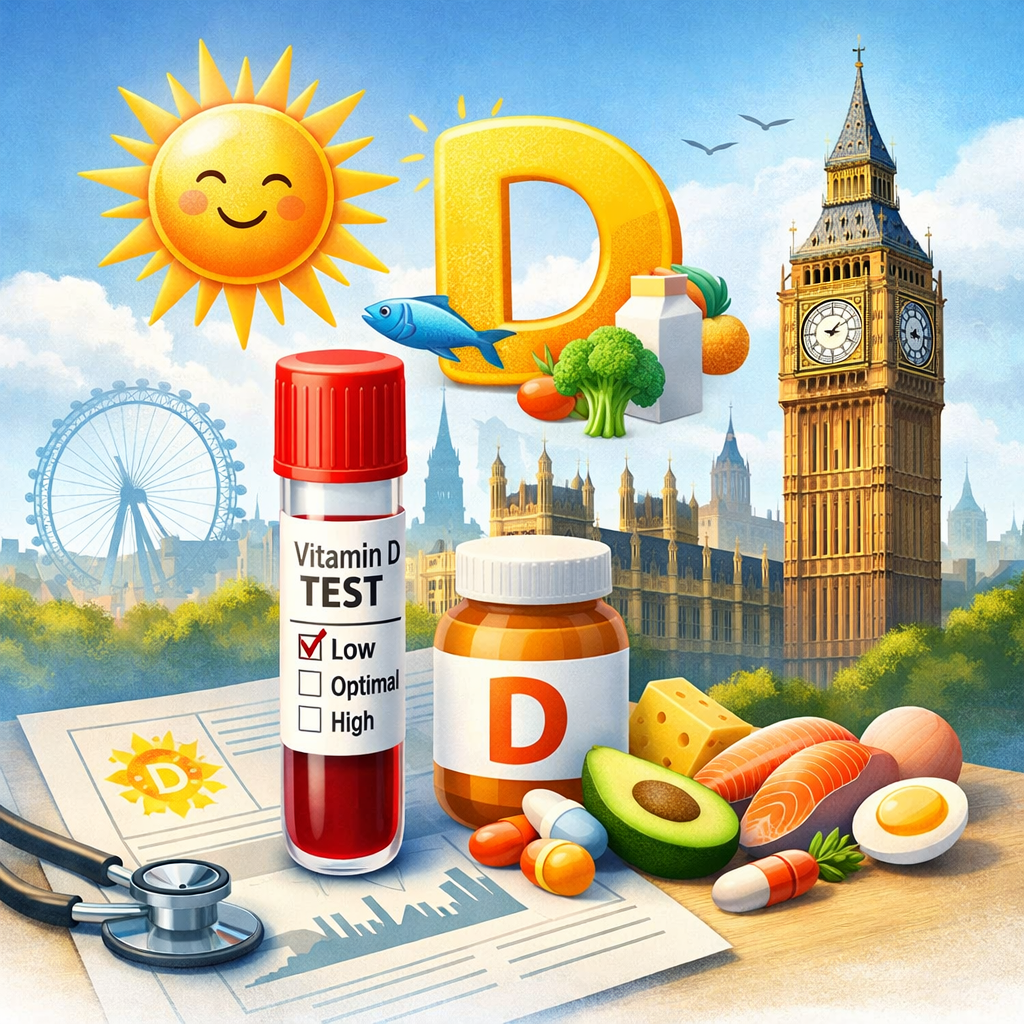
Vitamin D deficiency testing in London with clinician-led assessment and personalised supplementation advice
Useful in selected patients with symptoms or risk factors
Broader assessment of key vitamins
Available in serum and selected red cell profiles
Results interpreted with lifestyle and medical context
Why consider vitamin and mineral testing?
Testing may be helpful when there are symptoms or circumstances that suggest deficiency, imbalance, restricted intake or increased nutritional demands. It can also help guide safe and sensible supplementation in selected cases.
- Persistent tiredness or low energy
- Restricted diets or poor dietary variety
- Low sunlight exposure or increased risk of vitamin D deficiency
- Concerns about nutritional status in adults or children
- Review of current supplements and whether they remain appropriate
Why not just take multiple supplements?
Supplements can be useful when there is a known deficiency or a clear reason to use them. However, taking several products together without a plan may be unnecessary, may not address the real issue, and in some cases may lead to excessive intake.
A more scientific approach is to review symptoms, diet, lifestyle and relevant blood tests where appropriate, then decide whether supplementation is needed and in what form.
Vitamin D, nutrition and lifestyle
Vitamin D and sunlight
Vitamin D status can be influenced by sun exposure, skin pigmentation, time spent indoors, clothing habits, season, age and diet.
When testing may help
Testing may be appropriate if there are symptoms of deficiency, bone health concerns, relevant medical conditions, malabsorption issues, or other recognised risk factors.
Supplements still matter
Even when blood testing is not needed, some groups are advised to take routine vitamin D supplements because deficiency risk is higher.
Available vitamin and mineral tests
We offer a range of nutritional blood profiles. Panels can be selected according to the clinical question, the person’s age, current supplements and the type of concern being investigated.
| Profile | Included tests |
|---|---|
| Vitamins 1 | Vitamin A, Beta Carotene, Vitamin B1, Vitamin B2, Vitamin B6, Vitamin C, Vitamin E |
| Vitamins 2 | Vitamin A, Beta Carotene, Vitamin B1, Vitamin B2, Vitamin B3, Vitamin B6, Vitamin B9 (Red Cell Folate), Vitamin B12 (Active), Vitamin C, Vitamin D (25-OH), Vitamin E |
| Vitamin B Group | Vitamin B1, Vitamin B2, Vitamin B3, Vitamin B6, Vitamin B9 (Red Cell Folate), Vitamin B12 (Active) |
| Sports / Performance Vitamin Testing | FBC, ESR, Biochemistry Profile, Omega 3 / Omega 6, Total Antioxidant Status, Ferritin, C-Reactive Protein, HDL / LDL, Mineral Screen, Vitamin B9 (Red Cell Folate), Vitamin B12 (Active) |
| Mineral Screen | Calcium, Magnesium, Zinc, Iron, Copper, Chromium, Manganese |
| Mineral Screen – Red Cells | Red Cell Potassium, Red Cell Magnesium, Red Cell Calcium, Red Cell Manganese, Red Cell Zinc, Red Cell Copper, Red Cell Selenium, Red Cell Chromium |
| Single Test | Vitamin D (25-OH) |
Depending on the specific test requested, patients taking supplements may sometimes be advised to pause selected products before testing. This should only be done if specifically advised by the clinic.
Who may benefit from testing?
Adults
- People with ongoing fatigue or suspected nutritional deficiency
- Those with limited diets, gastrointestinal issues or malabsorption concerns
- People with low sunlight exposure or increased risk of vitamin D deficiency
- Individuals already taking supplements who want a more structured review
Children
- Children with restricted eating patterns or nutritional concerns
- Those with suspected low vitamin intake or deficiency
- Children needing clinician-led review of supplements and diet
- Cases where testing is recommended after clinical assessment
Our approach
Step 1
Review symptoms, diet, lifestyle, medical history and current supplements.
Step 2
Select appropriate vitamin or mineral tests rather than ordering unnecessary panels.
Step 3
Interpret the results in context and provide advice on supplementation, diet and follow-up where appropriate.
Need vitamin D deficiency testing or a vitamin profile?
We offer clinician-led assessment and nutritional blood testing for adults and children, including vitamin D, vitamin B12, folate and broader vitamin and mineral profiles where appropriate.
If you would like advice on whether testing is suitable, or want a review of current supplementation, please contact our clinic.
Selected references
- NICE. Vitamin D: supplement use in specific population groups. Last reviewed 2025.
- NHS. Vitamin D information and supplementation advice.
- Endocrine Society. Vitamin D for the Prevention of Disease Guideline Resources. 2024.
- NICE. Vitamin B12 deficiency in over 16s: diagnosis and management. 2024.
This page is for general educational purposes and does not replace individual medical advice. Testing and supplementation should be guided by clinical assessment.