Latest News and Info

Will my baby have the same allergies as me?

Will my baby have the same allergies as me?

Navigating life with allergies, from meticulous label-reading to pre-checking restaurant menus, becomes a well-honed skill. As an expectant mother, the question naturally arises: “Will my baby have the same allergies as me?” It’s a common concern among moms-to-be, which can feel worrying. 

We wanted to give you some peace of mind that it doesn’t have to feel that way. 

The reality is that allergies can have the potential families. If you’ve been careful to avoid certain things to stay allergy-free, you might be wondering if your little one will face the same challenges.

The honest answer is perhaps…but there’s no real hard or fast rule to say they will either way. It depends on two major factors.

Nature

Understanding allergies and how they’re passed down is like a family recipe. Your genes are the ingredients, and yes, they play a part. If one parent has allergies, there’s a higher chance your baby child might, too, and it’s even higher if both you and your partner have them. But it’s not a guarantee. While genes play a significant role, they’re not the only influence factor as to whether or not your baby will have allergies. 

Nurture

The environment your baby grows up in matters, too. Exposure to allergens can either build up protection, making allergies less severe or delayed or rendering them more sensitive later on. It’s a delicate dance between genetics and surroundings.

What does this mean for you as a parent? 

For parents, it’s a balancing act. While you can’t predict allergies, taking a test to identify potential triggers can provide peace of mind. Raising your child while being mindful of signs of allergies, especially in the early years, is a proactive approach. If allergies do emerge, it’s not anyone’s fault; it’s the result of the intricate interplay between nature and nurture.

Signs your baby might have an allergy 

Any child can develop allergies at any time, whether you or your partner have them or not. Sometimes, they’re just fleeting as your little one is growing. Cows’ milk, for example, is something a high percentage of infants are allergic to. Over 90% of children will become tolerant of milk by age 6.

The best you can do to manage symptoms is first to be aware of them:

  • hives or rashes
  • itching
  • wheezing or shortness of breath
  • red, itchy, and/or watery eyes
  • coughing and/or wheezing
  • runny nose
  • sneezing

If you notice these symptoms, it’s time to take action. By taking a test, you can figure out precisely what might be causing the issues, and with guidance, you’ll have an action plan to help you manage the symptoms. Armed with this info, you can create a home that’s comfy and safe for your little one.

As you step into this journey of parenthood, know that you and your child, with a bit of help from our in-house paediatrician, will figure it out together. Many parents fear the process of diagnosis and worry about what comes next. 

Your concerns about your baby’s health are entirely valid, but facing allergies with infants isn’t as daunting as it seems. At our London-based allergy and immunology centre, we understand that the well-being of your baby is your top priority. Our experienced paediatrician is here to provide compassionate support and guidance. If you suspect your baby has a cow’s milk allergy or if you’re unsure about the symptoms you’re witnessing, register as a new patient today and let’s start the process of helping your baby feel better.
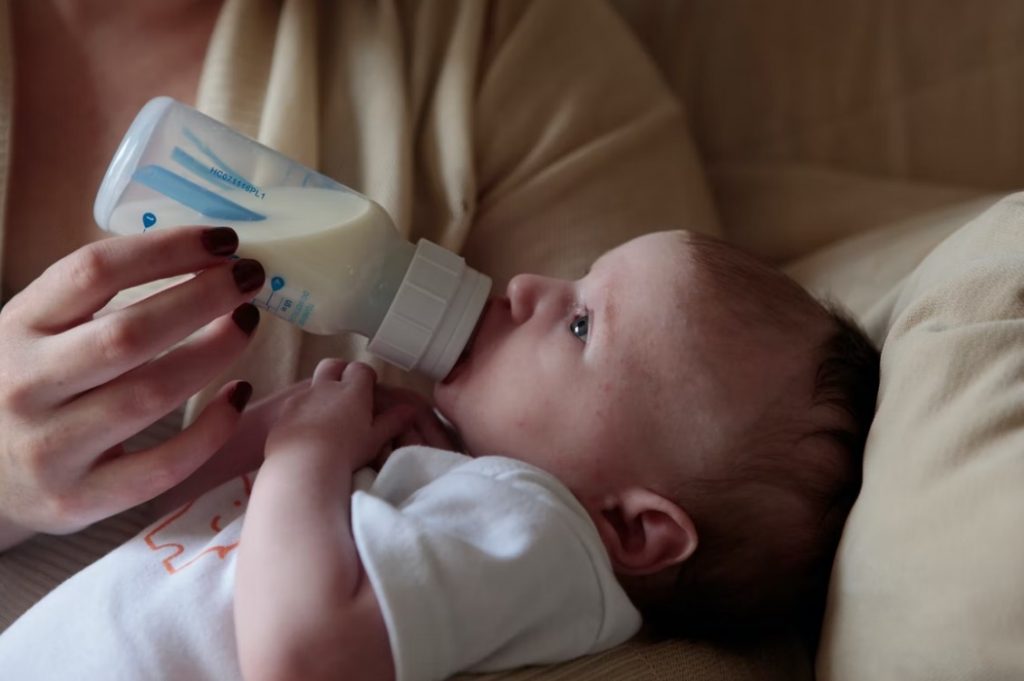

 

Everything new parents need to know about allergies in babies

allergies in babies

Everything new parents need to know about allergies in babies

Being a new parent is sure to bring about a million new questions. You suddenly have a baby to look after and figuring everything out is, frankly, overwhelming. And one area that many parents worry about is allergies – especially food ones.

Around 5% of children under the age of 5 have a food allergy. So the odds of your child having one isn’t out of the question. But what do you do? How do you even know? We know you’ll have burning questions just like these, so let’s jump into an FAQ about allergies in babies.

What causes food allergies in babies?

No one really knows why our bodies suddenly decide to be allergic to something. This means it’s hard to really explain what causes them. What we do know is that babies usually have to be exposed to the food first. For example, they might eat it once and be okay, but react the second time.

NHS advice is to introduce potentially allergen-risky food solely and in small amounts. This allows you to see if there’s any reaction without harming them.

What are the most common food allergies?

There are about nine common categories of food allergies. These are the most common ones you’ll come across:

  • Milk
  • Eggs
  • Wheat (or other foods with gluten)
  • Peanuts
  • Tree nuts
  • Sesame (and other seeds)
  • Soy
  • Fish
  • Shellfish

How can you tell if a baby has a food allergy?

There are some common symptoms you might want to look out for. Food allergies usually happen within a few minutes of ingesting them. Some telltale signs include:

  • Sneezing
  • Itchy, watery eyes
  • Coughing or trouble breathing
  • Red rashes
  • Worsening of asthma or eczema symptoms
  • Anaphylaxis

You can tell when an anaphylactic shock occurs because the baby will have trouble breathing, may lose consciousness, and have a weakened pulse. This is a less likely symptom, but one that can be fatal.

What to do if they’re allergic?

The best advice is talk to your GP/your baby’s doctor and see what they recommend. They might go the route of a specific diet or advise you to stay away from certain foods. They should also be able to help you adjust to these new restrictions.

How do you keep your baby safe?

Follow any advice given to you by your baby’s doctor. At home, you’ll want to remove any food that contains something they’re allergic to. Check ingredients thoroughly as many of them can be in food without you realising.

We have plenty of blogs you can read as well. These will give you some more advice on how to adapt your lifestyle. We have some tips on what you can do, four facts worth knowing, and some advice worth having.

Other than that, maybe consider finding an allergy specialist to help. They’ll be specifically tuned into how best to handle any lifestyle changes. And they’ll more keenly understand your concerns and the appropriate treatment.

If you need an allergy specialist, whether it be for you or your child, get in touch with us. Our experts are always happy to help a parent in need. Register as a new patient here or call us on 02031 433 449.

Identifying and preventing allergies in infants

recognising and preventing allergies in infants

Identifying and preventing allergies in infants

The BSACI Paediatric Allergy Group (PAG) and the Food Allergy Specialist Group (FASG) of the British Dietetic Association (BDA) have developed guidance to identify allergies in higher risk infants and advice in early prevention of allergies. To find out more about prevention according to the new guidelines, keep reading.

Prevention

The BSACI has outlined a summary for parents to minimise the risk of allergies. The guide advises that prevention start from 6 months of age onwards.

6 months

Studies show that infants not breastfed were 3.6 times more likely to be hospitalised compared to those who exclusively breastfed for four months or more. Their recommended course of action goes like this:

  • Exclusive breastfeeding for around the first 6 months of life.
  • From around 6 months of age (but not before 4 months), introduce complementary foods (solids) – including foods known to cause food allergies – alongside continued breastfeeding.
  • Excluding egg and peanut from your baby’s diet is not strictly necessary as it is likely to increase the risk of food allergy.

Studies show that despite the relatively early introduction of solid foods, consumption of peanut and hen’s egg during infancy is not common practice with 73% of infants consuming less than one or no eggs per week; with 98% of infants consuming less than or no nuts.

Complementary foods should be pureed and offered in small amounts of vegetables, fruit, starchy foods, protein, and pasteurised dairy. Do not add salt or sugar.

Next step

Signs your baby is ready for solid foods include:

  • Being able to sit relatively unaided in a high chair, with their head steady.
  • Trying to reach out to grab food and put in their mouth.
  • Loss of the “tongue-thrust” reflex – babies who aren’t ready push the food back out with their tongue, so they get more around their face than they do in their mouths.

High risk

Babies who suffer from eczema are likely to be at a higher risk of allergies*. The BSACI advise that you should introduce egg and/or peanut earlier on in their diet (4 months of age), followed by other foods known to cause food allergies.

The benefits of allergy testing in higher-risk babies before introducing egg or peanut needs to be balanced against the risk this could cause a delay (due to lack of available testing) and increase the risk of food allergy.

*Some babies will already have food allergies, especially those with severe eczema. The risk of a severe reaction (anaphylaxis) is low (1-2 per 1000 in these babies). Speak to your healthcare professional before introducing egg and peanut if your baby has severe eczema.

Guide to egg and peanut

  • Egg – choose British lion-stamped eggs. Aim to give your child one egg over the course of the week.
  • Peanut – never give your baby whole nuts – make sure you chop them finely. The guide advises that you use smooth peanut butter, “puffed peanut” snacks or grind whole peanuts to a fine powder. Mix with pureed fruits/vegetables, yoghurt, porridge, baby cereals etc.

It can be a scary time in your life when you find out your child has food allergies. You worry the future will be filled with anxiety, but that doesn’t mean you and your child can’t live a normal life.

These guidelines are for infants who’s allergies have not yet been diagnosed. If you think your little one might have an allergy and would like further testing, get in touch today to book an appointment. To find out more about the BSACI, click here.

Food allergies and intolerance in infants

food allergies and intolerance in infants

Food allergies and intolerances in infants

Food allergies can cause a lot of worry, especially when you have to send your child off to school. These allergies are not always easy to spot, but it isn’t impossible.

The first step to take is to identify whether your child is suffering from an intolerance or allergy. Physical reactions such as bloating to specific foods aren’t uncommon. They are likely to be considered an intolerance rather than an allergy. Both can have similar symptoms which is why they are often confused.

Allergies are characterised as being life-threatening and occur when the body’s immune system perceives a specific food as harmful, leading to an allergic reaction. Whereas intolerances are less severe and often will only cause issues such as stomach pains or nausea; this is usually a result of the body not being able to digest certain foods or the digestive system reacting to the food and becoming irritated as a result.

Dietary alternatives

If your child is intolerant, then they may be able to consume minimal amounts of the food they are sensitive to without too much discomfort. You can swap out foods for alternatives, such as oat milk instead of dairy milk. Ask your doctor for help in aiding your digestion, as well as seek medical help for any underlying health issues that are causing the sensitivity.

Early intervention

The BSACI’s Paediatric Allergy Group (PAG) and the Food Allergy Specialist Group (FASG) of the British Dietetic Association (BDA) have developed guidance to identify allergies in higher risk infants and advice in early prevention of allergies.

They suggest that you introduce a variety of vegetables, fruit, starchy foods, protein, as well as pasteurised dairy into your child’s diet as early as six months old. Including foods commonly associated with allergies such as egg and peanuts. It’s also worth noting that babies who suffer from eczema are at a higher risk of food allergies.

Symptoms

The guide states that there are two categories to be aware of:

  • Immediate – typically happens within 30 minutes of consuming the food.
  • Delayed – occurs hours after the dietary trigger.

Immediate symptoms include:

  • Swollen lips, face or eyes
  • Itchy skin rash
  • Abdominal pain
  • Vomiting

Rarer symptoms include:

  • Swollen tongue
  • A persistent cough
  • Difficulty in breathing or heavy breathing
  • Unresponsiveness

Delayed symptoms include:

  • Persistent abdominal pain, vomiting
  • Food refusal or aversion
  • Frequent stools, constipation
  • Skin redding or itch over the body

If your child suffers from eczema, an allergy can make the eczema flare up and worsen.

Testing

Intolerances can be diagnosed by the exclusion of products one by one, with further reintroduction in a blinded manner, confirming the absence and return of the symptoms. Our clinic can test for allergies in children. We can give dietary advice after doing one or more of the following tests:

  • Skin prick test with commercially available food extracts
  • Prick to prick test with fresh or cooked food
  • Challenge test with food in a safe hospital environment
  • Blood test Specific IgE to food
  • Biochip – molecular method of Specific IgE detection Immunocap ISAC

If you find that your child is experiencing any of the symptoms listed in this blog, get in touch with us today on book an appointment with one of our consultants to take the first steps to preventing their discomfort.

The truth behind cow’s milk allergy in infants

cow's milk

The truth behind cow’s milk allergy in infants

A few minutes ago your child consumed their first-ever bottle of cow’s milk-based formula. But now you watch as your baby screams, vomits, and develops skin irritations. You frantically search your mind for the reason behind your child’s onset of symptoms. It’s highly likely that your baby has a cow’s milk allergy, which is a common ailment amongst newborns and babies. However, there are two major types of allergies in babies: IgE-mediated and non-IgE-mediated. As a parent, it’s important to understand the differences between IgE-mediated and non-IgE-mediated reactions.

What are the causes behind your child’s cow’s milk allergy?

During IgE-mediated reaction to milk, the IgE antibodies on allergy cells (mast cell) bind to milk. This propels the cell to unleash a variety of allergic mediators, that cause swelling, rashes and even dangerous systemic reactions. These can occur within minutes of your child consuming cow’s milk. Some children experience a non-IgE-mediated reaction, which results in a slower onset of symptoms resulting in gastrointestinal symptoms.

The difference between IgE-mediated and non-IgE allergies

As mentioned, IgE-mediated allergies cause your child to react within minutes of consuming cow’s milk. Whereas non-IgE reactions see delays of hours or even days. IgE-mediated allergies are easy to recognise, as your child will likely vomit, break out in hives, and develop eczema. The most dangerous is that the child can have a massive reaction known as anaphylaxis.

If your child has a non-IgE reaction, it will be less severe, but pretty troublesome and should be taken seriously. Your child will experience gastrointestinal issues, skin irritations, and possible respiratory problems. In milder cases, a non-IgE allergy to cow’s milk may be confused with lactose intolerance. With this in mind, it is important to note that lactose intolerance in children is usually secondary (associated with some other digestive problem) and affects the bowels (diarrhoea, bloating, pain) because the child is unable to digest the sugar in milk: lactose.

Have no fear! Your child will likely grow out of his or her cow’s milk allergy. But, for now, there is a high chance that you just want to learn how to stop your baby from vomiting all over the carpet. For those with IgE-mediated allergies, it is advised that you switch your baby’s formula to EHF (Extensively Hydrolyzed Formula) or AAF (Amino Acid Formula). If you are breastfeeding, it is essential that you cut out all cow’s milk from your diet. However, before anything, please have your child tested for allergies.

How can you fix it?

The process of adjusting to your child’s non-IgE-mediated allergy depends on its severity. If your child has more serious symptoms, it’s recommended that you follow a similar procedure to the above.

Mothers breastfeeding children with mild non-IgE-mediated allergies can try the process of cutting cow’s milk from their diet. If your child shows no symptoms, you can slowly bring cow’s milk back into your diet. When the child doesn’t react to cow’s milk, they are unlikely to have an allergy at this point. If the symptoms reappear after you add cow’s milk back into your diet, then it is crucial that you eliminate all cow’s milk from your diet yet again. Your child’s symptoms will likely fade as you do, which is a telltale sign that they do have an allergy. Bring your baby to an allergy consultant for testing, before giving any cow’s milk.

Parents who choose to use formula rather than breastfeed can follow a similar route, except you will use an eHF formula for the elimination phase and a cow’s milk-based formula instead of you, yourself consuming cow’s milk.

It is important to note that a cow’s milk allergy is the most common allergy among newborns and your child will most likely grow out of it. However, should problems persist or you would like some help and advice, please book an appointment with our consultants on our website. If you would like further information, click here to find more about food allergy in children and young people from the National Institute for Health and Care Excellence.

Copyright 2026. All Rights Reserved

LAIC Main Menu